New Delhi, January 25 (IANS). US President Donald Trump is putting pressure through tariffs to do business on his own terms. According to him, Trump is continuously giving threats of tariffs to many countries. The situation has become such that along with the European Union, many countries of the world are considering plans to reduce their dependence on America.
In fact, today digital frameworks have become an important part of our lives. Most of the companies in the digital world are America’s contribution. In such a situation, if this framework breaks, many essential services may also be disrupted.
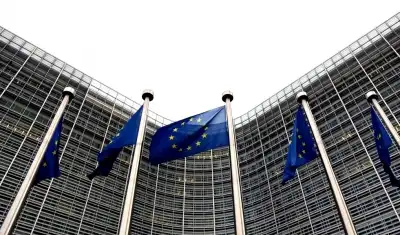
With the beginning of his second term, Trump has created a tension in global politics. Many countries of the world are considering changing the dynamics in the fields of politics, business and technology. Trump’s repeated demands and threats of tariffs for Greenland have forced the EU to rethink relations with its former ally.
Most of Europe’s data is stored on American cloud services. Companies like Amazon, Microsoft and Google own more than two-thirds of the market in Europe, while US-based AI companies like OpenAI and Anthropic are at the forefront of artificial intelligence.
According to a report by the European Parliament, the EU depends on non-EU countries for more than 80 percent of digital products, services, infrastructure and intellectual property.
EU lawmakers are pushing for a different technological dependency than the US. EU law makers are focusing on other sources or indigenous solutions instead of companies like Google, Open AI, Microsoft etc.
According to Johan Linaker, senior researcher at Sweden’s Rise Research Institute and assistant professor at Lund University, Europe’s negligence has taken this group to a level where most of Europe is running on the cloud provided by America’s Big Tech.
He said, “The public sector and governments have been suffering from a comfort syndrome for decades. There has been a conservative procurement culture, a habit of risk aversion and a preference for remaining as is. The difference now is that the geopolitical environment adds a new dimension of risk, beyond the lack of innovation and rising license costs.”
Think-tank Bertelsmann Stiftung estimates that it will take about a decade and 300 billion euros for Eurostack to achieve its goal. According to a less conservative estimate from the US trade group Chamber of Progress (which includes many of America’s biggest tech companies), the full cost would be much more than 5 trillion euros.
–IANS
KK/ABM