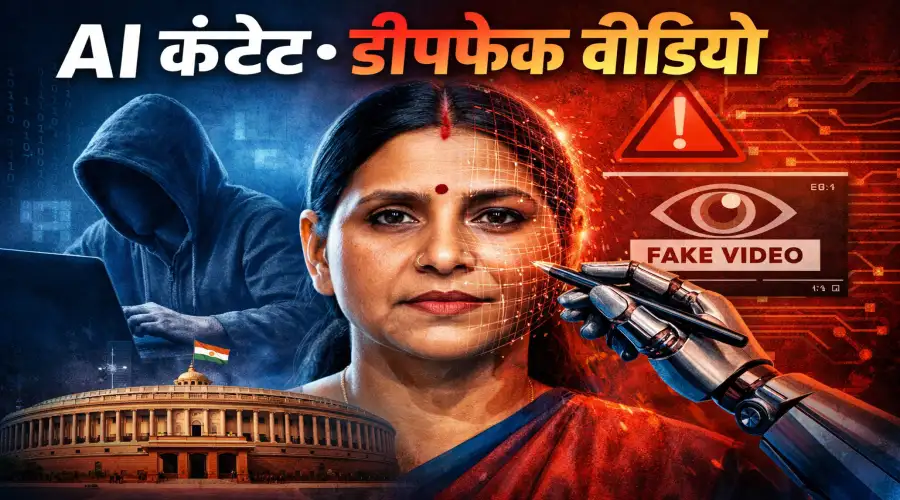
Whenever a video goes viral on social media, people often share it considering it to be real. Within hours, rumors of the fake video spread like wildfire. Later it was revealed that the video was not real, but a deepfake created by AI. Now, the central government has taken a strict stance on such matters. The new rule clearly states that if deepfake content is not removed within three hours, not only the user but also the platform may have to face legal problems.
Why new strictness on AI content?
In recent times, deepfake videos and fake photos created with AI have increased rapidly. These have affected elections, society and even personal respect. In view of this threat, the Ministry of Electronics and Information Technology has issued new guidelines under IT rules. Its clear objective is to immediately stop misleading AI content on social media. The government has made it clear that clear labeling will be necessary on any photo or video created by AI, so that users can know whether the content is genuine or created by AI.
Deepfake has to be removed within 3 hours, otherwise…
The biggest change is that if any complaint is received about deepfake or misleading AI content, the concerned social media platform will have to remove it within 3 hours. Earlier this time limit was considered to be 36 hours. Now the scope for delay has been reduced considerably. If the platform does not remove the content within the stipulated time, it may face fines and legal action. Repeated violations of the rules may also result in the platform’s safe harbor protection being removed. Safe harbor means that the platform is not directly responsible for content posted by users, but if this protection is removed, the company itself could be sued.
No label, straight crime
Under the new rules, posting AI content without labels will be considered a crime. Once an AI label is placed on a piece of content, the platform cannot remove or hide it. At least 10 percent of the content should be clearly watermarked or labeled. While uploading the post, users will also have to indicate whether the content is created by AI or not. Every three months, the platform must remind its users of the rules and warn of penalties or fines for misuse.
zero tolerance case
There are instructions to immediately block child pornography, private photos and videos without permission, fake documents, or AI content that incites violence. No delay will be tolerated in such cases.
Where to complain?
If a user comes across deepfake or misleading AI content, they can first file a complaint through the social media platform’s grievance officer or reporting system. Every major platform in India is required to appoint a grievance officer. Apart from this, complaint can also be filed on the National Cybercrime Portal cybercrime.gov.in. In serious cases, the police or cyber cell can also be contacted.