Nav Thakuriya
hiThe general elections to be held in the Malay nation of Nepal on March 5 are not just a process of change of power, but will also decide whether the country will be able to regain the path of stability after the resentment of Gen Z against corruption, unemployment and political instability. The election was necessitated by the fall of the government following a massive youth-led movement in Kathmandu in September last year.
More than 1.89 crore voters will exercise their franchise in Nepal, which has a population of about 3.05 crore. These include about 92 lakh women. Voting will be held through ballot paper on a single day at 10,967 polling stations across the country. A total of 3,484 candidates from 68 political parties and independents are in the fray for the 275-member House of Representatives. At present, the command of the country is in the hands of the interim government led by former Chief Justice of the Supreme Court Sushila Karki.
Nepal’s electoral structure is a mixed system based on the 2015 Constitution. Under this, 165 MPs are elected through direct voting i.e. first-past-the-post system, while 110 seats are filled through proportional representation. The purpose of this system is to prevent complete dominance of any one party and to give proper representation to small parties and minorities in Parliament.
This is the reason why coalition governments have been common in Nepal, but due to this political instability also continued. The race for the post of Prime Minister is being considered very interesting this time. Four-time Prime Minister and CPN-UML leader Khadga Prasad Sharma Oli is again in the fray from Jhapa-5 seat. In September 2025, he had to resign from the post of Prime Minister under pressure from the youth movement, but his political base in eastern Nepal is still considered strong. In front of him is 35-year-old Balendra Shah, who has emerged as the face of the aspirations of Gen Z.
Structural engineer turned rapper and then politician Balendra Shah is very popular on social media. Recently, he resigned from the post of Mayor of Kathmandu Metropolitan City and joined the Rashtriya Swatantra Party, which is led by TV journalist turned politician Rabi Lamichhane. Despite the ban on opinion polls in Nepal, the general political discussion is that Balendra Shah is considered to be ahead in the race to reach Singh Darbar, the center of power.
As the third major contender, the country’s oldest party Nepali Congress has put forward its new president Gagan Kumar Thapa as the face of the post of Prime Minister. He has replaced five-time Prime Minister Sher Bahadur Deuba, who decided not to contest the elections this time. At the same time, another former Prime Minister Jhala Nath Khanal is also keeping himself away from this election. Experienced leader of leftist politics Pushp Kamal Dahal (Prachanda) is also seen active once again.
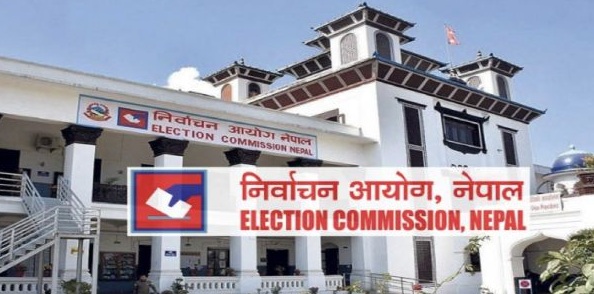
The Maoist movement, which ran from 1996 to 2006, ended Nepal’s 240-year-old monarchy and made it a federal democratic republic in 2008. However, the change of more than 14 governments in the last two decades shows that political stability still remains Nepal’s biggest challenge. Nepal Election Commission has implemented strict code of conduct this time. A clear ban has been imposed on the participation of minors in election campaigning.
The ballot boxes will be sent to Kathmandu as soon as voting ends at 5 pm on March 5. The results of the direct system are likely to be declared within 24 hours and the results of seats involving proportional representation in two to three days. Nepal shares a 1,751 km long open border with India, so the impact of Kathmandu’s political stability is felt in eastern and northeastern India. Recently, India has provided about 100 pickup vehicles and other material to Nepal to assist in election preparations.
Issues like China’s growing role in India-Nepal relations, border security and regional balance also make this election strategically important. Now the biggest question is whether this election born out of the opposition of Gen Z will lead Nepal towards stable, transparent and development-oriented governance, or will the old era of coalition politics and power struggle continue. Its answer will be locked in the ballot boxes on March 5.
(The author is a senior journalist from Eastern India)
Read this also – Click to read the news of your state/city before the newspaper.