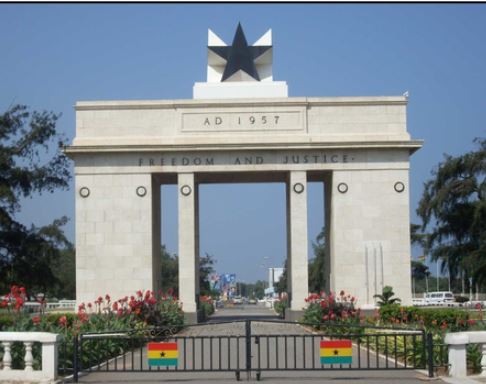
New Delhi. Crowds gathered on the streets of Accra, waving red-yellow-green flags and songs of independence—this was the historic moment when Ghana, the British colony of West Africa, emerged as an independent nation. The formal transfer of power occurred just after midnight, and the announcement of the end of colonial rule sparked new hope across the continent.
On March 6, 1957, Ghana officially gained independence from Britain, becoming the first country in Sub-Saharan Africa to free itself from colonial rule. This was not just a constitutional change, but also a decisive victory in the long struggle against imperialism. Thousands of people were present at the ceremony held that night, and the British flag was lowered and the tricolor of the new nation was raised. During British rule, this area was known as the “Gold Coast”, which was extremely important due to its gold, cocoa and strategic ports. Britain established formal control here in the second half of the nineteenth century. After World War II, the demand for self-determination intensified at the global level and African nationalism took a new direction. The soldiers returning from the war and the educated middle class raised their voice for political rights.
The leading leader of this movement was Kwame Nkrumah, who gathered widespread public support through the “Convention People’s Party”. They raised the slogan of “Self-Government Now” and put pressure on the British administration through peaceful movements, strikes and electoral politics. After his party’s victory in the 1951 elections, the process of transfer of power accelerated and ultimately paved the way for complete independence.
Upon independence, the country’s name was changed from the Gold Coast to “Ghana”, paying homage to the heritage of the ancient African empire. The new nation adopted parliamentary democracy and remained a member of the Commonwealth. Nkrumah promoted Pan-Africanism and made African unity the center of his foreign policy. He believed that Ghana’s independence was incomplete until the whole of Africa became independent.
Historian Martin Meredith, in his book ‘The Fate of Africa’, notes that Ghana’s independence reenergized political consciousness across the continent and the 1960s became a period of decolonization in Africa. Although independence faced obstacles such as economic dependence, administrative challenges, and Cold War politics, Ghana continued efforts towards maintaining democratic institutions.
Ghana’s independence was not just the achievement of one country; It became a symbol of confidence and change for sub-Saharan Africa.
—
Read this also – Click to read the news of your state/city before the newspaper.