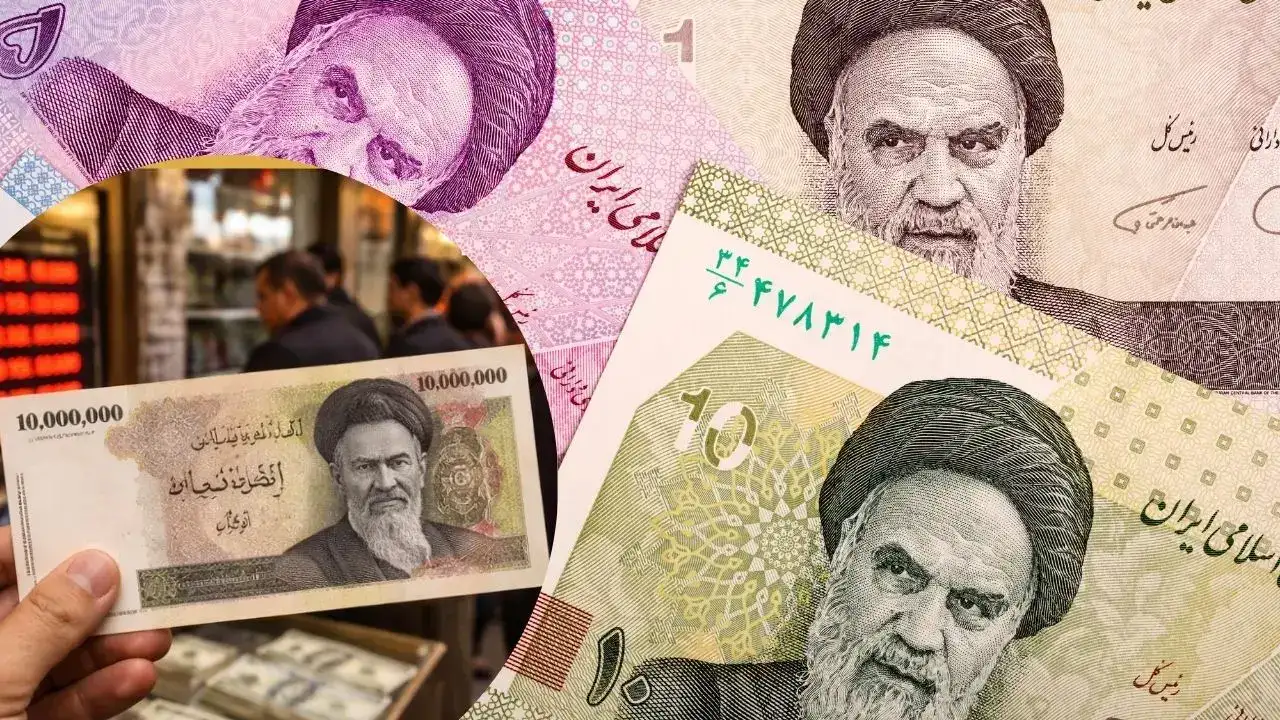
Amidst the ongoing economic pressure and tension between Iran, America and Israel, a shocking development has come to light. Specifically, Iran has issued a banknote of 10 million rials—which is equivalent to one crore. At first glance, this figure may seem quite large, but the reality is quite different. Let us know why Iran has taken this step.
Iran’s 10-million rial banknote
To tackle rising inflation and meet the increasing demand for cash, Iran has officially issued a banknote with a denomination of 10 million rials. Although the note appears to be a symbol of great value, its actual purchasing power—that is, the ability to buy—is quite low compared to global standards. This is a clear example of how rapidly the value of the Iranian Rial has fallen over time.
Why was this banknote needed?
As prices skyrocket, low denomination banknotes are no longer practical for everyday use. People now have to carry huge bundles of cash with them even to buy daily essentials. To reduce this burden and ease financial transactions, the authorities have issued higher denomination banknotes.
What is the reality behind this note?
Despite its large face value, the 10-million riyal note is worth only between ₹650 to ₹725 in Indian currency. This huge difference between the printed price and the actual price clearly shows to what extent inflation has reduced the purchasing power of the currency. Simply put, while this banknote may seem like a powerful source of wealth, it can actually buy very little.
Rising prices: the real problem
Inflation has greatly increased the prices of everyday essentials. The price of flour is around 520,000 riyals per kilogram, while the price of rice can reach 200,000 riyals. Similarly, milk is currently being sold for around 600,000 riyals per litre. For the common citizen, this situation is creating confusion and causing huge economic distress. The value of savings is depleting rapidly, and it is becoming difficult to meet household expenses with each passing day. Even though larger denomination notes make transactions easier, they cannot solve the deeper problem of rising prices.