Mumbai, April 10 (IANS). ONGC Chairman and CEO Arun Kumar Singh on Friday said India should rethink its energy security strategy and reduce dependence on traditional suppliers, especially the Middle East.
Speaking at an energy security conference organized by the Petroleum and Natural Gas Regulatory Board, the ONGC chairman warned that the recent conflict in West Asia, which led to one of the biggest energy crises in decades, has exposed vulnerabilities in India’s energy supply chain.
“At present, India imports about 50 per cent of its crude oil imports, about 30 per cent of its natural gas imports and about 85-90 per cent of its NPG needs from the Middle East,” he said.
However, Singh cautioned against assuming easy access to these resources because of geographical proximity.
“We should be cautious about thinking that the Middle East is closest to us and therefore has easy access to all their resources,” he said.
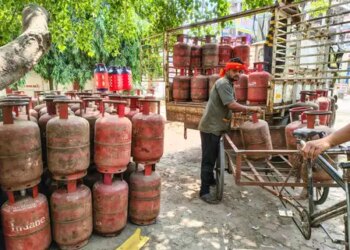
The crisis was further compounded by the six-week blockage of a key shipping route used by Gulf countries to export crude oil, natural gas and LPG, disrupting supplies to many importing countries, including India.
The disruption forced officials to give priority in gas allocation to critical sectors.
Highlighting the risks to an increasingly fragmented global order, Singh said a “decisive change” was taking place.
He said, “If the world becomes more deglobalized, we will face more problems.” He further said that India’s heavy dependence on imports makes it particularly vulnerable in such a scenario.
He stressed that boosting domestic production has become a “necessity” and called for aggressive exploration efforts.
He said, “Wherever there is oil or gas in our country, we must find it at all costs, because nothing will help in a crisis.” He also said that deep water exploration remains a challenge.
Singh also stressed the urgent need to increase strategic storage capacity to cushion against supply and price shocks.
“We have to solve this storage problem now, no matter what,” he said. Pointing to increasing volatility in global energy markets, he said refining economics have become increasingly unpredictable, and there have also been unusual instances where product margins have exceeded the cost of crude.
–IANS
abs/