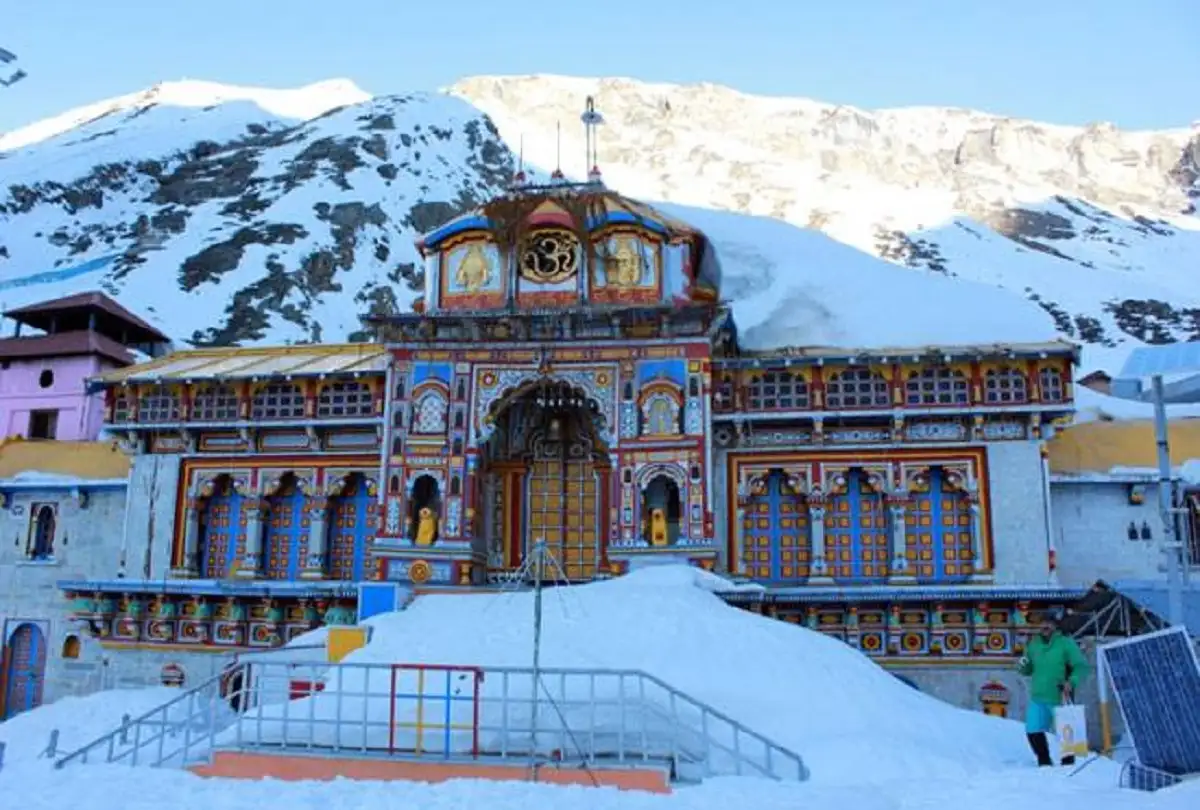
The doors of Badrinath Dham have opened for the devotees. The temple gates were opened for pilgrims today—April 23—at 6:15 am. With the opening of the doors, this year’s Char Dham Yatra has formally begun. It is worth noting that Badrinath Temple is also called ‘Vaikuntha on Earth’. This temple is dedicated to the form of Lord Vishnu known as ‘Badri Vishal’. According to legend, Lord Vishnu performed rigorous penance at this very place. In Hinduism, Badrinath is considered the gateway to salvation. So, let us now know about some mythological secrets related to Badrinath temple.
10 interesting facts about Badrinath Dham:
Blowing of conch is prohibited: Blowing of conch is considered strictly prohibited inside the Badrinath temple premises. Conch is not blown during worship in the temple. According to religious beliefs, Goddess Lakshmi was doing penance here at that time. Coincidentally, during that time Lord Vishnu had killed a demon named ‘Shankhachoorna’. Although in Hindu religion it is customary to blow the conch to celebrate victory, Lord Vishnu did not want to disturb Goddess Lakshmi’s penance; Therefore, he did not blow the conch. This is the reason why conch is not blown in Badrinath.
Garlands of *Van Tulsi* (Wild Basil): Tulsi (Holy Basil) is very dear to Lord Vishnu; However, in the Badrinath temple, instead of the usual Tulsi, garlands made of *Van Tulsi* (Wild Tulsi) are offered to Lord Narayana. This special variety of wild basil grows only at such high altitude places and has its own unique aroma.
Nar and Narayan: Badrinath Dham is situated on the banks of the Alaknanda River, nestled between two mountains named ‘Nar’ and ‘Narayan’. Here, the idol (Vigraha) of Nar-Narayan is worshipped. Idol of Lord Badrinath: The idol of Lord Vishnu (Shri Hari) in the Badrinath temple is carved out of a *Shaligram Shila* (fossilized stone) and is installed in the Dhyana Mudra (*Dhyana Mudra*) with four arms. It is said that whichever devotee comes to Badrinath Dham with a special wish in his heart, his wish is definitely fulfilled. The devotees who undertake pilgrimage to Badrinath Dham are always blessed by Lord Vishnu and Goddess Lakshmi.
**Temple gates remain open for six months** – Every year, the gates of Badrinath temple are closed to devotees for a period of six months. According to religious beliefs, Badrinath is worshiped as the eighth *Vaikuntha* (divine abode) of the universe; Here, Lord Vishnu remains in the waking state for six months and remains in the sleeping state for the remaining six months.
**Restoration of the idol by Shankaracharya** – According to legend, Shankaracharya discovered a black stone idol of Lord Badri Narayana—made of *Shaligram* stone—in the Alaknanda River. He originally installed it in a cave located near the hot springs of *Tapt Kund*. In the 16th century, the king of Garhwal shifted this idol to the present site of the temple.
**The doors of the temple are opened with three keys** – The doors of Badrinath Dham temple are opened not with any one key, but with three different keys; Moreover, these three keys are held by three different persons.
**’Ghantakarna’ – Protector of the Temple** – ‘Ghantakarna’ is considered as the gatekeeper (*Dwarpal*) of Badrinath Dham, who was a great devotee of Lord Shiva. His permission and worship is considered mandatory before the doors of the temple are opened. According to legend, Ghantakarna performed penance at Badrinath at the exact place where Lord Narayana did his penance. Pleased with Ghantakarna’s devotion, Lord Krishna later appeared before him and appointed him as *Kshetrapala* (protector deity of the area) of Badrinath Dham. **Future Badri** – According to beliefs, at the end of *Kaliyuga* (present era), when *Nar* and *Narayan* mountains will merge together, then the path to Badrinath will become inaccessible. After that, the worship of Lord Badrinath will be done at a place called ‘Bhavishya Badri’ located near Joshimath.
**Tapt Kund** – ‘Tapt Kund’ is located just below the temple, which is a natural hot water source. Despite the temperature outside being below zero, the water in this pond always remains warm—a miracle that is no less than a miracle.