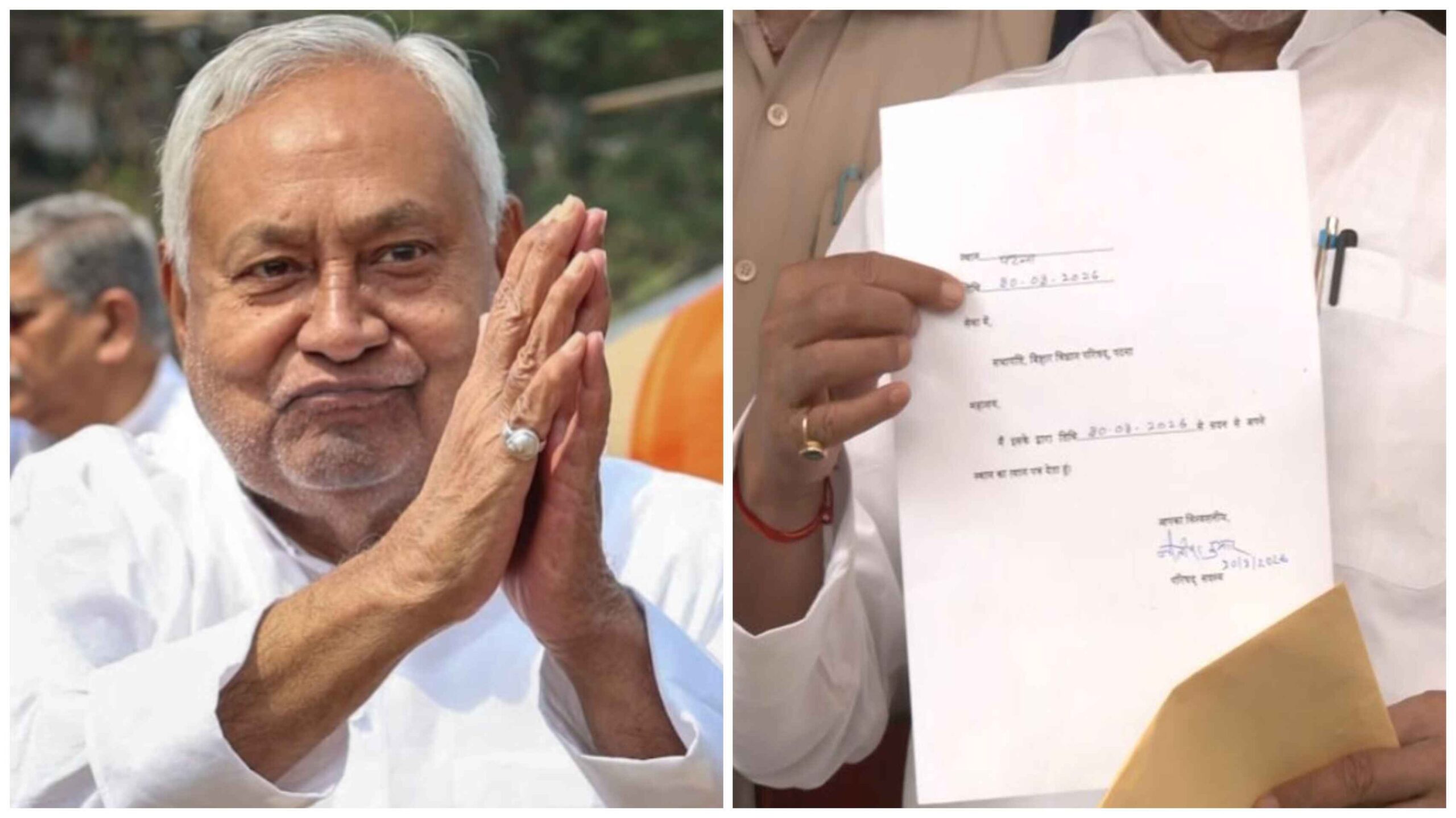
Bihar’s longest serving Chief Minister and Janata Dal (United) chief Nitish Kumar has resigned from the membership of Bihar Legislative Council (MLC).
Kumar, who was elected to the Rajya Sabha earlier this month, tendered his resignation from the state legislature as part of the process of change of power, a significant political development in the state.
On March 5, the 75-year-old leader had announced his decision by writing an emotional message. He expressed his strong desire to become a member of both the Houses of Bihar Legislative Assembly as well as the Houses of Parliament. He reiterated his commitment towards building a “developed Bihar” and assured his “support and guidance” to the new government.
The National Democratic Alliance (NDA) welcomed Kumar’s decision and hailed his return to parliamentary democracy.
A week ago, Chief Minister Nitish Kumar was unanimously elected as the president of Janata Dal (United) as no other candidate filed nomination for the post.
Nitish Kumar’s political career is a classic example of coalition strategy, marked by a series of ideological shifts.
Starting his journey as an MLA in 1985 and later serving as a Union Minister in the Vajpayee government, he first assumed the post of Chief Minister of Bihar in 2005 as a pillar of the NDA.
However, his tenure since 2013 has been defined by frequent changes in alliances, alternating between the BJP and the Grand Alliance (RJD and Congress) in 2013, 2017, 2022 and 2024. Despite these frequent changes, his political stability remains unmatched; Recently, he achieved a landslide election victory for the fifth time in 2025 and was sworn in as the Chief Minister for a record-breaking tenth time.
Kumar’s entry into the Rajya Sabha could bring about a major change in the political scenario of Bihar, increasing the influence of the BJP in the state and opening the way for a new leadership in Patna.