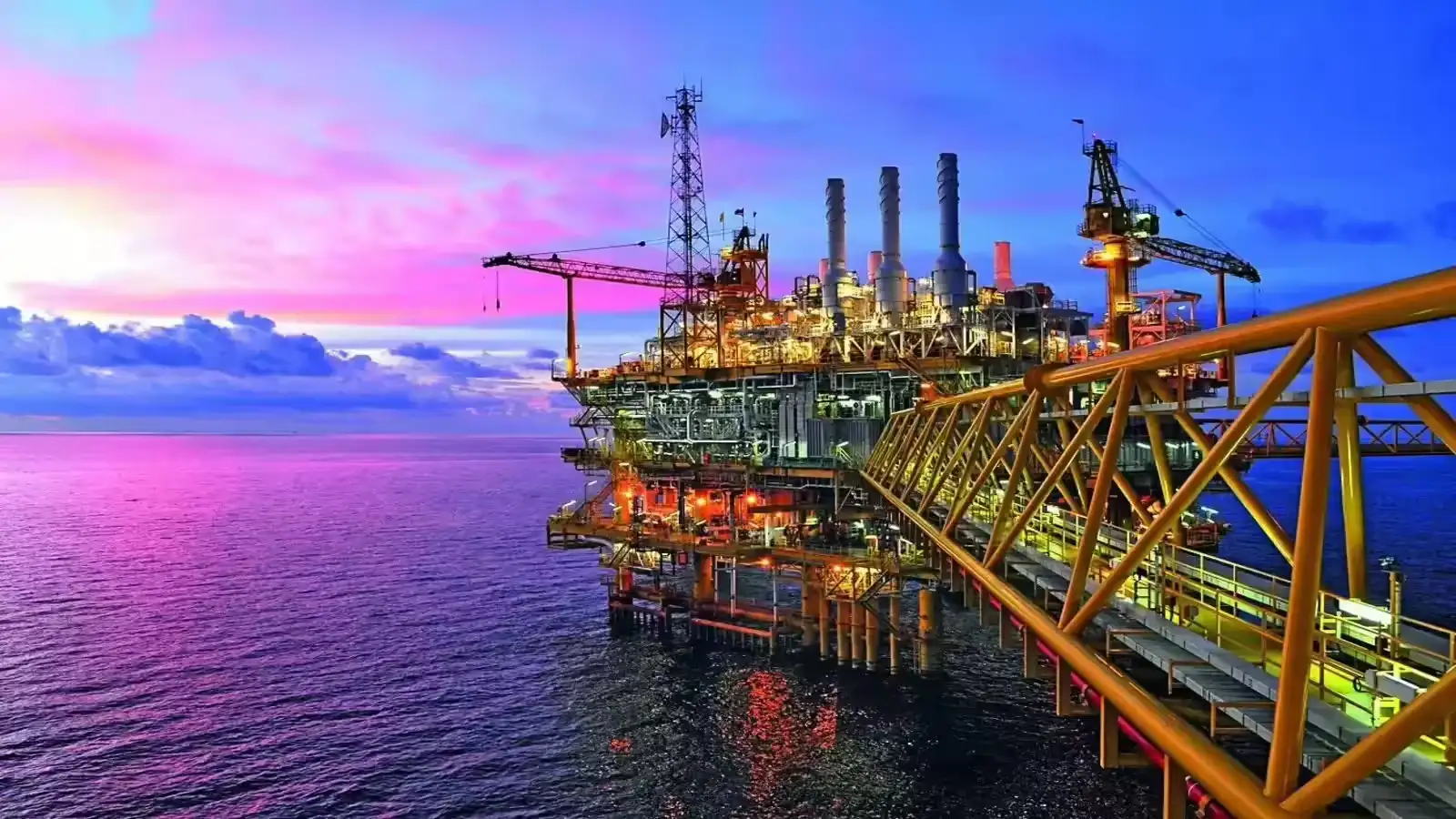
The ongoing conflict in the Middle East has made India understand the importance of being self-reliant in the matter of oil and gas. India is facing a serious energy crisis due to the blockage in the route passing through the Strait of Hormuz, due to which the prices of petrol, diesel, CNG and LPG have increased. India is now ready to reduce its dependence on imports. The work of finding underground oil and gas reserves has intensified, which has led to success in Rajasthan and Andaman Islands. Now a comprehensive plan has been prepared to locate these hidden resources.
Oil India Limited (OIL) has achieved major success in the Andaman Sea for the second time. The company has discovered natural gas reserves in an exploratory well named ‘Sri Vijayapuram-3’, about 15 kilometers off the east coast of the Andaman Islands. The government is excited by the discovery; This well was dug in approximately 355 meter deep water. Earlier, a new reserve of gas was found in the Dandewala area of Jaisalmer Basin in Rajasthan. The government has now intensified oil and gas exploration efforts, especially off the east coast of India.
36-month ‘multi-client’ oil mission?
The success in the Andaman Sea has boosted exploration activities on the east coast. This new exploration campaign includes the Mahanadi, Bengal-Purnia, Kaveri and Krishna-Godavari basins. The government is actively exploring oil and gas reserves in these basins on the east coast. A new deepwater survey is being planned, which will involve reprocessing old (legacy) seismic data, and companies are being invited to participate. This mission will mainly cover Mahanadi, Bengal-Purnia, Cauvery and Krishna-Godavari (KG) basins.
Major initiatives of the government for oil and gas exploration
The government is ready to invite bids in these areas for exploration of hydrocarbon reserves under the ground. For this, advanced imaging techniques will be used followed by a new broadband 3D seismic survey to be conducted under a multi-client model. This process will ease the reprocessing of old 2D and 3D marine seismic datasets. The entire work is expected to take approximately 36 months. The use of modern technology will provide clear images of rock formations under the sea, which will help in identifying potential areas containing oil and gas.
**Importance of East Coast**
There is a possibility of huge reserves of oil, gas and minerals on the east coast. There is great potential for hydrocarbons in the Mahanadi basin. Similarly, there is a good possibility of finding biogas and hydrocarbons under a 10 km thick layer of sediments in the Bengal-Purnia Basin. The Cauvery Basin is already an established area of petroleum production, and the government expects that there are still considerable unexplored resources there. Similarly, there is a possibility of finding gas reserves in the Krishna-Godavari (KG) basin. The government is planning to invite companies to invest in the exploration and identification of these gas and oil reserves, thereby reducing the initial cost burden on the government.
**Aim to reduce import dependence**
At present, India has enough oil and gas reserves to meet its needs for 76 to 80 days. The country is heavily dependent on imports – a dependency it now wants to end – as it seeks to achieve energy self-sufficiency.