New Delhi, June 13 (IANS). India’s external sector is much stronger than before and the country’s macroeconomic fundamentals are now better placed to withstand global shocks. Chief Economic Advisor (CEA) V. Ananth Nageswaran said this.
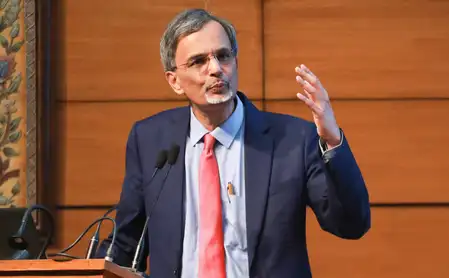
Speaking at the NDTV Ignite Summit, Nageswaran said the risks facing the external sector have reduced significantly. He said the Reserve Bank of India (RBI) is also less likely to feel pressured to use its foreign exchange reserves to handle the rupee.
He said that the most difficult period on the external front is now behind us. He attributed this improved situation to prudent economic management and timely policy interventions adopted during the recent global crises.
Endorsing the 6.6 per cent GDP growth forecast given by the RBI for the financial year 2026-27, Nageswaran said that despite global uncertainties, India’s economic situation is now more under control than before.
Talking about future prospects, Nageswaran said that to achieve the goal of ‘Developed India’, the country will have to maintain an economic growth rate of around 8 per cent for a long time.
However, he also said that if geopolitical tensions in West Asia persist for a long time or crude oil prices remain consistently above $100 per barrel, it could have an impact on economic growth and the growth rate could come down to around 6 percent.
On the topic of employment and technology, Nageswaran said that it is very important to create new employment opportunities around the rapidly growing Artificial Intelligence (AI) sector.
He said employees need to focus on developing skills that can work with AI and be less affected by changes caused by automation.
The Chief Economic Adviser said listed companies have started increasing investment, indicating an improvement in the private capital expenditure (capex) cycle.
Additionally, the rural economy is expected to support growth, and Nageswaran expressed a positive outlook for the upcoming kharif season.
He said increased water levels in reservoirs and better sowing conditions will support agricultural production, even as concerns remain over the possible impact of El Nino.
Meanwhile, stressing the need to prepare for AI, former NITI Aayog Chief Executive Officer (CEO) Amitabh Kant said AI will become a common technology in the future and India will have to create a strong talent base, big data resources, progressive policies and extensive digital public infrastructure to achieve global leadership in this field.
Kant described AI as a transformative force that could increase productivity on a larger scale than the advent of electricity and computers.
He said, “This will prove to be the biggest revolution ever.” According to Kant, on one hand the world is grappling with geopolitical conflicts and supply chain challenges, while on the other hand it is entering an era of unprecedented productivity growth driven by AI.
–IANS
DBP