This time the pace of south-west monsoon has been very slow across the country. Normally, monsoon reaches Uttar Pradesh by June 20, but this year it has not advanced on time. Rainfall has reduced in many places and scorching heat continues in some areas. According to the Meteorological Department and recent reports, rainfall across the country in June 2026 has been below normal, which may impact both agriculture and inflation. There are several reasons behind the slow pace of the monsoon: Western disturbances – weather systems originating from the west – are very active, while the system of winds bringing moisture from the ocean remains weak, hindering the advance of the monsoon.
According to the India Meteorological Department (IMD), rainfall in the first fortnight (early half) of June 2026 was about 25% to 32% below normal. This shortage has been seen more in some states, especially in Central and North India. Additionally, El Nino-like conditions in the Pacific Ocean can further weaken the monsoon, causing uneven rainfall patterns – with some areas receiving heavy rainfall and others receiving very little rainfall. Monsoon is delayed in Uttar Pradesh, Bihar and neighboring states; Normally rain reaches UP between June 18 and 23, but this year there has been a delay of 5 to 10 days. Rainfall in UP in the first part of June was about 32% less than normal, and in eastern UP the deficit was more than 50%. This is affecting farming, because June and July are the most important months for sowing of Kharif crops.
**Big impact on Kharif crops**
Indian farming is largely dependent on monsoon. Kharif season crops – such as paddy, pulses, maize, soybean, cotton and sugarcane – require a lot of early rainfall. If there is a delay in rains, farmers either postpone sowing or delay the process, which directly impacts the overall yield. Paddy is most affected because it requires a lot of water; If there is a prolonged lack of rain, paddy production may decline, which may subsequently increase rice prices. All these factors are deeply interconnected; If there is an imbalance in even one, others are also likely to be affected. **Pressure on pulses and edible oil**
Lack of rain also affects pulses. Crops like arhar, urad and moong are the main Kharif crops, and their production may decrease if there is less rainfall. India is already dependent on other countries for many types of pulses; Therefore, if domestic production decreases, imports will increase and international market prices will impact India as well. Similarly, soybean and other oilseed crops may also be affected, due to which the price of edible oil may increase.
Talking about domestic production, India produces 240 to 260 lakh tonnes, whereas the annual demand is around 300 lakh tonnes. Because of this, 40 to 60 lakh tonnes of pulses have to be imported every year. However, AFTA General Secretary Sunil Baldeva told CNBC Awaaz that India had imported more peas last year; Therefore, this time the total import of pulses may be only 20-25 lakh metric tonnes. But the problem is that these figures are based on data of those years when the monsoon was good. There was good rainfall at that time, but if the behavior of monsoon remains uncertain this time, the production may decrease. How much this decline will be remains to be seen, but the market will certainly react to this sentiment, which could lead to price fluctuations.
**Impact on sugarcane and sugar prices**
Sugarcane is a crop that requires a lot of water. If there is less rainfall in major producing states like Uttar Pradesh and Maharashtra, sugarcane production may decline. Decline in sugarcane production means:
low sugar production
Increase in prices of sweets
Increase in cost of biscuits, soft drinks and packed food
Possible increase in prices of vegetables and fruits
The effects of low rainfall and extreme heat are not limited to grains only. Tomato, onion, potato and green vegetables are perishable crops. If there is a delay in rains, the supply chain becomes weak, due to which the prices of vegetables are likely to increase in the market. Past trends show that late monsoons often lead to sudden increases in prices of tomatoes and onions.
**Impact on milk and dairy sector**
Lack of rain may lead to shortage of green fodder for animals, leading to decline in milk production. Its results include:
Milk prices may increase
Prices of curd and ghee may increase
People’s income may increase in rural areas
These effects may take some time to appear, but they may last for a long time.
**Why does inflation increase?**
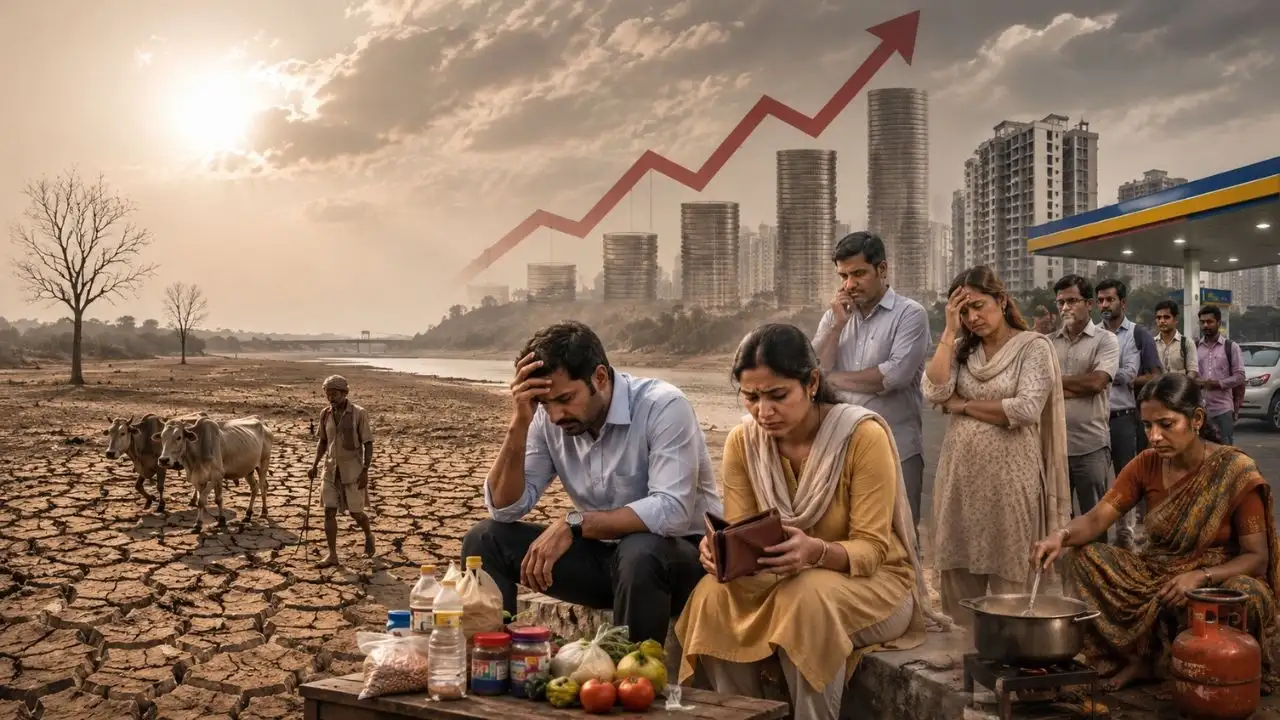
In India, food items constitute a major component of the Consumer Price Index (CPI). When prices of grains, vegetables, milk and pulses rise, overall inflation also rises. Bad monsoon not only hurts farmers but also affects the entire national economy; In rural areas, people’s income decreases and their purchasing power in the market decreases.
**Is the situation serious?**
Right now many experts say that there is no need to panic. The monsoon has not stopped completely; Its speed has just slowed down. The rains are expected to intensify in early July. If there is good rainfall in July, the Kharif crop can be recovered to a great extent. Moreover, the country’s irrigation infrastructure and grain reserves are better than before, which helps in handling the situation. Although this is not a huge crisis right now, it is definitely a warning. The rains in the coming weeks will decide whether inflation will increase or there will be relief.