Tension in the Gulf region has recently reduced after talks between the US and Iran in Switzerland. During this agreement, America appeared to be left behind, while Tehran was successful in getting its conditions – whether it was relaxation of oil sanctions, maintaining its dominance over the Strait of Hormuz, or releasing of frozen funds of $ 12 billion. Iran was successful in agreeing terms for peace talks with the US. The US has given a 60-day relaxation in sanctions on the sale of Iranian oil and petrochemical products. This is expected to increase the availability of Iranian oil in the market, but will it reduce oil prices? Will oil companies reduce the prices of petrol and diesel?
How will India benefit from this?
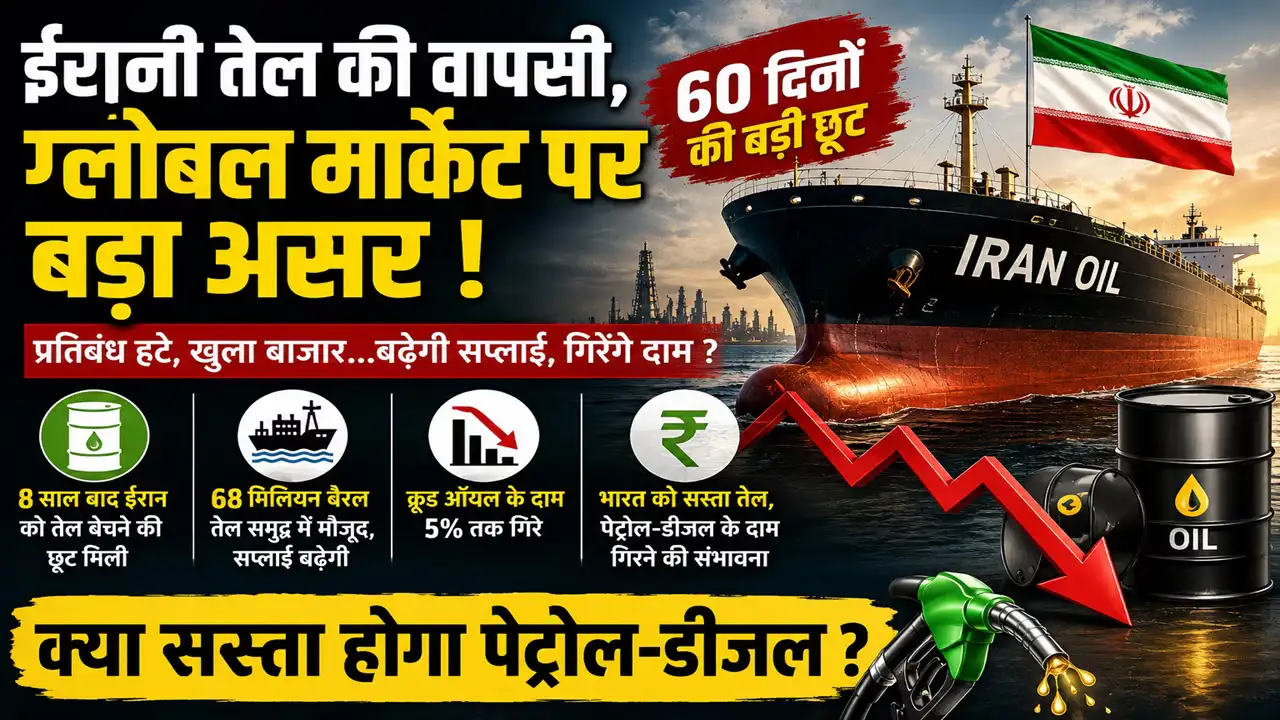
The US has lifted sanctions on the production, delivery and sale of Iranian crude oil and petroleum products for the next 60 days. After eight years, Iran has received permission to sell its oil on the open market. The US had imposed sanctions on Iranian oil in 2018. This exemption will increase the reach of Iranian oil in the global market. Countries like India and China will be able to buy oil from Iran without any restriction, which means that Iranian oil will be available in the market.
How much oil reserves does Iran have?
Iran has huge reserves of crude oil, which are approximately 208 to 209 billion barrels. Iranian oil accounts for about 11.8% to 12% of global oil reserves, making it the country with the third largest oil reserves in the world. Due to its chemical composition, Iranian oil is in high demand in refineries. Apart from the chemical composition, its import is also beneficial. Factors such as import conditions, trade concessions and low shipping costs can make Iranian oil a strong competitor to other sources. China has been the largest importer of Iranian oil.
What impact will Iranian oil have on the global oil market?
Iranian oil will be sold openly in the global market. The availability of crude oil will increase with the arrival of Iranian oil in the market. Increasing supply leads to lower prices, as is being seen today; Crude oil prices have fallen by 5 percent in the last two days. The price of Brent crude fell below $78, while West Texas Intermediate (WTI) crude fell 2.7 percent to $73 a barrel. This market reaction suggests that the waiver on Iranian oil exports is likely to increase global supply and lower prices.
How will India benefit from the exemption on Iranian oil exports?
The concession on Iranian oil exports gives India access to the world’s third-largest oil and natural gas reserves. Temporary relaxation in US sanctions will increase energy supply in the global market. Indian refineries are well suited to process Iranian oil. Buying oil from Iran is both convenient and economical; Procurement costs, shipping costs and import time are all low. These things give great relief to India. Historically, India has sourced 60 percent of its total oil imports from the Gulf countries, with large consignments reaching Indian shores via the Strait of Hormuz. Before 2018, the share of Iranian oil in India’s total oil imports was 11.5 percent. Iran’s light and heavy crude oil is very good for Indian refineries. The important thing is that this oil was available to India at good prices and easy payment terms. Now that the sanctions on Iranian oil exports have been lifted, it will become easier for India to get oil supplies.
Will the prices of petrol and diesel reduce?
According to Kepler data, about 68 million barrels of Iranian crude oil is currently present in the sea in the form of floating storage or transit cargo. Data from Vortexa firm shows that 80 percent of this oil is not linked to any pre-existing sales contract. With the easing of restrictions, Indian refineries can buy this oil. Due to increase in oil supply and decrease in crude oil prices, the prices of petrol and diesel may come down. Moreover, Indian refiners have a chance to negotiate good terms with Iran. Since sanctions on Iranian oil have been temporarily lifted – while the EU and the UK have maintained their sanctions – issues related to insurance, financing and shipping for oil imports from Iran are still unresolved. Many ports are still hesitant to accommodate “dark fleet” Iranian ships, making India the closest destination for these ships. As a result, Indian refiners can leverage their position to negotiate and buy Iranian oil at lower prices.