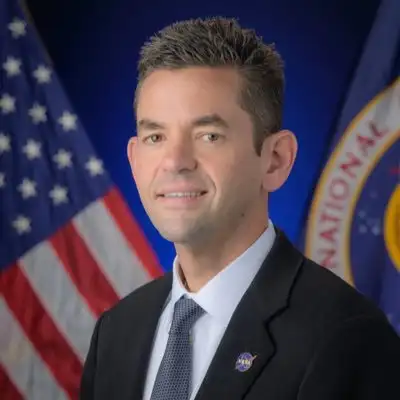
Washington, July 6 (IANS). NASA Administrator Jared Isaacman has said that America is once again competing with China in the race to send astronauts to the Moon again. He warned that now this competition will not be decided in years but in months, because both the countries are rapidly advancing their plans to establish permanent presence of humans beyond the Earth.
In an interview on CBS’ “Face the Nation” to mark the 250th anniversary of America’s independence, Isaacman said there should be no doubt that Beijing intends to land astronauts on the Moon, so it is important for Washington to act quickly.
He said, “There is no doubt about it. Like, we are in the space race right now and the Chinese are moving very fast. The Chinese will land their taikonauts (a special name given to China’s astronauts) on the moon. There is no doubt about it. The question is, will America come back before them?”
Isaacman said the Trump administration has made lunar exploration a national priority by making a historic investment in NASA’s Artemis program.
“We’re going back. It would be awesome,” he said. He added that Artemis III is planned for next year and will be followed by Artemis IV in 2028, when astronauts are expected to land on the lunar surface after testing the new landing system in Earth orbit.
Regarding the strategic challenge posed by China, Isaacman said, “They said that before 2030, we are saying that we are targeting the landing at the end of 2028. This is a time of months, not years.”
In addition to returning astronauts to the Moon, NASA’s long-term goal is to establish a permanent presence on the Moon that would serve as a stepping stone to future missions to Mars.
Isaacman said infrastructure for a moon base would begin arriving as early as 2027. He said that by 2028, astronauts should already have the stuff they need on the moon, including a Lunar Terrain Vehicle and the beginning of permanent infrastructure.
“In the early 2030s, the Moon will be like the International Space Station. You will have crews that will stay there for a very long time as we learn in that environment and prepare for Mars,” he said.
The NASA chief also defended the growing role of private companies in America’s space program, saying that commercial launch providers have changed the economics of space exploration.
Referring to an experimental mission to save NASA’s aging Swift space telescope, he said much cheaper commercial launches could extend the life of scientific missions that previously required costly replacements.
Isaacman also expressed concern over delays following the recent launch failure of Blue Origin’s New Glenn rocket. He said that NASA is helping the company with the investigation and ensuring that work on future lunar missions continues.
“They’ll figure it out. NASA is here to help,” he said.
The Artemis program is NASA’s biggest effort to send humans back to the Moon for the first time since the Apollo era. Unlike the Apollo missions, Artemis aims to establish a sustained human presence on the lunar surface through international partnerships and commercial space companies and ultimately send astronauts to Mars.
–IANS
KK/PM