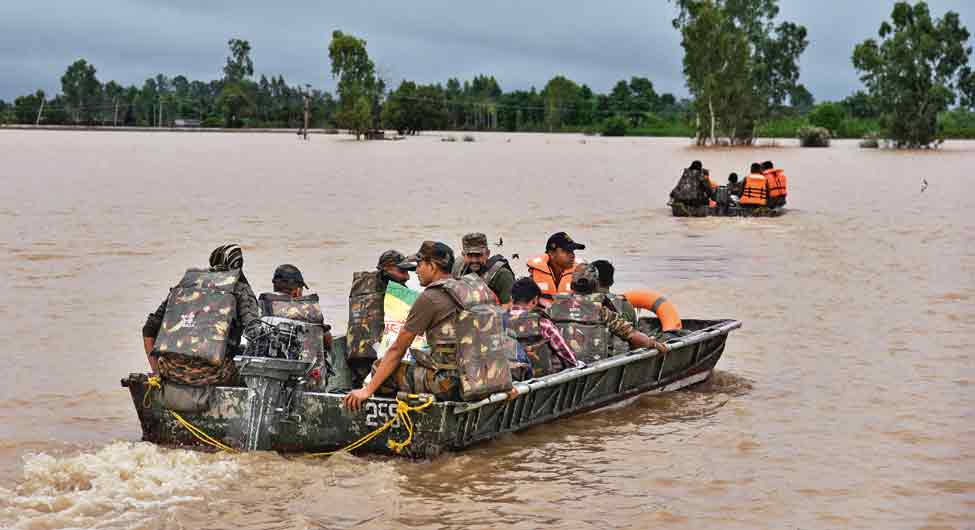
In the last few years, the problem of water logging in many metros of the country including Delhi has taken a formidable form. Prior to every monsoon, officers claim to arrange drainage, which prove hollow in minutes of rain.
Once upon a time, the problem of water logging was considered to be the tragedy of small cities. Consoling the problems related to it during the monsoon year after year and even after several weeks, it became the destiny of the residents there. Still nothing has changed. Today, due to indiscriminate urbanization in the era of globalization, the situation became more frightening today. However, the problem of water logging is no longer only to small cities. There was a time when this problem was not in the metros. At that time, it was generally understood that floods and water logging only disturb the alleged backward states like Bihar and Assam every year, the cities of the big and developed states remain untouched by it and will remain, because there are better arrangements for civil facilities and urban development. However, looking at the recent pictures, it can be said that at least the distance of big and small cities in this case has been erased.
In the last few years, the problem of water logging has taken a formidable form in many metros of the country including the capital Delhi. Every year before the monsoon, the officials of urban bodies claim to make strong arrangements for drainage, which prove to be hollow in a few minutes of rain. Today, in every big city, normal life gets disturbed due to water logging. The recent rains in Gurugram, Haryana, adjacent to Delhi, wreaked havoc, it was unexpected. In long queues, vehicles were stuck in traffic for hours.
Significantly, the fame of Gurugram is in the form of a very modern city, which is called ‘Millennium City’. There are many modern amenities present there, but in the same strong rains, it was opened to become very modern. This metropolis may have multi-storey offices of multinational companies, expensive residential areas, magnificent shopping malls, cyber city, but in terms of water logging, he also had to face the same problems, which was only in the fate of people settled in the small town.
In the eighties, when there was water logging in residential areas like Juhu and Vile-Parla in Mumbai, it was realized for the first time that the drainage system there was needed to repair according to the growing population. The country’s rich urban body Brihanmumbai Municipal Corporation (BMC) then tried to get rid of this problem. But even today there is a long water logging in many areas after rain. This story is more or less of all the big cities in the plains.
Can only nature be held responsible for this or are such problems man -made? In the last few years, there has been an unpredictable increase worldwide in excess rainfall, interpretation or cloudburst, the root cause of which is playing with nature. Trees are being brutally cut off in craze for urbanization and expressways are being built by cutting the mountains so that more and more tourists can be improved. New towns and city are being settled randomly without making proper arrangements for drainage. All these adverse effects are bound to fall on the environment and common life.
Water logging is not the only major problem of big cities. There is a tremendous pressure of the growing population on the resources available there. Ever since independence, due to lack of adequate system of living in villages, people started traveling on a large scale towards metros, where large industries were set up. All the necessary facilities and resources were present there. It was easy to send the goods prepared from there to the rest of the country. Because of this, the development of the industry took place around the metros. For this reason, due to the arrival of a large number of workers, the pressure on the system there increased. Even today, millions of people turn to metros in search of employment. Due to increasing population and limited resources, it is not possible for municipal corporations and other urban bodies to improve infrastructure according to the needs of changing times, so that preparations are kept for solutions to any problem. In recent years, an attempt was made to create a ‘smart city’ in the country, but the results were not seen which was expected. Seeing the condition of Gurugram, it seems at least the same.
Obviously, policy makers need to think seriously about the permanent solution to these problems. If there is a long mess with nature, then nature will also start messing with us, which people of both big and small cities will have to be filled.