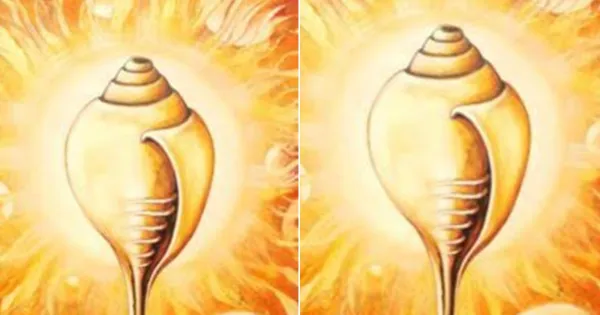
In Hindu religion, conch is considered very sacred, auspicious and provides wealth and health. Any puja, aarti, havan or yagya is started and concluded with the sound of shankha. It is believed that the sound of conch purifies the environment and destroys negative energy. According to mythology, Lord Shiva had killed a demon named Shankhchud. For this reason, use of conch shell in Shiva worship is considered prohibited.
Even Rudrabhishek is not performed on Shivalinga with conch water. On the other hand, the conch was the eighth gem among the 18 gems that emerged from the churning of the ocean and Goddess Lakshmi also appeared from the same churning. That’s why conch is called Lakshmi’s brother. Conch has a special place among the four weapons of Lord Vishnu – conch, chakra, mace and padma.
From a scientific point of view, conch is a marine creature of the mollusk class. Mussel, snail and cowry are also creatures of this class. These are found in the sea, Kailash Mansarovar and some mountain reservoirs. After the death of an organism, its hard shell is obtained in the form of a conch. However, at many places it is said that conch shells should be removed from living beings as well, which is not considered appropriate. Mainly three types of conch have been described – Dakshinavarta conch, Ganesh conch and anti-clockwise conch.
Among these, the Dakshinavarta conch is considered the best. Lord Krishna’s famous Panchjanya conch was Dakshinavarta, which he used in the Mahabharata war. The name of Arjun’s conch was Devdutt, Yudhishthir’s Anantvijay, Bhima’s Paundra, Nakul’s Sughosh and Sahadev’s Manipuspak. The conch of Bhishma Pitamah has been called Ganganad. Apart from this, many types of diamond conch, pearl conch etc. are also described. The conch should be kept wrapped in red or yellow clean cloth in the puja room.
It is considered appropriate to wash it with clean water before use. In the houses where puja is performed daily, along with the idols, the conch shell is also worshiped with incense, lamp and naivedya. It is said in the Puranas that in the house where the conch is kept, there is health, prosperity and permanent residence of Goddess Lakshmi and there are less disputes. According to folk beliefs, it is said that women should refrain from blowing the conch.
It is also believed that blowing conch regularly benefits the lungs, heart and respiratory system of men and strengthens the nerves. However, these claims are not fully confirmed by modern medicine. Blowing conch at night is also considered taboo.
There is no tradition of blowing conch in Badrinath temple. It is believed that when Goddess Lakshmiji was doing penance in the form of Tulsi, Shankhachud was killed at the same time. To avoid any hindrance in his penance, conch is not blown there. It is also believed that blowing the conch when there is fear of loud thunder or lightning reduces fear. Both conch and cowry are considered extremely sacred in Hindu tradition. A broken conch shell should never be kept in the house. Both real and fake conch shells are available in the market, hence it is necessary to identify them correctly while purchasing.