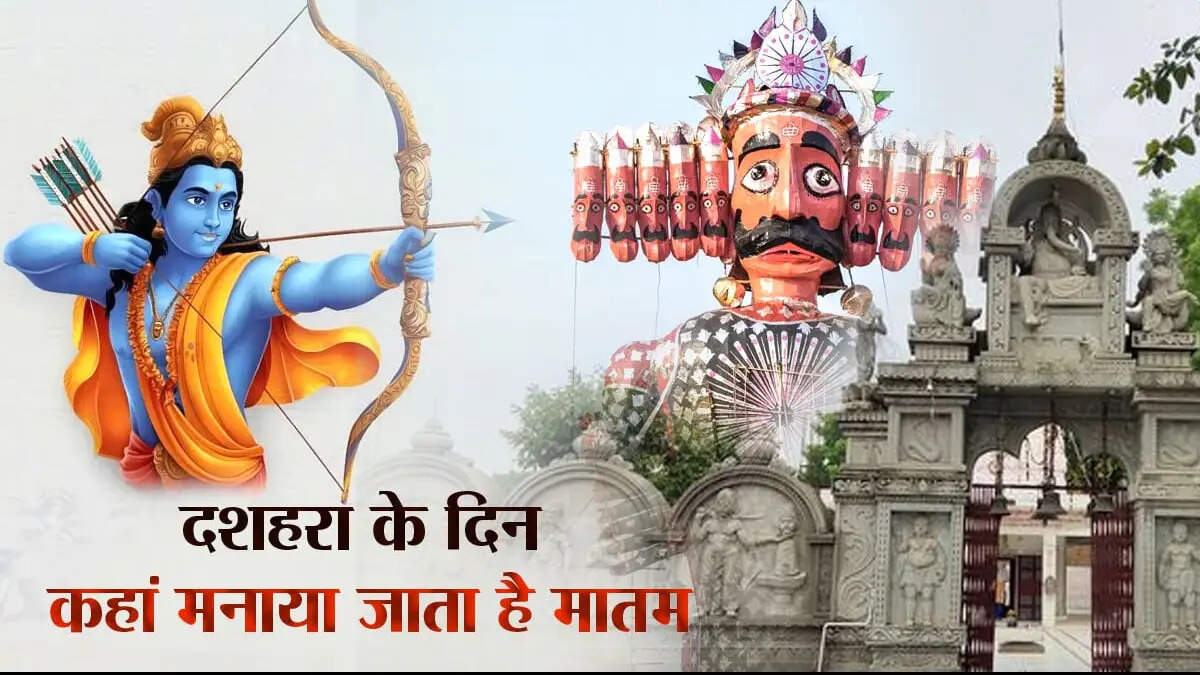
The festival of Dussehra holds special significance for Sanatan Dharmavalambi and it is celebrated with great pomp across the country. On this day people celebrate the victory of good over evil. According to mythology, Lord Rama killed Ravana on the Dashami date of the Shukla Paksha of Ashwin month in the Treta Yuga and protected Sita. Since then, the festival of Dussehra or Vijayadashami was celebrated on this date. On this day people worship Lord Rama and burn the effigy of Ravana at night. However, along with the effigy of Ravana, his brother Kumbhakaran and the effigies of son Meghnad are also burnt. This year Dussehra will be celebrated on Thursday, 2 October 2025. However, there is a village in Uttar Pradesh where the effigy of Ravana is forbidden because he was born there. Let’s learn about this village.
Celebrating Dussehra is punishable
Bisarkh village located in Gautam Buddha Nagar in Uttar Pradesh is considered the birthplace of Ravana. Dussehra or Ramlila is not celebrated here. The people of Bisarkha believe that whoever tries to celebrate Dussehra here is cursed. By doing this, they insult Ravana, for which they get punished.
A Shivling is also installed
There is also a temple dedicated to Lord Shiva in Bisarkh village. According to religious belief, Ravana’s father Rishi Vishwashrava himself established an octagonal Shivling here, which was worshiped by Ravana and his brother Kubera. It is also said that Ravana offered his head on this Shivling to please Lord Shiva, after which Lord Shiva gave him a boon of ten heads.
Apart from the Shivling installed by the sage Vishwashrava, there are also idols of Lord Shiva, Goddess Parvati, Kartikeya and Lord Ganesha. This temple also has an idol of the sage Vishwashrava, which is worshiped daily with religious rituals.
The name of Bisarkh village also holds special significance.
Villagers believe that Bisarkh village is named after Ravana’s father Rishi Vishwashrava. The sage Vishwashrava resided here for a long time and did harsh penance to please the deities.