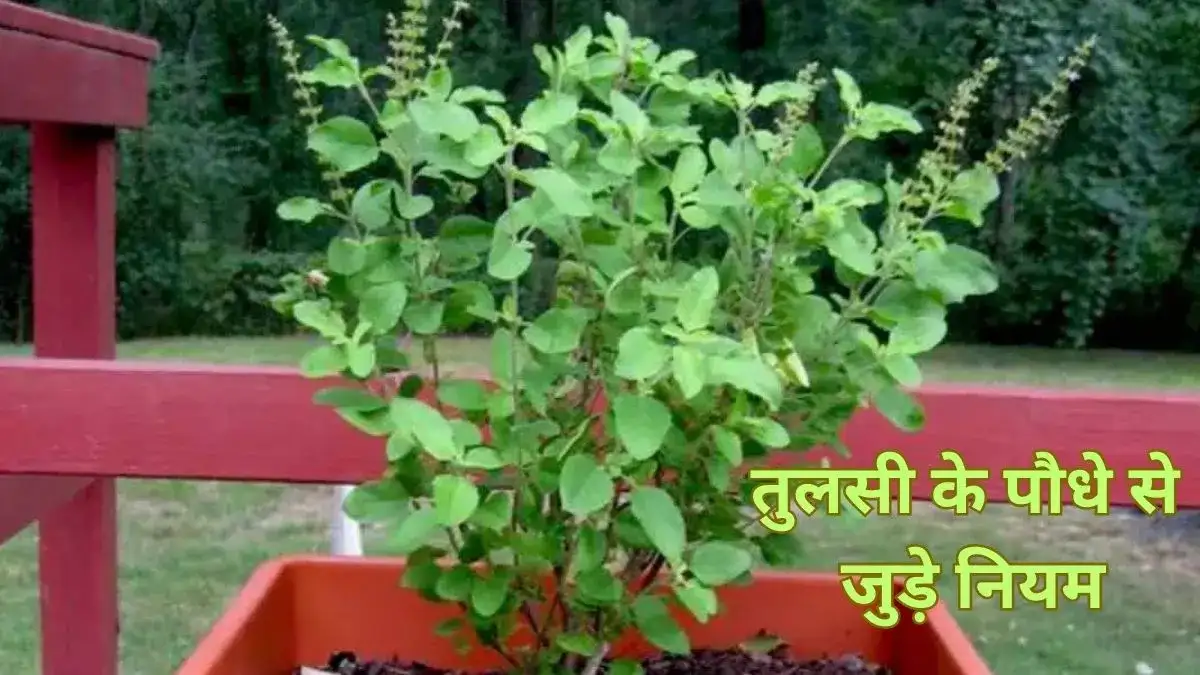
In Hinduism, Tulsi is considered a symbol of faith and devotion. Planting Tulsi in the courtyard of the house is associated with happiness, prosperity and purity. According to religious beliefs, Tulsi is considered the abode of Goddess Lakshmi. This is very dear to Lord Vishnu. This is why people plant Tulsi in their homes and worship it regularly. It is believed that a Tulsi plant planted at the right place and in the right direction brings positive energy and peace to the house.
Avoid planting Tulsi in the south direction
According to Vastu Shastra, the south direction of the house is not considered auspicious for the Tulsi plant. According to religious beliefs, this direction is associated with ancestors. Therefore, keeping Tulsi here is likely to increase tension, financial difficulties and health problems among family members.
South-west direction is also considered unsuitable
According to Vaastu beliefs, the south-west direction is considered to be under the influence of Rahu. Therefore, planting Tulsi at this place can weaken the positive energy of the house, and can also create obstacles in work, anxiety and mental stress.
Avoid keeping it in a dark or closed place
Tulsi plant requires sunlight and open air to grow properly. If it is kept in a place where there is not enough light and air, the plant may gradually weaken. It is believed that this can also increase negativity in the home environment.
Avoid keeping Tulsi near Lord Ganesha
In religious traditions, Tulsi is not used in the worship of Lord Ganesha. Therefore, it is advisable to avoid keeping the Tulsi plant near the idol of Lord Ganesha or his place of worship. It is considered inauspicious to do so.
keep basil plant clean
Tulsi is considered a sacred plant, hence it is extremely important to maintain cleanliness around it. Things like garbage, dust, soil, shoes, slippers or broom should not be kept near it. Apart from this, planting thorny plants near the Tulsi plant should also be avoided.
Most auspicious direction for Tulsi plant
According to Vastu Shastra, planting a Tulsi (Holy Basil) plant in the north-eastern corner of the house—also known as ‘Ishaan Kon’—is considered extremely auspicious. Apart from this, Tulsi can also be planted in the courtyard, balcony or any open space of the house. When placed in the right direction, the Tulsi plant is believed to increase positive energy and prosperity within the home.
Other Vastu instructions related to Tulsi
Offering water to the Tulsi plant daily and lighting a lamp (*diya*) near it is considered auspicious.
Lighting a lamp near the Tulsi plant in the evening is believed to increase positive energy inside the house.
Any dry or withered leaves of the basil plant should be removed from time to time.
One should avoid plucking basil leaves on Sunday and *Ekadashi*.
It is considered beneficial to always maintain a calm and sacred environment around the Tulsi plant.