
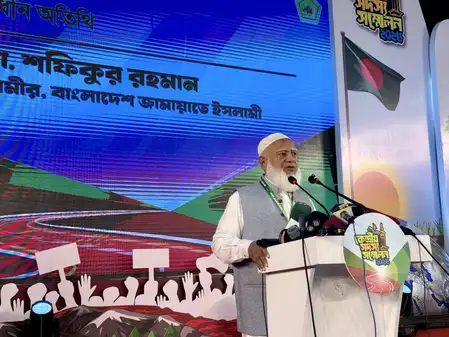
Male, February 11 (). Bangladesh’s radical Islamic party Jamaat-e-Islami’s recent statements and election manifesto have projected an inclusive and protective image of women, but there appears to be no real change in its long-standing conservative thinking. This claim was made in a report on Wednesday.
According to the report of ‘Maldives Insight’, the Jamaat promises to provide representation and protection to women, but the absence of women in leadership positions, not fielding any female candidates in the elections and the rhetoric that confines women to the domestic realm weakens its claims.
The Jamaat’s ambiguous stance on Shariat laws also indicates that its vision of women is still based on isolation and subordination, and not on genuine empowerment, the report said.
According to the report, “The question of women’s empowerment has always been fraught with contradictions in Islamic movements and Bangladesh’s Jamaat-e-Islami is a clear example of this. On the surface, the party’s recent election manifesto talks about inclusivity and promises representation of women and ethnic and religious minorities in government. But when seen in the context of the party’s past stance and behavior, these promises appear to be more symbolic steps than actual gender equality.”
The report said that in election meetings, Jamaat leader Shafiqur Rehman has repeatedly called the “safety and dignity” of women a priority. He assured that women will be safe “at home, on the road, at work and everywhere else.” The manifesto also includes announcements like safe work environment, reduced working hours during maternity, special bus services for women, CCTV cameras and emergency helplines.
However, the report says these promises focus more on protection rather than empowerment, reinforcing the perception that women are being seen as a vulnerable group to be protected rather than active public participation.
The report also underlined that Jamaat-e-Islami has not given ticket to even a single woman candidate in the upcoming elections. This raises questions on the claim of giving representation to women in the cabinet. The party leadership has also made it clear that women cannot hold the highest positions.
—
dsc