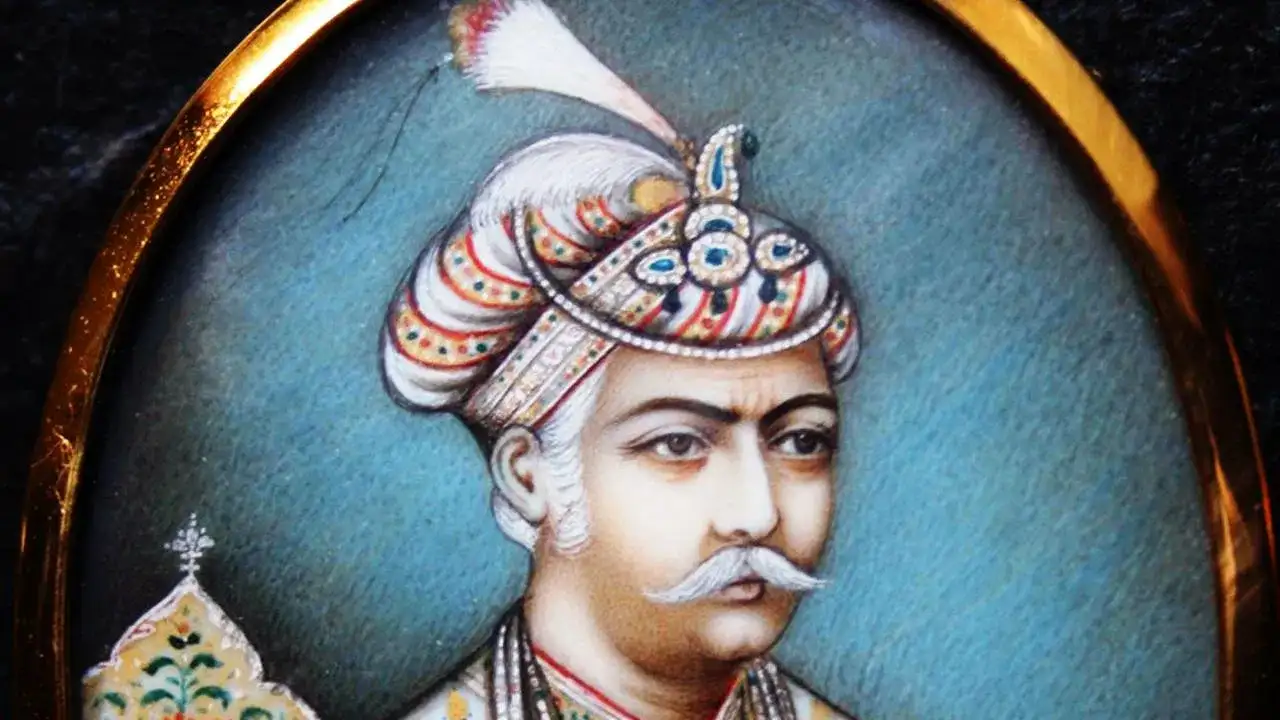
The Mughal Empire is an important chapter in Indian history. Emperors like Akbar, Jahangir, Shahjahan and Aurangzeb left a deep impact not only politically and militarily, but also administratively and culturally. In today’s democratic India, when we hear words like election, vote and public representative, the natural question arises: Were elections held even during the Mughal period? If yes, what was their nature and to what extent were they different from today’s elections? In the light of the ongoing elections in Bihar, let us analyze the Mughal political and administrative system, how elections were conducted and the process of entry into the Mughal Empire.
The Mughal Empire was originally a hereditary monarchy. The emperor was the center of power, whose legitimacy was believed to rest on three major grounds: his connection to the Timur and Genghis Khan dynasties, which legitimized him as a natural king; his acquisition of power through military conquest; And in a conquered state, the rule of the victorious ruler was considered to be the result of divine will.
Islamic political thought and Persian tradition combined to call the emperor Zillah-i-Ilahi, meaning “Shadow of God”. Such a system lacked the concept of popular elections or universal suffrage in the modern democratic sense. Neither was the king elected by popular vote, nor were there elections for any kind of legislature.
Succession and selection
The most controversial issue in Mughal history was who would inherit the throne. There was never any strict rule that only the eldest son would inherit the throne. Civil wars often broke out between princes for power. There are many examples of this recorded in history. After Akbar, his sons struggled, but ultimately Jahangir ascended the throne. Shah Jahan’s succession to the throne was relatively peaceful, but the road ahead was filled with bloodshed. The conflicts between Shah Jahan’s sons, Dara Shikoh, Shuja, Murad and Aurangzeb clearly demonstrated that the Mughal succession was often decided by the force of the sword and not through legal election.
It is true that court nobles, governors and high officials could support a prince, providing him financial and military assistance. In a way, it was a politics of balance of power and support, but it cannot be called an election in the modern sense. Here the voters were not the masses, but the army and the elite class (elite and elite). Support was based on personal loyalty, profit, communal and provincial interests, or future political aspirations. Thus, although the term “selection” may apply to Mughal succession conflicts, it was not a democratic election, but a power struggle.
Importance of Subedar and Mansabdar in administrative structure
The administration of the Mughal Empire was highly organized. Akbar established the Mansabdari system and the Suba-Government-Pargana-Village system. The entire empire was divided into many provinces. Each province was headed by a governor, appointed directly by the emperor. Under the Governor were Diwan, Faujdar, Qazi and other officers, who were also appointed from above.
Appointments to these posts were based on the emperor’s orders and court recommendations rather than regional elections. Below these were parganas and villages. Government officials like Shikdar (head), Kanungo (law maker) etc. were appointed within the pargana. Due to the land system at the village level, some positions became almost hereditary, such as Mukhiya (Mukhiya), Patwari (Patwari), or leading member of the Panchayat. In villages, depending on folk traditions and community consensus, there was sometimes a tradition of recognizing a person as a head. It was a form of community selection, but it cannot be considered as written, universal and organized like regular elections. This practice was based primarily on caste, community, wealth and land-ownership, and not on the equal opinion of all adults. Therefore, even at the administrative level, there was no structured form of election.
Local Panchayats and Community Decisions
Historical evidence shows that before and during the Mughal period, gram panchayats and caste councils were an important part of community life in Indian villages. These Panchayats took decisions related to land, water, pasture, religious rituals and social disputes. To resolve disputes, arbitrators were appointed, who received the consent of the community.
Sometimes, a capable person within the community was accepted as the head, sarpanch or panch. This approval resembled some sort of informal selection process, such as selection based on the advice of elders, selection based on the consent of influential families, and community loyalty to a particular individual. However, these decisions were not based on written ballots, vote counting or any fixed period of election campaigning. These decisions were often taken through meetings behind closed doors, verbal agreements, and social pressure. Therefore, a kind of consensus-based leadership selection process is found in Gram Panchayats, but historically it would be inappropriate to call it democratic elections.
Elections in religious and intellectual institutions
There are some examples in history where limited selection is seen in religious or Sufi institutions, such as Sajjadanshin of Sufi orders. The successor to a Khanqah or Dargah was often chosen from within the family. Often, elders and disciples were consulted to decide who would be entrusted with spiritual leadership. Madrasas and Qazis were sometimes appointed with the consent of local scholars and elites. However, the final appointment power rested with the Emperor or the Governor. These examples clearly demonstrate that there were limited consultation and selection processes in religious and intellectual institutions, but not any form of public election related to governance.
Difference between Mughals and modern democracy
When comparing today’s democratic India and the Mughal Empire, we should consider several important points. Under the rule of the Mughals, there was no provision for voting at any level for all adult citizens, irrespective of class, caste, religion or gender. Most of the power was concentrated in the hands of the emperor. There was no formal representation of the general public in the decision making process. A democratic system in today’s sense is based on a balance between the Constitution, legislature and judiciary. Under Mughal rule, Sharia, fatwas, customs and the Emperor’s Jusla-e-Amri (royal decrees) together made up the law, but there was no structure like a representative body (Parliament or Assembly). Thus, it is clear that there were no elections in the modern sense during the Mughal period.
Still, did public opinion play any role?
Although formal elections were not held, this does not mean that public sentiment and public opinion were irrelevant. If the tax policies were too harsh, they would have reacted in the form of peasant rebellion, Jat-Bundela rebellion, Maratha conflict, etc. This was such a form of public discontent that the emperor could not ignore.
When Akbar adopted a policy of reconciliation and tolerance, he received widespread public support. On the contrary, Aurangzeb’s harsh religious policies increased discontent among various classes. The court often gauged the mood of the public in the capital and major cities. Sometimes, this public opinion was the driving force behind policy changes, tax cuts, or liberal governance, even if it was not formally expressed through voting.
Thus, if one asks whether elections were held during the Mughal period, the historically accurate answer would be: no. There were no elections in the modern sense during the Mughal period. Although there were some limited and informal traditions of leadership selection, consultation and consensus at various levels of society, they cannot be compared with democratic elections today.