There is a shortage of fighter jets in India. It is also true that there are enemy countries like China and Pakistan all around us. However, this does not mean that India has compromised on its security challenges. Buying fighter jets is a complex process that involves many things, so India is currently facing some difficulties in this matter. Overall, time is not in India’s favor in terms of fighter jets. However, it is not that due to this shortcoming India has neglected its security preparedness. Security experts say that China and Pakistan are modernizing their air forces very rapidly. The Chinese Air Force fleet now includes the fifth-generation J-20 fighter jet, and production of another fifth-generation jet, the J-35, has also begun. Apart from this, China is ready to provide its J-20 fifth generation fighter jets to Pakistan. In contrast, India is currently dependent on 4th and 4.5 generation jets, and these too are not available in sufficient numbers; The chances of getting fifth generation jets are very less.
No period of traditional war
Looking at this situation, you might feel that India is somehow dealing with its security challenges. But you would be wrong. The conflicts between Iran and the US, as well as Russia and Ukraine, have shown the world that this is not a time of conventional war. India had shown a similar approach during ‘Operation Sindoor’ last year; This strategy forced Pakistan to surrender in just 72 hours. Today we will not go into the details of that incident, because our focus is somewhere else.
Direct offer from Iran! Will India buy crude oil from Iran again?
In fact, our old ally Russia has handed over a secret weapon to India: the NEBO-UM VHF radar. You might be wondering what’s the big deal in this – after all it is just a radar system. but it’s not like that. This is by far the world’s most advanced radar system, which is capable of detecting even fifth generation stealth fighter jets. Russia has given this radar to India, so now you can understand why this weapon is so important. This radar system was recently showcased during the ‘Vayu Shakti-2026’ exercise. However, there is not much information available about it in the public domain. All we know is that it is the NEBO-UM radar system. How many units has India purchased, what is the deal price, where it is deployed and when it was purchased – there are many questions on all these; Nevertheless, all this information has been kept confidential. Neither the Indian government nor the Air Force have released any information on the matter – in fact, every aspect of this weapon is kept secret.
**Key Features of Nebo-UM VHF Radar**
The biggest feature of the Nebo-UM VHF radar is its greatest strength: it creates 3D images of its targets. This is completely different from traditional high-frequency radar, such as X-band and Ku-band systems; Instead, Nebo-UM operates in the VHF (Very High Frequency) spectrum, specifically in the 133–144 MHz and 216–225 MHz ranges. The radio waves emitted from this radar interact differently with the external structure of the stealth aircraft. This significantly reduces the effectiveness of stealth technology, making the jet visible to radar. Typically, stealth jets absorb conventional radar waves due to special paint applied to their airframes.
Chinese stealth jets fight
At present India does not have any stealth jet; The most advanced jet in its fleet is Rafale, which has only two squadrons. Talks are underway to buy 114 more jets from France. Rafale is considered a 4.5+ generation jet. There are currently no signs that India will rapidly expand its fighter jet capabilities. Given this situation, it is prudent to consider other options to counter potential threats from China and Pakistan. The purchase of Nebo-UM VHF radar from Russia is being seen in this context. India is currently capable of competing with the world’s superpowers in missile and radar technology. Our BrahMos missile system has received praise across the world, and we have excellent defense systems ranging from the S-400 to the Akash and Sudarshan Chakra. We have rocket systems like Pinak, which is one of the best systems in the world, as well as dozens of missiles like Agni, Prithvi, Akash and Nag. As a result, with this secret weapon of Russia, India will be able to successfully counter China’s lead in fifth generation fighter jets.
Opening doors for Su-57
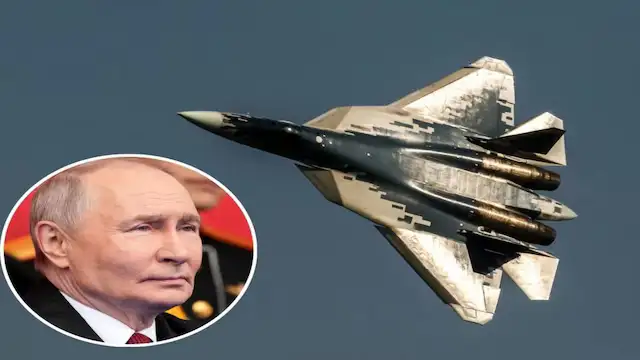
Now the question arises that why did Russia give this secret weapon to India? The main reason is that India is one of Russia’s oldest and trusted allies. However, there may be more to this story. India is currently keen to overcome the shortage of its fighter jets, but its options are limited. While talks are going on on the Rafale deal, the situation regarding Tejas Mark-1A and Mark-2 is not clear. American engines are to be installed in these indigenous jets, but America has tripled the price of F414 engine for Mark-2. Meanwhile, Russian media has repeatedly claimed that negotiations on the deal for the fifth generation Sukhoi-57 jet have advanced well. Although the Indian government has not given any official statement on this matter, but sources say that India can buy at least three squadrons of this jet. However, India is still cautious due to Western sanctions imposed on Russia after the Ukraine war. Experts believe that if there is a ceasefire between Ukraine and Russia and US sanctions on Russia are lifted, then India will move forward on the Su-57 deal. Acquiring Nebo-UM VHF radar from Russia is also being considered as part of this broader context.