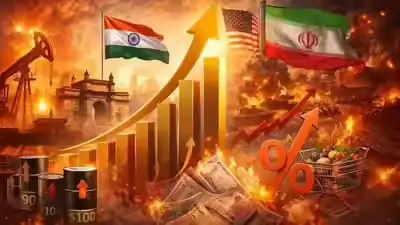
The impact of increasing tension between Iran and America and fluctuations in the global oil market is now clearly visible on India’s economy. Amidst the rise in crude oil prices and uncertainty over supply, the Indian government and policy makers are taking several domestic steps aimed at reducing inflation and energy pressure.
To deal with this situation, the government is again promoting measures like “Work from Home (WFH)” and “Fuel Discipline”. Prime Minister Narendra Modi recently appealed to citizens to avoid unnecessary travel, use public transport more, adopt carpooling and, where possible, prefer hybrid or work from home models.
The direct objective of these steps is to reduce the consumption of petrol and diesel and reduce the pressure on the country’s oil import bill. According to experts, India imports a large part of its energy needs, hence the global crisis has a direct impact on the domestic market.
As pressure on oil supplies increases, the government has also put forward the concept of “fuel discipline”. Under this, emphasis is being laid on people to adopt low fuel consumption options, use public transport instead of private vehicles and increase efficiency in the logistics sector.
Economists believe that this strategy can help provide short-term relief, as it reduces demand and reduces some of the pressure on prices. This may also help control inflation, which is directly affected by fuel prices.
Globally, Iran-US tensions have increased volatility in oil markets, further increasing the challenge for import-dependent countries like India. Any disruption in the supply chain has a direct impact on domestic fuel prices and foreign exchange reserves.
The government meanwhile is also working on long-term solutions, including diversification of energy sources, promoting renewable energy and strengthening strategic oil reserves. India’s strategy is working at two levels—demand management (such as WFH and fuel discipline) to mitigate the immediate impact on the one hand, and efforts to strengthen long-term energy security on the other.