
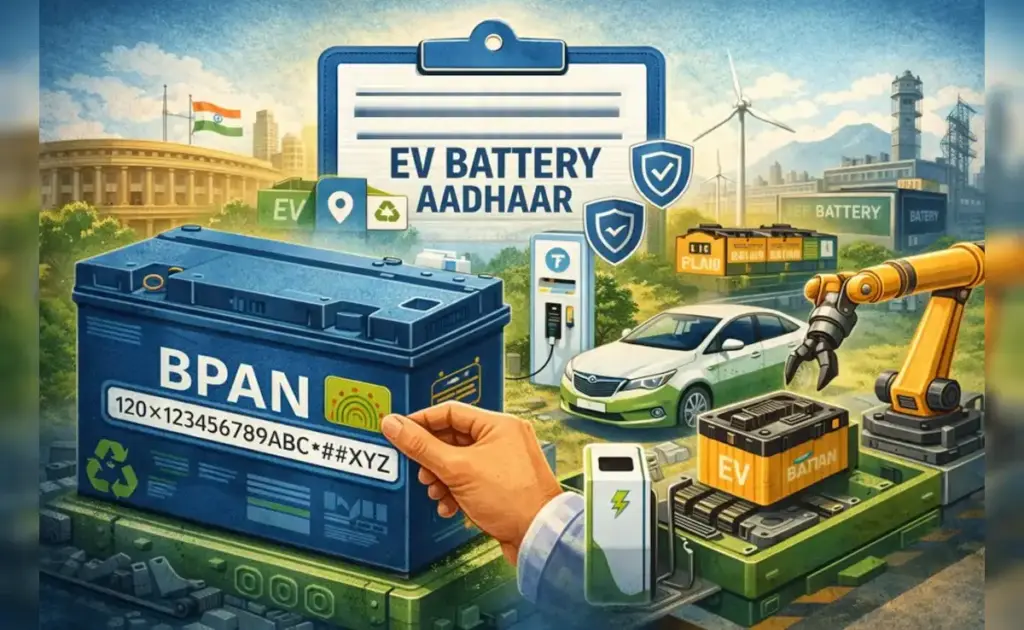
Amidst the rapid adoption of electric vehicles in India, the government is now going to take a big and important step regarding their batteries. The Ministry of Road Transport and Highways has proposed a draft framework for Battery Pack Aadhaar Number (BPAN). Its objective is to give a unique identity to the battery of every electric vehicle and make its entire life cycle more transparent and efficient for the people. This initiative will not only benefit common car owners, but will also make monitoring and security easier for both the industry and the government. Let us understand what this new BPAN draft is.
What is Battery Pack Aadhaar Number (BPAN)?
BPAN will be a unique 21-digit alphanumeric identification number that will be given to every electric vehicle battery. This number will also be available in the form of QR code, which can be easily read by machines. This will help track when the battery was made, where it was installed, when it was serviced, and ultimately how it was recycled. This system is similar to the previously suggested battery passport system, which has been considered for implementation in India and other countries.
Which batteries will this rule apply to?
This framework will initially be applicable to batteries of electric vehicles. Later, this can be extended to all batteries with a capacity of 2 kWh or more. However, small batteries used in common electronic devices will not come under this rule. At present, this will apply only to batteries used in electric vehicles.
How will you benefit?
Through the BPAN system, customers will be able to track the manufacturing date of their batteries, verify their authenticity, and monitor their health. This will prevent unauthorized battery replacement or tampering. This will also increase confidence in the life and quality of the battery.
Why is this system important?
For the government and battery makers, this system will bring transparency at every step, from raw material sourcing and transportation to second-life reuse, safe recycling and mineral recovery. The availability of large-scale data will help create safer, more durable and better batteries in the future. Insurance companies, used car buyers, banks, waste management agencies and service providers will also benefit from this system.
What data will be tracked?
Under BPAN, many types of battery related data will be stored. This will include identification of the battery manufacturer, battery description, battery identity, material composition, carbon footprint and dynamic data. This data is likely to be similar to the battery passport standard being developed in Europe, so as to remain in sync with global standards in the future. The government will also create an online portal for this purpose.
When will it be implemented?
This system may take some time to be fully implemented. This may take several months or even years. Proposals based on technologies like blockchain, RFID and NFC have already been made. The Road Transport Ministry has formed a special committee for this purpose, which includes experts from IIT, ARAI, NITI Aayog and other institutions. This committee will decide the rules and implementation strategy based on Indian conditions.