
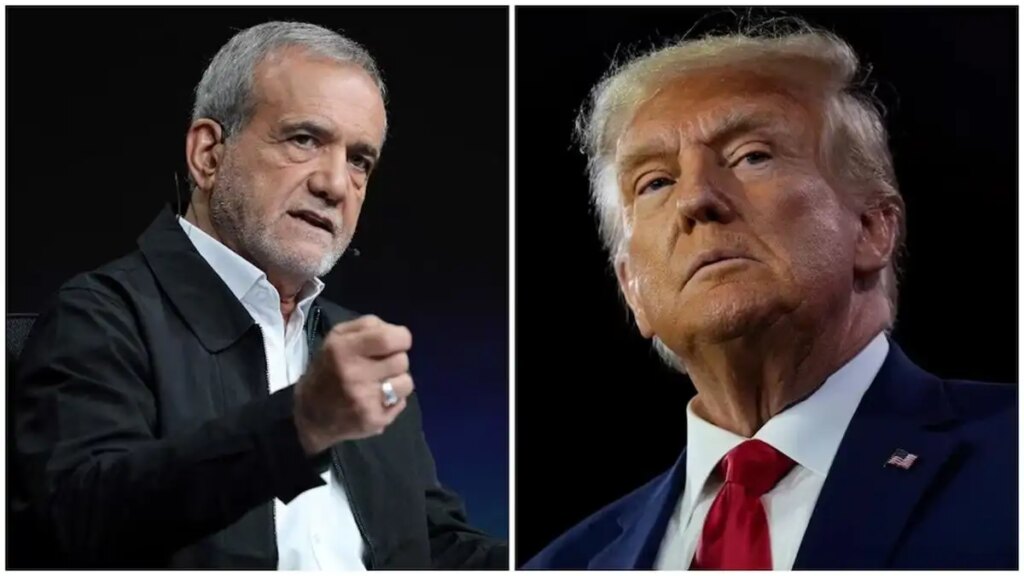
The conflict has entered its 33rd day, with tensions rising rapidly in the Middle East. US President Donald Trump has intensified his threats, while Tehran has given a strong response. As a result, this conflict is now taking an even more dangerous form. In a report published Sunday, Axios reported that the US, Iran and a group of regional mediators are discussing the terms of a possible 45-day ceasefire—a move that could lead to a permanent end to hostilities. Axios cited four US, Israeli and regional sources familiar with the talks for this claim.
What was discussed regarding the ceasefire?
A report from Axios correspondent Barak Ravid suggests that negotiations are still ongoing over the terms of the two-phase agreement. The first phase would include a possible 45-day ceasefire, during which discussions would be held with the aim of permanently ending the war. The report further said that the second phase would involve reaching a formal agreement to end the conflict. If additional time is required for negotiations, the ceasefire may be extended. On Sunday, US President Donald Trump told *The Wall Street Journal* that his deadline for Iran to reopen the Strait of Hormuz—or face attacks on critical infrastructure—is by Tuesday evening.
What’s going on behind the scenes?
According to the report, the talks are being conducted through Pakistani, Egyptian and Turkish intermediaries, as well as through text messages exchanged between Trump’s envoy Steve Witkoff and Iran’s Deputy Foreign Minister Abbas Araqchi. A US official said the Trump administration has made several proposals to Iran in recent days; However, Iranian authorities have not yet acknowledged them.
Sources confirmed that mediators are currently discussing the terms of a two-phase settlement with the parties concerned. The first phase will include a possible 45-day cease-fire, during which talks will be held focused on permanently ending the conflict. A source said that if additional time is required for talks, the ceasefire could be extended. The second phase would involve reaching an agreement to end the conflict. Sources indicated that mediators believe that a full reopening of the Strait of Hormuz—as well as any resolution regarding Iran’s highly enriched uranium (either by taking it out of the country or by lightening it)—can only result from a final, comprehensive agreement.
Iran took a tough stance on Hormuz!
On Sunday, April 5, Iran’s Revolutionary Guards issued a stern warning to the United States and Israel regarding the Strait of Hormuz. The IRGC said on social media that a new security order is taking shape in the Persian Gulf, and this vital sea route will no longer be the same as it was before. Meanwhile, US President Donald Trump issued a warning of retaliation on Easter Sunday. He announced that if the strait was not reopened, Iran’s power plants and bridges would be targeted on Tuesday. Due to Iran’s control over the Strait of Hormuz, global crude oil prices are witnessing a huge surge, and this is impacting the entire global economy.