
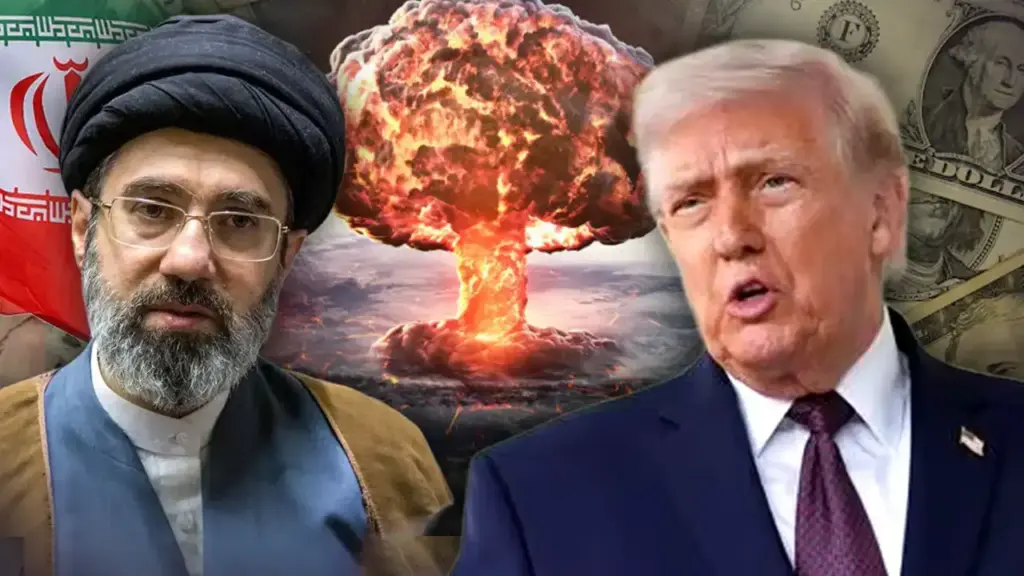
When work is going on on a deal between Iran and America, the process of finalizing it takes a lot of time. You can call it an experience like watching a Bollywood blockbuster – just as the audience waits for “The End” while enjoying the film, a similar situation is seen in the case of the Iran-US deal. Although US President Donald Trump and Iranian President Massoud Pezheshkian gave good news to the world yesterday (June 17) by signing a Memorandum of Understanding (MoU), the truth is that it will take months to reach a final agreement between the two countries. Now that the signing has been done, talks will begin to determine the way forward on disputed issues such as the nuclear program and the Strait of Hormuz. A time limit of two months has been set for these discussions; However, some experts believe it will take longer. Rami Khoury, a fellow at the American University of Beirut, said it will take longer than the anticipated 60-day timeline to finalize an agreement between the two countries.
Such delays are not surprising in the context of US-Iran relations, given the complex nature of their disputes. Issues that have required detailed discussions to reach consensus include the timing and manner of the uranium transfer, removal of mines from the Strait of Hormuz, release of Iran’s outstanding funds, and compensation for war-related damages. History also shows this pattern; Previous agreements between the two countries had taken years of negotiations instead of months.
How long did it take to reach the Iran nuclear deal?
The nuclear deal between Iran and the US was signed in 2015, but negotiations had been going on since 2013. The resulting agreement came into force in January 2016. Although officially named the ‘Joint Comprehensive Plan of Action’ (JCPOA), it became commonly known as the “Iran nuclear deal”. At the time this agreement was signed, Barack Obama was the US President and Hassan Rouhani was the President of Iran. At that time, Supreme Leader Ayatollah Ali Khamenei was also alive. Another interesting aspect of that agreement was that the signatories were not limited to just the US and Iran; China, Russia, France, UK and Germany also jointly signed the agreement. Although Israel and Saudi Arabia were not happy with the agreement, it did not last despite being signed by major global powers from the opposing factions.
Why was the Iran nuclear deal broken?
The Iran nuclear deal was supposed to last for ten years, but it did not. Change of power in America; The Democrats were out of power and the Republicans came to power under the leadership of Donald Trump. In 2018, Trump withdrew the US from the agreement. He cited failure to curb Iran’s missile program and limit its regional influence as the reason for the move. As a result, the efforts of the P5+1 group weakened and Iran began to ignore sanctions imposed on its nuclear program.
There was a change of power in America and Joe Biden was elected Democratic President. Tension remained between the two countries. Attempts were made to restart the JCPOA agreements, but they failed. Biden’s envoys held talks with Iran, but no concrete results were achieved. The Hamas attack on Israel in October 2023 changed the entire situation. A terrible war broke out and Iran took a tough stance against Israel and the US over the situation in Gaza and Palestine. Biden tried to stop the conflict, but no practical solution emerged.
When Trump came to power in 2024, the US took an aggressive stance towards Iran. Trump openly challenged Khamenei and demanded that he stop his nuclear programs or face attack. In June 2025, when there were hopes of moving towards the negotiating table, Iran was attacked. Talks were postponed and threats continued to be exchanged. On the night of February 28, 2026, the US and Israel jointly took a step that Iran had never imagined: they directly targeted and eliminated Supreme Leader Ali Khamenei, sparking a fierce war between the two countries. Eventually, after efforts by global powers, Trump signed an agreement in France on June 17, 2026. Pakistani Prime Minister Shehbaz Sharif signed the agreement as a mediator. Iran has also signed, although it will take a long period of discussions to reach consensus on various issues. It remains to be seen how long it will take for Iran and America to reach the final conclusion this time.