
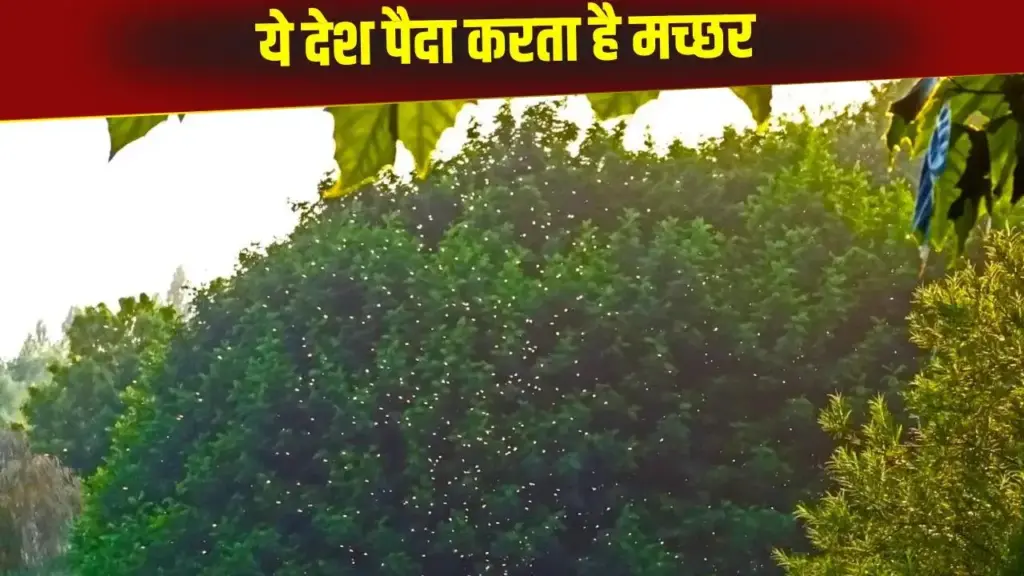
A factory where mosquitoes that bite humans are being made! It sounds strange, but this is not a science fiction story. In fact, Brazil has built the world’s largest mosquito factory to fight the deadly disease called dengue. Every year thousands of people are hospitalized due to dengue, and many die. Now, Brazil has found a new and unique solution to this problem.
This factory located in Campinas, Sao Paulo State, produces about 19 million mosquitoes every week. But these mosquitoes cannot spread dengue; Rather, they prevent dengue from spreading. A special type of bacteria called Wolbachia has been introduced into these mosquitoes. This bacteria prevents dengue virus from growing in the mosquito’s body. This means that even if such a mosquito bites a person, the virus will not spread.
How do mosquitoes do this?
This factory is no less than a big industrial unit. Spread over an area of approximately 1,300 square meters, this facility is entirely for mosquito production. Scientists and technical staff work day and night to ensure that these safe mosquitoes are properly reared and ready to breed.
The species of mosquito that breeds here is Aedes aegypti, the same mosquito that commonly spreads diseases like dengue, chikungunya and Zika virus. The only difference is that these mosquitoes are infected with Wolbachia. When these mosquitoes produce babies, the bacteria are passed on to the next generation. Gradually, the entire mosquito population in the surrounding area becomes safe, and the possibility of dengue spread is almost eliminated.
How are mosquitoes born?
The process of breeding of mosquitoes in the factory is equally interesting. This process is done in thousands of trays filled with water. Firstly, mosquito eggs are laid in these trays. After some time, larvae emerge from them. When the larvae become mosquitoes, they are placed in special cages where they are fed a variety of food.
Male mosquitoes are fed sugar solution, while female mosquitoes are fed blood. This blood is actually artificial, which is packed in a bag that looks like human skin so that mosquitoes can easily suck it. The mosquitoes are kept in cages for about four weeks, during which time they hatch and lay eggs. Then from these eggs a new generation of mosquitoes infected with Wolbachia is born.
Every process in the factory is carefully monitored. Temperature, humidity and light levels are constantly controlled so that the growth of mosquitoes is not hindered. Egg counting and sex determination are also done with fully automated machines.
preparations are underway
The Brazilian government is running this project as a major public health campaign. These mosquitoes have already been released in many parts of the country, and dengue cases have declined sharply. Scientists say that this method is safe because Wolbachia bacteria are not harmful to humans or animals. They remain active only inside mosquitoes and stop the life cycle of the virus.
This project has attracted the attention of scientists around the world. Experiments on this technology are going on in countries like India, Indonesia and Australia. It is expected that in future this method can prove to be the most effective weapon in fighting diseases like dengue and malaria.