
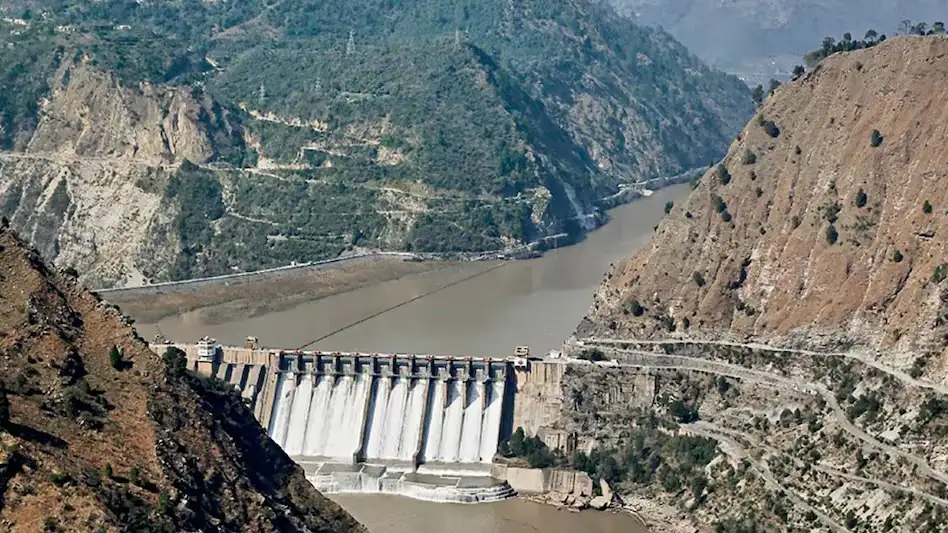
Pakistan’s Deputy Prime Minister and Foreign Minister Ishaq Dar has once again raised the issue of Indus Water Treaty. He accused India of diverting or stopping the flow of water in the Chenab river and called it an act of war. Dar said India’s “aggressive actions” are a major threat to the peace and stability of South Asia.
What is the whole matter?
The Indus Water Treaty was signed in 1960 between India and Pakistan with the mediation of the World Bank. Under this treaty, three eastern rivers (Ravi, Beas, Sutlej) were allotted to India and three western rivers (Indus, Jhelum, Chenab) were allotted primarily to Pakistan. This treaty has remained in force despite many wars and tensions. However, following the April 2025 terrorist attack in Pahalgam, Jammu and Kashmir, in which 26 tourists were killed, India unilaterally suspended the treaty. India described it as a step taken in response to Pakistan sponsored terrorism. Since then, the treaty is suspended – India stopped sharing hydrological data and also discontinued the joint monitoring mechanism.
December 2025: Sudden change in water quantity observed in Chenab river. First, 58,000 cusecs of water was released on the night of December 7-8, then from December 13 onwards the quantity of water reduced to 870-1,000 cusecs. Pakistan alleges that India released water without any prior notice and then reduced it, which affected its crops (especially wheat). Pakistan described this as “weaponizing water” and a violation of the treaty.
Main allegations of Ishaq Dar:
This is a violation of Article 26 of the Vienna Convention.
India is systematically weakening the treaty.
It is dangerous to use water as a weapon.
Stopping or diverting water would be considered an act of war.
Pakistan will not compromise on its water rights.
India is avoiding the dispute resolution process, which is a violation of international rules.
India’s actions are threatening Pakistan’s food security and could lead to a humanitarian crisis.
Briefing diplomats, Dar said Pakistan has raised the issue several times in the UN Security Council. Recently, UN Special Rapporteurs have also expressed concern over India’s action. Their report states that unilaterally suspending the treaty is wrong and blocking the flow of water violates the human rights (rights to water, food and livelihood) of millions of people. Experts demanded clarification, compensation and adherence to the treaty from India.
What is India’s stand?
India says suspending the treaty is a response to terrorism. India alleged that Pakistan was supporting cross-border terrorism, which is a violation of the spirit of the treaty. India said that the treaty will remain suspended until Pakistan gives up terrorism. India also clarified that it is not blocking water completely, but has relaxed data sharing and some restrictions.
What could happen next?
This dispute may increase tension between the two nuclear weapon countries. Pakistan is taking this matter to international forums (UNSC, PCA), while India is calling it a bilateral and security issue. Experts believe that water shortage and climate change may further aggravate this problem. Both the countries should find a solution through dialogue, otherwise regional peace may be in danger. The issue is rekindling long-standing concerns about water in South Asia. The Indus river system is a lifeline for Pakistan, while India is linking it to national security.