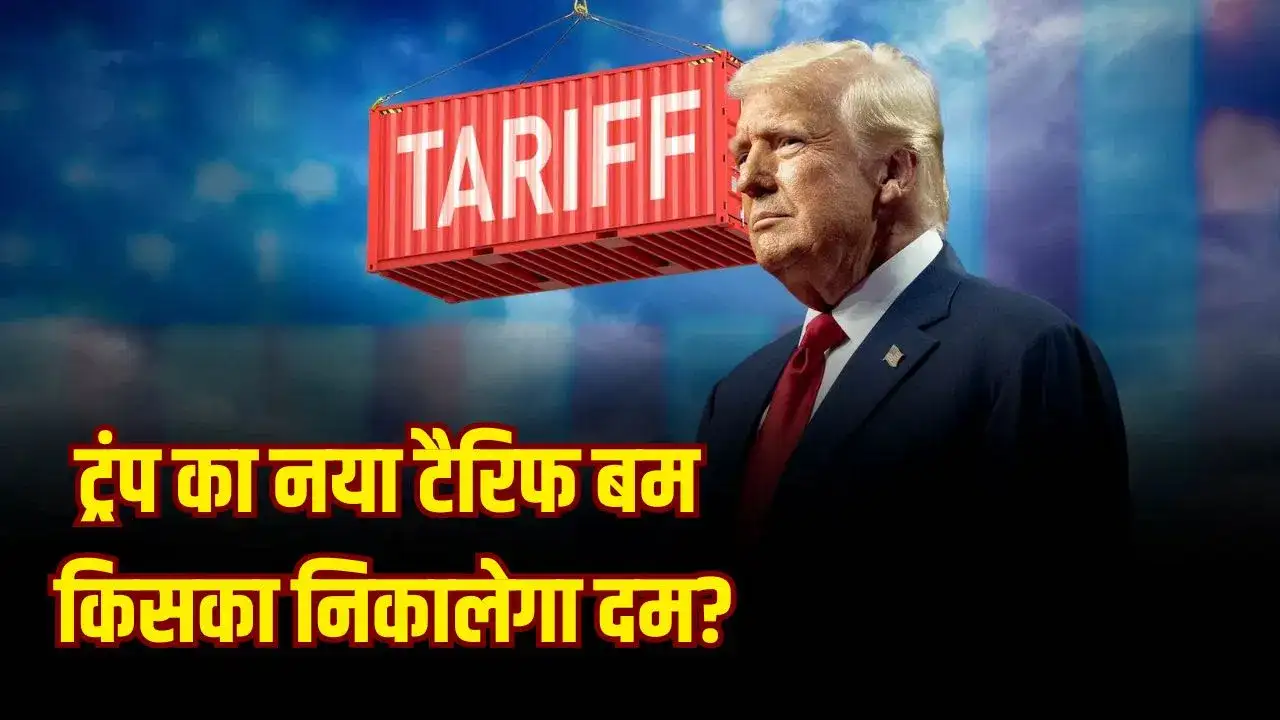
US President Donald Trump on Friday ordered the imposition of a new tariff of 25% on imported medium and heavy duty trucks and their parts, which will be effective from November 1. A 10% tariff will also be imposed on imported buses. According to officials, these tariffs are being imposed on national security grounds and are aimed at shifting more automobile production to the US. However, it could be a major blow to Mexico, which is the largest exporter of medium and heavy trucks to the US.
What did Trump order?
According to Trump’s order, US automakers can receive a credit of 3.75% of the suggested retail price for vehicles assembled in the US through 2030. This credit will help offset the cost of tariffs on imported parts. Similarly, a 3.75% credit has been extended to US engine manufacturing and US medium and heavy truck production.
What is included in the new tariffs?
The new tariffs apply to all trucks from Category 3 to Category 8. These include large pickup trucks, moving trucks, cargo trucks, dump trucks, and 18-wheeler tractors. Trump said that this step has been taken to protect American manufacturers from unfair foreign competition. The decision will benefit companies like Packer-owned Peterbilt and Kenworth-Daimler Trucks-owned Freightliner.
US Chamber of Commerce appealed to Trump
The US Chamber of Commerce had earlier also appealed to Trump not to impose new tariffs on trucks. He said the top five import sources – Mexico, Canada, Japan, Germany and Finland – are US allies or close partners and pose no threat to US national security.
The order also provides financial relief to GM, Ford, Toyota, Stellantis, Honda, Tesla and other automakers from tariffs previously imposed on imported auto parts. The Commerce Department said in June it planned to provide an offset of 3.75% of the value of eligible U.S.-assembled vehicles through April 2026 to reduce tariffs on imported automobile parts. After that, it will become 2.5% in the second year.
What did Republican Senator Bernie Moreno say?
Republican Senator Bernie Moreno said the revised credit extends it for five years, keeps it at 3.75% year-round, and applies it to more parts. This makes it more valuable to automakers and gives companies even more incentive to move their production to the US.