
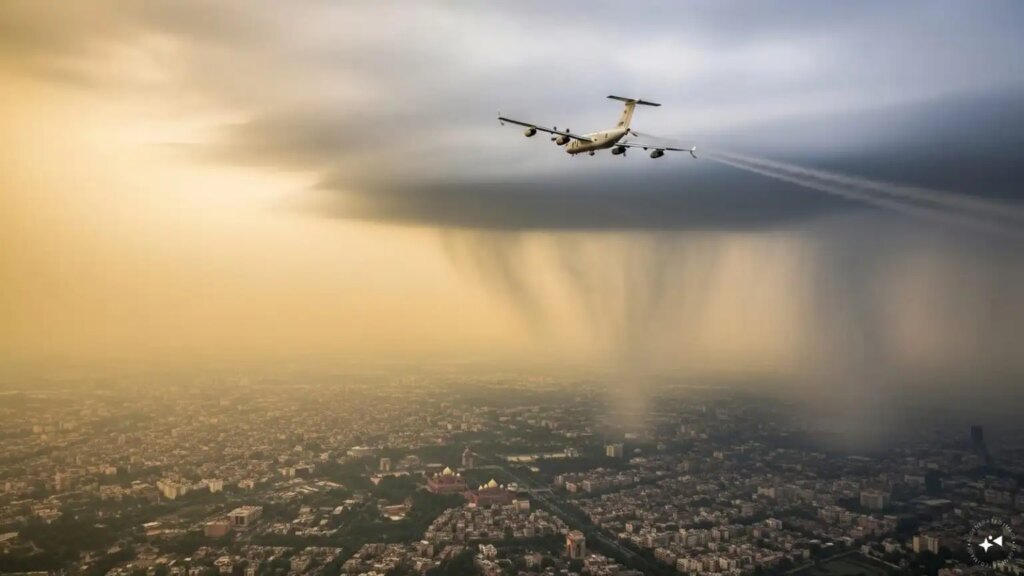
Many countries around the world are now resorting to artificial rainfall instead of relying on natural rainfall. In this technique called cloud seeding, rain is induced by increasing the amount of moisture in clouds by using chemicals or salt flames. This technology is proving helpful in many areas like drought relief, agriculture, water management and pollution control. Let us find out which countries have adopted this high-tech rainfall.
China
China is currently the world leader in artificial rainfall. The government has set a target to cover approximately 55 lakh square kilometer area with this technology by 2025. In China, artificial rainfall based weather forecasting is being done using hundreds of aircraft and rockets. This technology is used for drought relief, agricultural irrigation, and weather control during major events.
United Arab Emirates (UAE)
The UAE started its cloud seeding program in 1982. The government here uses modern technologies like artificial rainfall, drones and hygroscopic salt flames. The purpose of this technology is to increase rainfall and maintain moisture in desert areas.
United States of America
Cloud seeding is widely practiced in the United States, especially in drought-prone states such as California, Colorado, and Texas. This technology is used to increase snow accumulation, improve water supplies and promote agriculture.
India
In India, cloud seeding is used during drought and for agricultural irrigation. States like Maharashtra, Karnataka and Tamil Nadu have adopted this technology in collaboration with private companies and international experts. Recently, IIT Kanpur conducted two tests with silver iodide flares in the Delhi-NCR region, although neither of them resulted in rain.
Thailand
Thailand initiated the ‘Royal Rainmaking Project’ in the 1950s, which is still considered one of the oldest and most successful cloud seeding programs in the world. It is used to increase agricultural production, reduce pollution and manage water resources.
Russia
In Russia, artificial rainfall is used for agriculture, drought relief, water management, and forest fire suppression. The country is dependent on this technology to maintain climate balance in its arid regions.
Australia
In Australia, cloud seeding is being used to enhance agriculture and water management as well as hydropower production. This technique helps maintain water availability during dry periods.
saudi arabia
Saudi Arabia will start cloud seeding for the first time in 2022. Its goal is to increase moisture in desert areas, prevent desertification, and improve water resources.
Indonesia
Indonesia has adopted this technology to reduce the risk of floods during the rainy season and make better use of water resources. The government there regularly uses this technique to manage seasonal imbalance.