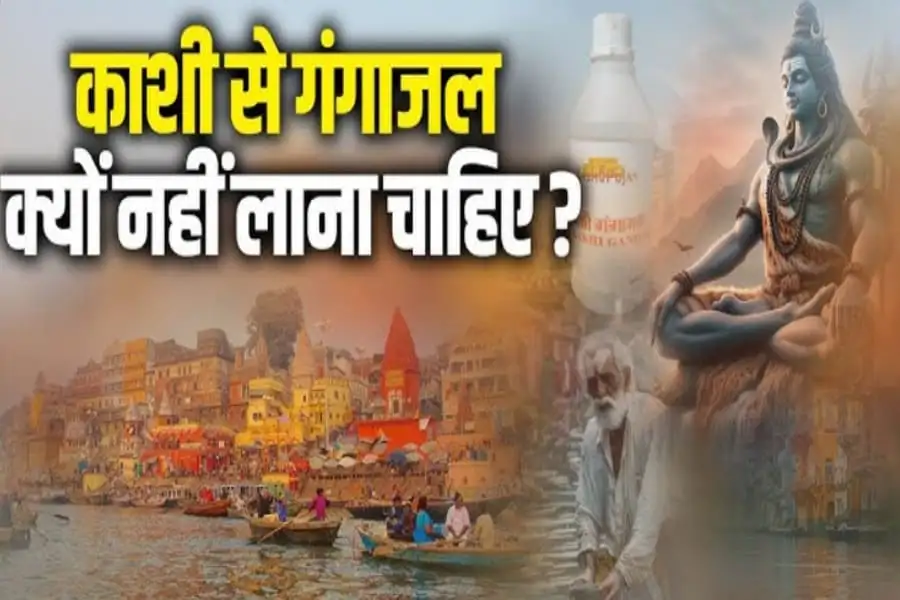
In Hinduism, *Gangajal* (water of the Ganges River) is considered extremely sacred—it is equivalent to *Amrit* (the juice of immortality). In every Hindu home and temple, you will definitely find a vessel filled with *Gangajal*. Whether it is to perform *puja* (worship), perform any auspicious ritual, perform *tarpan* (deeds performed for ancestors), or purify the house – any religious work is considered incomplete without the use of *Ganga water*.
When most people visit pilgrimage sites like Haridwar, Rishikesh or Gangotri, they always fill *Gangajal* in bottles to bring back home. The water of these places is considered a symbol of life, good health and positive energy. However—and this is an interesting thing—when it comes to Kashi (Varanasi), the city of Lord Shiva, people never bring *Ganga water* back home. Why is this so?
Kashi: City of *moksha* and liberation
Kashi is known as the favorite city of Lord Shiva and is considered to be the direct gateway to *moksha* (liberation). Our ancient text, *Skanda Purana* (especially *Kashi Khanda*) clearly states: “*Kashyam Maranam Muktihah*.” The direct meaning of this verse is that whoever takes his last breath on the holy land of Kashi attains eternal *moksha* (liberation). It is believed that here—especially at Manikarnika Ghat—the body is not merely burnt to ashes; Rather, the soul becomes free from every worldly bondage. At the moment of death, Lord Shiva himself whispers the *Tarak Mantra* into the ear of the deceased—a sacred mantra that serves as the true key to the salvation of the soul.
Why is *Ganga water* not brought home from Kashi?
This practice of not bringing back *Ganga water* from Kashi is in no way based on superstition, nor does it mean that the water there is impure. Rather, the practice is a profound symbol of deep reverence for the departed souls. Pyres burn continuously day and night at the major ghats of Kashi—Manikarnika and Harishchandra. Here every day, the ashes and bones of hundreds of dead people are immersed in the sacred lap of Mother Ganga. In this context, the Ganga flowing here is no longer just ‘life-giving’; Rather she becomes ‘Mokshadayini’ for those souls. From a spiritual perspective, if we bring Ganga water from Kashi to our home—and if, unknowingly, that water contains even a tiny trace of the ashes or bones of a departed soul—we may unknowingly be hindering their journey to salvation.
Bring only Mahadev’s blessings with you
The Ganga water of Haridwar and Gangotri is meant to bring auspiciousness and well-being in our lives while we are alive. In contrast, the Ganga of Kashi is dedicated to the afterlife—specifically, to the attainment of peace and liberation after death. Therefore, it is an unwritten rule—and also a mark of polite reverence—that no one brings back Ganges water, ash, or any other material object from Kashi. From there we return with nothing but the immense blessings of Lord Shiva and a feeling of deep inner peace.