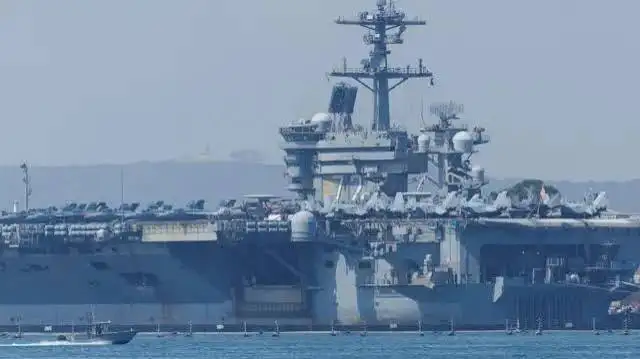
Military tension between America and Iran is continuously increasing. On Tuesday night, America launched military operations against Iran for the fourth consecutive day. According to US Central Command (CENTCOM), the operation, which lasted about seven hours, targeted Iranian missile and drone bases, naval assets and coastal defense systems located around the Strait of Hormuz. The US says this action was taken with the aim of ensuring navigational safety in the area and reducing potential threats. At the same time, Iran has claimed retaliatory action, calling these attacks an attack on its sovereignty.
Iran counterattacks, targets American military bases
Iran’s Islamic Revolutionary Guard Corps (IRGC) claimed that it has launched a retaliatory operation by attacking US military bases in Bahrain, Kuwait and Jordan. According to the IRGC, the US Fifth Fleet Base in Bahrain and Azraq Air Base in Jordan were targeted. However, the damage caused by these attacks or any casualties has not yet been independently confirmed. The US administration has also not given any immediate official response to these claims.
Trump’s strict warning
Meanwhile, US President Donald Trump gave a stern warning to Iran, saying that if Tehran does not move towards talks and agreements, America can also target power plants, bridges and other important infrastructure in the next phase. After this statement of Trump, there is a possibility of further increase in tension in West Asia. Security experts believe that if the scope of military action between the two countries increases, it could affect the stability of the entire region and global energy supply.
Iran said- will not bow under pressure
On the other hand, Iran has made it clear that it is not going to bow down to American pressure. Tehran says that its strategy regarding the Strait of Hormuz will continue and it will take every necessary step to protect its national interests. Analysts believe that the Strait of Hormuz is a very important sea route for global oil supply. In such a situation, the increasing military tension in this region can have a wide impact on the international market, crude oil prices and global trade.
At present the situation between the two countries remains very tense. The international community is continuously appealing for restraint and finding diplomatic solutions, but in the current situation, there is a possibility of the conflict increasing instead of decreasing.