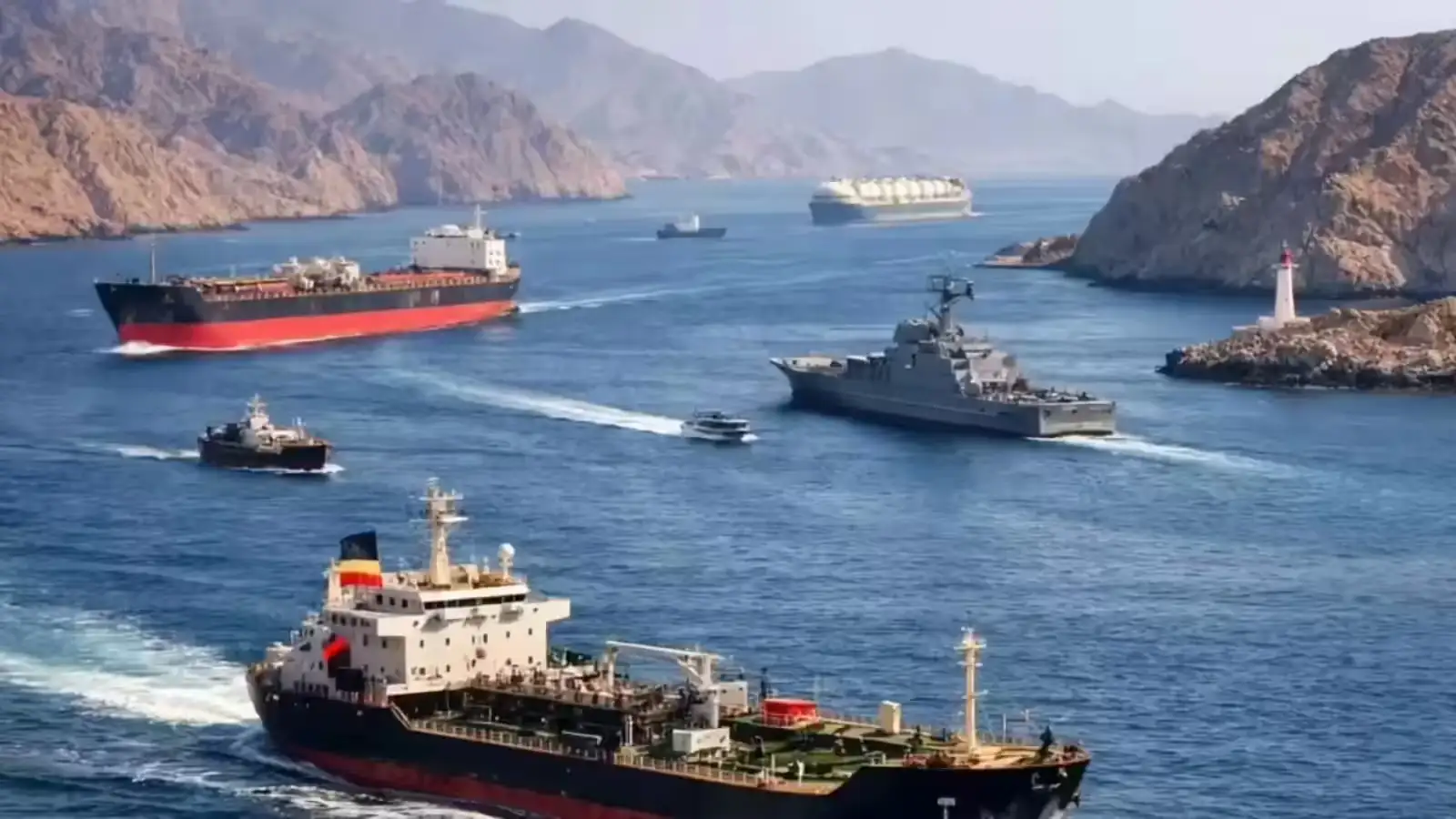
Nearly 300,000 metric tonnes of India’s Liquefied Petroleum Gas (LPG) is currently stuck in the Strait of Hormuz. Rajesh Kumar Sinha, Special Secretary, Shipping Ministry, gave this information during a press briefing on Tuesday. According to Shipping Ministry data, 22 Indian-flagged ships are currently stranded in the region. These include 6 LPG carriers, 1 LNG tanker, 4 crude oil tankers, 1 chemical product carrier, 3 container ships and 2 bulk carriers.
Rajesh Kumar Sinha told that a big ship (very big gas carrier) can carry about 45,000 metric tons of LPG. On this basis, it has been estimated that the 6 Indian ships stranded in the Strait of Hormuz are collectively carrying 300,000 metric tonnes of LPG. Meanwhile, two Indian-flagged LPG tankers—’Shivalik’ and ‘Nanda Devi’—passed safely through the Strait of Hormuz on March 14 and reached India. These ships were carrying approximately 92,700 metric tons of LPG.
Apart from this, a crude oil tanker named ‘Jag Ladki’ has also safely departed from Fujairah, UAE; It is carrying 81,000 metric tonnes of crude oil and is now en route to India. Meanwhile, India on Tuesday denied reports that claimed New Delhi had discussed a “ship swap” arrangement with Iran in exchange for the safe withdrawal of its ships from the Strait of Hormuz. Indian Foreign Ministry spokesperson Randhir Jaiswal clarified that no such discussions have taken place with Iran.
Talks continue to ensure safe passage from Hormuz
Earlier, a report by news agency Reuters had claimed that Iran had offered Indian-flagged ships—or India-bound ships—safe passage through the Strait of Hormuz, in exchange for the return of three seized tankers. However, India acknowledged that it is in constant touch with Iran and other countries to ensure the safe return of other ships stranded in the Strait of Hormuz area. Ministry of External Affairs (MEA) spokesperson Randhir Jaiswal said several ships were still present in the area, and the government’s priority was to bring them back safely. For this purpose, talks are going on with Iran and other concerned countries. He further said that issues related to providing humanitarian aid to Iran are also being discussed with the authorities there.
Meanwhile, during a press briefing, MEA spokesperson Randhir Jaiswal told External Affairs Minister S. Jaishankar’s recent visit to Brussels was also mentioned. He informed that Mr. Jaishankar was invited to attend the meeting of the Foreign Affairs Council of the European Union, where he discussed India-EU relations as well as global challenges. During the meeting, particular concern was expressed about the situation in West Asia—particularly the conflict involving Iran—and its potential impact on energy security. The foreign ministers of European countries emphasized that the solution to the current crisis is possible only through dialogue and diplomacy. Supporting the same stance, India also underlined the importance of peace and stability in the region.
It is noteworthy that on February 4, 2026, the Indian Coast Guard seized three oil tankers—identified as MT Asphalt Star (IMO 9463528), MT Al Jafjafah (IMO 9171498), and MT Stellar Ruby (IMO 9555199)—in the Arabian Sea off the coast of Mumbai. It is alleged that these tankers illegally transferred about 30 metric tonnes of heavy fuel oil (HFO) to other vessels within India’s Exclusive Economic Zone (EEZ), using forged documents and without informing any Indian authorities. However, the Indian Coast Guard has not yet disclosed the country of origin of these three tankers. Searches of these vessels, examination of electronic data and interrogation of crew members revealed that they brought cheap oil from conflict-affected areas and transferred it from one ship to another in international waters.