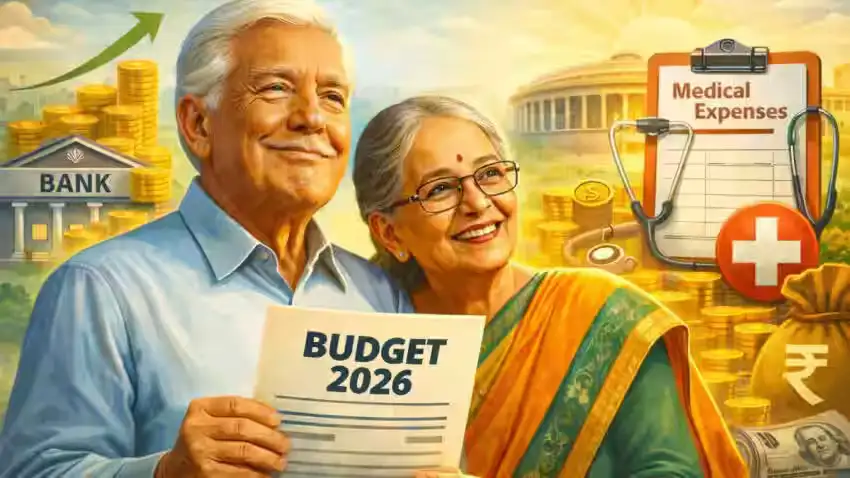
Union Finance Minister Nirmala Sitharaman will present the Union Budget for the financial year 2026-27 on February 1. This time in the budget, they will have to face many big challenges, in which expansion of medical infrastructure and providing affordable health services to the common people can be the main issues. In most developing countries, including India, government expenditure on healthcare is still much lower than in developed countries, even though good healthcare services are the foundation of any strong economy.
A 2022 World Bank report clearly shows that there is a huge difference in healthcare spending between countries. The US spends about 17 to 18 percent of its GDP on health care, which amounts to about $12,000 to $13,000 per capita. However, its public healthcare system is weak, and there is high reliance on the private sector. Japan spends 10 to 11 percent of its GDP on the medical sector, with per capita spending between $4,500 and $5,000, and its public healthcare services are considered strong.
Country GDP expenditure on health (%) Per capita health expenditure (USD) US 16.8% 12,000 Japan 11 4,150 Russia 5.3 1,474 China 5.0 731 India 3.6 209
How much do different countries spend on healthcare?
Russia spends about 5 to 6 percent of its GDP on health care, with per capita spending between $800 and $1,000, but the quality of services varies. China has rapidly increased investment in health infrastructure over the past decade and spends 6 to 7 percent of its GDP on the medical sector, bringing per capita spending to $700 to $900. In contrast, India spends only 3 to 4 percent of its GDP on health care, with per capita spending of just $100 to $200. However, efforts are being made to gradually improve the situation through schemes like Ayushman Bharat.
How was India’s last medical budget?
If we look at the previous budget, the government has increased its focus on digital health, medical infrastructure, domestic production and affordable medicines. About ₹1 lakh crore was allocated to the health ministry in the budget for fiscal year 2025-26, which was about 11 percent more than last year. This included provisions for expansion of Ayushman Bharat, exemption in custom duty on cancer drugs, establishment of new medical colleges and additional funding for institutions like the National Health Mission and AIIMS.
Year Health Budget (Rs crore) 2022-23 86,606 2023-24 88,956 2024-25
90 thousand crores
2025-26
99,858.56
expert opinion
Regarding the medical budget for 2026-27, experts believe that the share of GDP given to health should be further increased. According to Dr. Sharad Aggarwal, former president of the Indian Medical Association (IMA), health expenditure should be clearly mentioned in different categories in the budget so that it can be known how much is being spent on infrastructure development and how much is being spent on salaries and other administrative expenses. He emphasizes that it is very important to pay special attention to infrastructure development.
Dr Aggarwal also suggested that medicines, medical equipment and surgical products should be exempted from GST to reduce treatment costs. He also recommended relief in custom duty on medical equipment. He further said that just as tax exemption is given on life insurance, similarly health insurance should also be promoted through additional tax benefits.
He believes that the medical infrastructure in the country has improved since COVID-19, but a lot of work still needs to be done in remote areas. There is a need to focus on the quality and availability of ambulance services, oxygen plants, solar panels, generators, operation theatres, ventilators and other essential equipment. Many ventilators installed during the COVID-19 pandemic are no longer working due to poor quality. Therefore, it is important that there is strict monitoring of expenditure under the health budget, and an independent, impartial body can audit its implementation and quality.