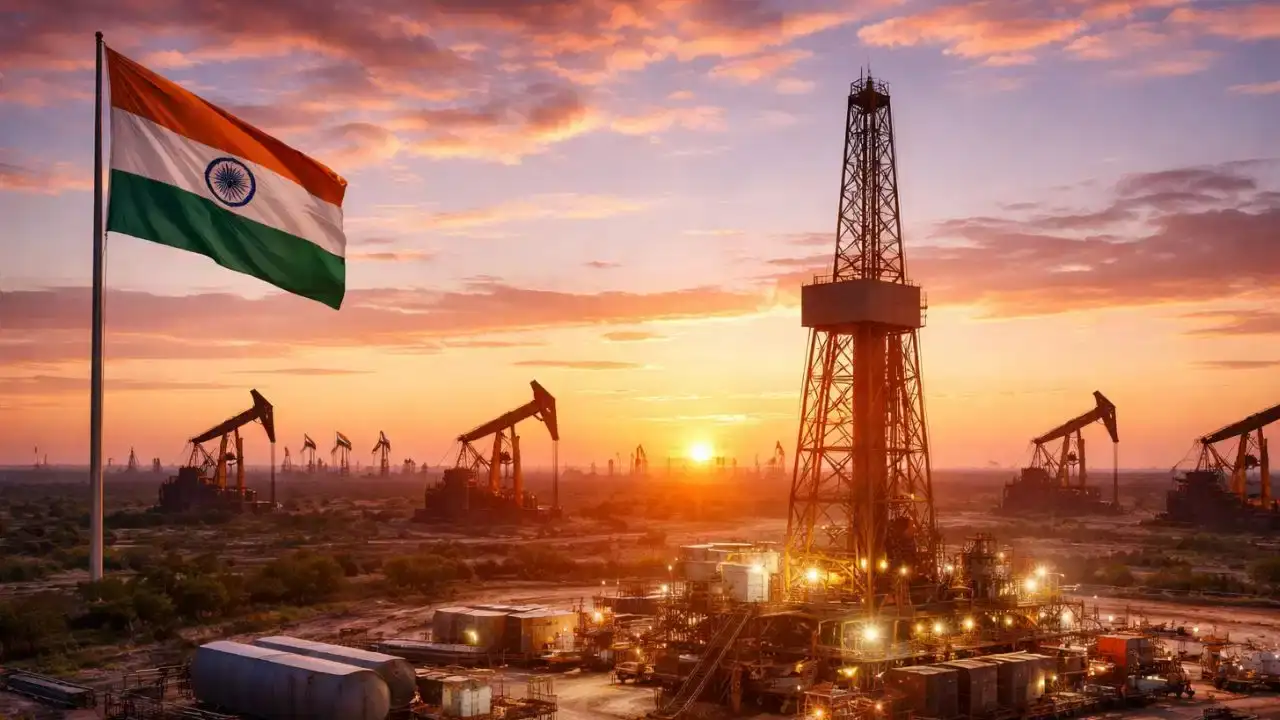
India is going through the biggest energy transition in its history. For decades, the country’s economy has been heavily dependent on crude oil imports, petrol-powered vehicles and industries based on fossil fuels. However, with lofty climate goals, rapid technological advancements and growing concerns about energy security, India is gradually moving towards a future dominated by renewable energy, electric mobility, green hydrogen and nuclear power. Let us know where India can stand in the next 50 years and whether the coming generations will even be able to see petrol or diesel.
**India is moving away from fossil fuels**
India has set a long-term target of achieving net-zero carbon emissions by 2070. To achieve this goal, the government is reshaping the country’s energy ecosystem. At the same time, dependence on imported crude oil is decreasing and investment in clean energy sources is increasing.
Currently, India imports a major part of its crude oil needs. This dependence not only affects the energy security of the country but also puts a huge burden on the economy. As a result, policymakers are focusing on renewable energy, domestic fuel alternatives, and cleaner transportation technologies.
**Energy transition period**
Major changes are expected in India’s energy sector between 2030 and 2035. The country has made significant progress in increasing solar and wind energy capacity and is rapidly moving towards generating a larger share of its electricity from non-fossil fuel sources. There is also talk of gradually phasing out diesel vehicles. Another important part of this change is ethanol blending; The government aims to increase the ethanol content in petrol to reduce dependence on imported crude oil.
**Role of electric vehicles and natural gas**
By 2050, India’s transportation landscape could be very different from what it is today. It is expected that electric vehicles will dominate the two-wheeler and three-wheeler segments. Big changes may also be seen in the heavy commercial transport sector; Natural gas-based fuels like CNG and LNG can play an important role in trucking and logistics.
Also, the role of crude oil may also change. Rather than being used primarily as a vehicle fuel, the oil can increasingly be used in the petrochemical industry to produce plastics, chemicals and industrial materials.
green energy superpower
The final phase of India’s energy transition, from 2070 to 2076, envisages an economy that will be largely carbon-neutral. Green hydrogen could become an important source of energy for industries that are difficult to run on electricity, such as steel production, shipping, aviation and long-distance transportation. Nuclear energy is also expected to increase significantly.
Will the coming generations be able to see petrol and diesel?
The answer is that its possibility is very less. Although petrol and diesel will not be completely eliminated, their use on public roads is expected to reduce significantly in the coming decades.