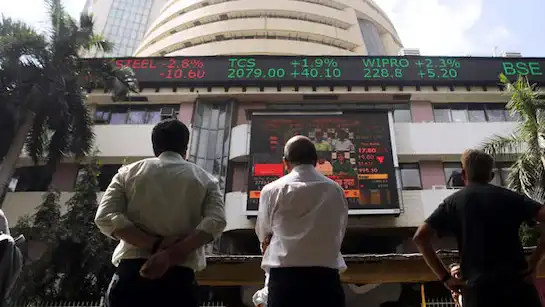
Sunday is always a holiday. But that won’t happen on February 1, 2026; The doors of Parliament will remain open, and the stock market will also remain open. This is because the budget will be presented on February 1, and this year February 1 falls on a Sunday. That is why the stock market will remain open. Such a coincidence does not happen often. As per rules, the budget is presented every year on 1 February. Therefore, there will be a lot of bustle in Dalal Street from the morning on the budget day.
stock market trading on sunday
It is worth noting that generally, both the exchanges, BSE and NSE, remain completely closed on weekends, i.e. Saturday and Sunday. However, an agreement was reached between the market regulator and the Finance Ministry to keep the markets open on important days like Budget day, as the markets are always open on Budget days. Budget day is exciting for investors too. This time, since the Budget is on February 1 (Sunday), the Economic Survey can be presented on or before January 31 (Saturday), the last working day, i.e. January 30 (Friday).
Why was this decision taken?
The decision to keep the markets open on Budget day was taken so that the direct impact of major economic steps could be seen in the markets immediately. For many years, investors have been demanding that the market should be live on the Budget day to avoid sudden fluctuations the next day. It is noteworthy that February 1, 2025 was a Saturday, but the markets were open as it was the Budget day. If we talk about presentation of the budget on Sunday, February 28, 1999 was a Sunday, and the budget was presented on that day. Earlier, the budget was presented on 28 February. That was the year when the budget was presented in the morning instead of in the evening.
Speculation regarding budget theme
Although there are still about 50 days left for the budget, investors are currently trying to understand in which direction the government can make big announcements. From income tax slabs to reforms related to infrastructure, manufacturing, rural economy and capital market.