
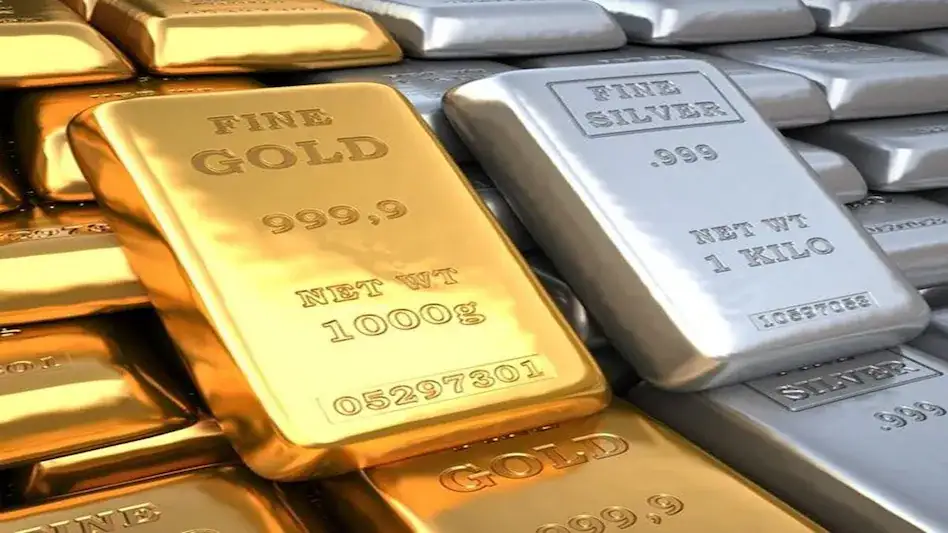
Gold and silver have become cheap once again. As soon as the markets opened on Monday, there was a huge fall in the prices of gold and silver. While on one hand the stock market is witnessing a major decline due to the possibility of continued conflict between Iran, Israel and the US, on the other hand gold and silver prices are—contrary to expectations—falling instead of rising. Around 10:00 am on Monday, gold prices fell by around ₹1,300, while silver also became cheaper by around ₹2,000.
What are the current prices of gold and silver?
On the domestic commodity exchange (MCX), at around 9:42 am, gold prices were trading at ₹143,000 per 10 grams—a fall of ₹1,282. This represents a decline of 0.89% compared to the closing price recorded at 11:59 pm on Friday. Meanwhile, at around 9:51 am, silver was trading at ₹226,200 per kg—a fall of ₹1,754—and this represents a decline of 0.89% from the closing price at 11:59 pm on Friday.
Gold and silver prices in bullion market
On March 30, gold and silver prices fell across the country. In Mumbai, 24-carat gold price fell by nearly ₹1,500 to ₹147,280 per 10 gram, while 22-carat gold is currently available at ₹135,000 per 10 gram. It is worth noting that these prices do not include GST or making charges. Earlier in January this year, gold touched its all-time high of ₹180,000, while silver touched its all-time high of ₹420,000.
Fall in gold and silver prices in international markets
On Monday, gold prices fell nearly 1% to $4,450 an ounce in the international market. Silver prices fell more sharply than gold, falling nearly 2% to around $68 an ounce. Silver prices have now fallen by 30% from their all-time high in March. Meanwhile, on the first day of the week, crude oil prices saw a big jump of 3%, crossing $102 per barrel. This is the highest level of oil prices since July 2022.
Why are gold and silver prices falling?
The 1.3% appreciation of the rupee has also pulled down the prices of these metals in the domestic market. Globally, gold has fallen more than 14% this month—its biggest monthly decline since October 2008. According to Kedia Advisory, as tensions in the Middle East enter their fifth week and crude oil prices continue to rise, concerns over inflation have increased. As a result, the likelihood of central banks raising interest rates has increased, keeping gold prices under pressure. It is worth noting that current gold prices are trading more than 15% below their March highs; Moreover, reduced purchasing of gold by central banks has also contributed to bringing down the prices.
There is fear in the market that the Federal Reserve (US Fed) may choose to increase interest rates instead of reducing them this year. This sentiment has reduced investor interest in assets that yield no interest income—such as silver. The rise in oil prices, as well as reports of possible US military action, have also put negative pressure on silver prices.