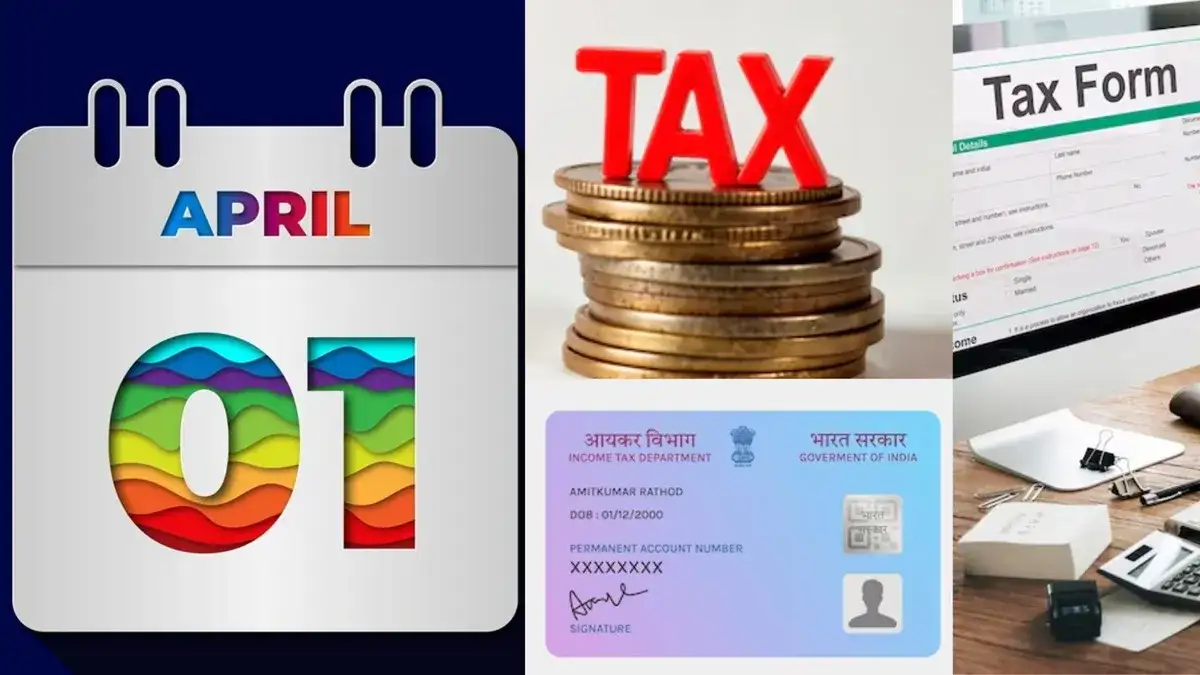
From April 1, the Income-Tax Act, 2025 is going to come into force in India, which will replace the almost 60-year-old Income-Tax Act, 1961. The government says that this is not just a change in the tax system, but a complete process of rethinking the entire law and rebuilding its structure. The biggest relief for the general public is that there has been no change in the existing tax slabs or tax rates. However, tax reporting, reporting and filing methods are going to be more stringent, digital and transparent than the earlier rules. Let us learn about the main changes made in the new income tax rules that you need to know about.
1. Benefits of eating
In the new rules, many benefits related to meal allowances have been provided for salaried employees. The limit of tax exemption on meal cards or vouchers given by owners (like Sodexo, Pluxee, etc.) has been increased from ₹50 per meal to ₹200 per meal. As a result, any employee can now avail tax-free meal allowances up to approximately ₹1 lakh annually, increasing his overall tax savings.
2.HRA
Changes have also been made in the rules related to House Rent Allowance (HRA). The list of cities eligible for 50% HRA waiver—which was earlier limited to just Delhi, Mumbai, Chennai and Kolkata—has now been expanded to include Bengaluru, Hyderabad, Pune and Ahmedabad. However, to make the rules more stringent, it has now been made mandatory to provide landlord information while claiming HRA; The purpose of this step is to prevent fraudulent claims.
3. Form 16
A major change is that now companies will stop issuing Form 16 to their employees; Instead, a new document—Form 130—will be provided. This change will make the process of filing Income Tax Returns (ITR) completely system-based; As a result, any discrepancy in ‘Tax Deducted at Source’ (TDS) may lead to delay in receiving tax refund.
4. PAN card rules
Apart from this, the rules related to PAN card have also been tightened. It is now mandatory to provide your PAN details for high value transactions, such as purchase or sale of a motor vehicle. Additionally, to simplify the process of choosing a tax regime, there is no longer any need to fill out a separate form; Instead, taxpayers can choose their preferred options directly within the ITR.
In other words, this new law has been brought not for the purpose of increasing taxes, but to make the system more transparent, digital and accurate. Its objectives include features like faceless assessment, reduced human intervention and faster refunds. Therefore, it is important for people to review their salary structure, HRA information, PAN linking status and TDS information from time to time to avoid any possible hassles in future.