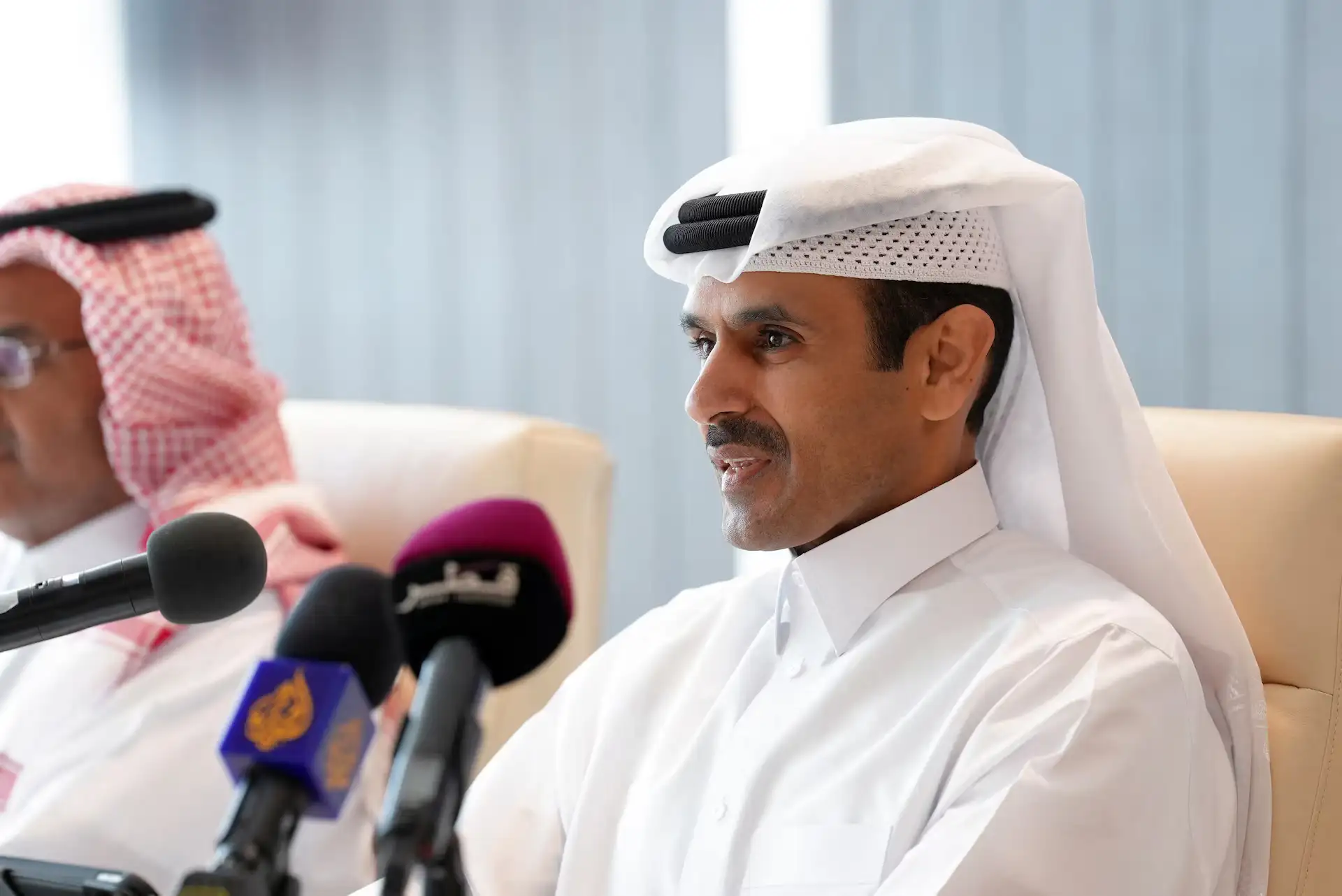
QatarEnergy CEO and Minister of State for Energy Affairs, Saad al-Kaabi, said the Iranian attacks have devastated about 17 percent of Qatar’s LNG export capacity, resulting in annual revenue losses of about $20 billion. According to Al-Kaabi, the repair works will disrupt the production of 12.8 million tonnes of LNG per year for a period of 3 to 5 years, jeopardizing supplies to European and Asian countries, including China and India. Attacks by Iran over the past few days have damaged at least two of Qatar’s 14 LNG trains and one of its two Gas-to-Liquids (GTL) facilities.
What QatarEnergy CEO said
Speaking to Reuters, Saad al-Kaabi commented, “I never imagined—not even in my wildest dreams—that Qatar and the entire region would be the victims of such an attack, especially during the holy month of Ramadan. And that such an attack would be carried out by a fellow Muslim nation.” State-owned QatarEnergy has announced that, due to the damage caused to two LNG trains, it will be forced to declare *force majeure* (exemption from the contract due to force majeure) on supply contracts scheduled for Italy, Belgium, South Korea and China—lasting up to five years.
First of all, we must end hostilities” — Al-Kaabi
Iran has launched a series of attacks on oil and gas facilities in the Gulf region following Israeli attacks on its own gas infrastructure. Tensions escalated further following an Iranian missile attack on Ras Laffan—Qatar’s largest LNG complex—on Wednesday, prompting QatarEnergy to declare *force majeure* on its entire LNG production. Al-Kaabi insisted that, in order for production to resume, hostilities must first end.
Ownership stakes: who owns what and where?
He further said that the damage caused by these attacks has set the region back 10 to 20 years; In fact, for many people, the area had long served as a safe haven—a place where they could live safely. I believe this image has now changed. According to the minister, US oil company ExxonMobil is a partner in the damaged LNG plants, while Shell is a partner in the damaged GTL plants; Repairs to the latter are expected to take up to a year.
Texas-based ExxonMobil has a 34 percent stake in LNG Train S4 and a 30 percent stake in Train S6. Train S4 affects supplies to Italy’s Edison and Belgium’s EDFT, while Train S6 affects South Korea’s KOGAS, EDFT and China’s Shell.