The impact of the sanctions imposed by Iran on oil routes—which were imposed amid the ongoing geopolitical conflict—is now visible in India as well. Long queues have formed outside gas agencies, and protests are taking place on the streets in many parts of the country, including Noida. Despite booking cylinders, people are not able to get their gas supply. As a result, citizens have started blocking the roads. Amidst this nationwide shortage of gas, the specific route by which gas reaches India has also become a topic of discussion. India produces 40 percent of its gas domestically, while the remaining 60 percent is imported from abroad.
For a long time, India has been heavily dependent on West Asia for its cooking gas needs. Qatar, United Arab Emirates (UAE) and Kuwait are the main countries from which India imports a major part of its LPG. The geographical distance between India and Qatar is approximately 2,500 kilometers. Of the total gas imported by India, 90 percent comes by sea route, which passes through the Strait of Hormuz. Now the important question arises: How does LPG reach India after covering this distance of 2,500 kilometers?
How does gas reach India?
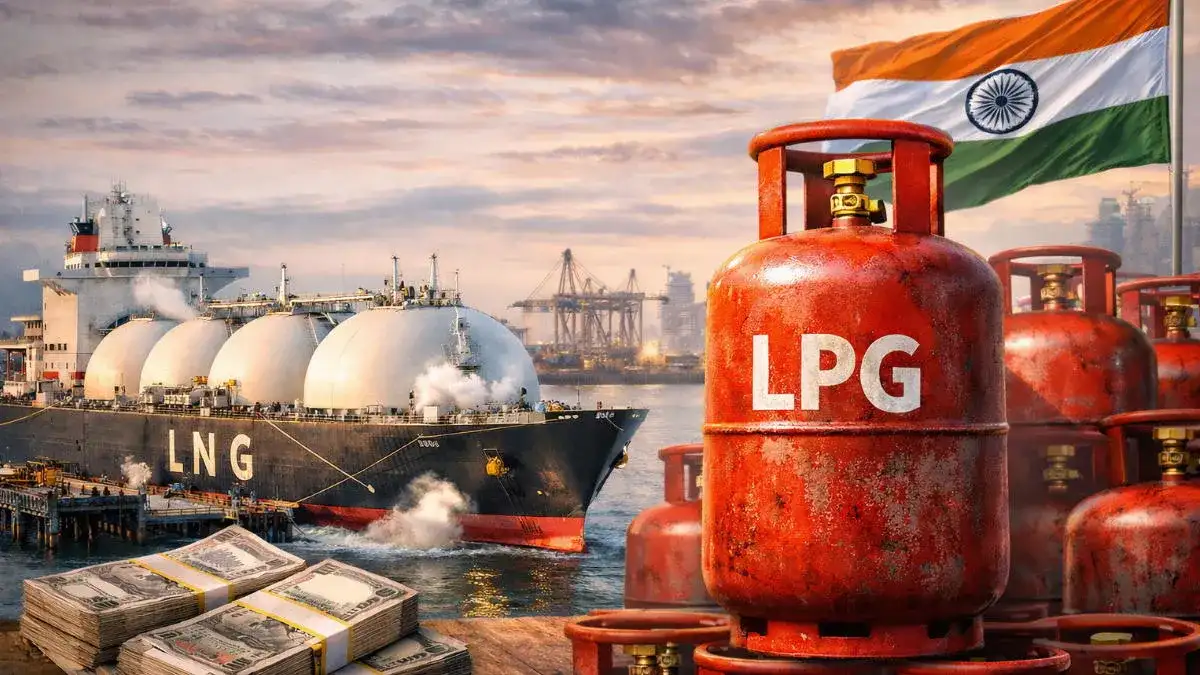
LPG is not transported in the gaseous state in which it is used in home kitchens. LPG (Liquefied Petroleum Gas) is a mixture of butane and propane. It is transported to India by sea. The interesting thing is that special types of ships are used for this transportation. To make transportation easier, LPG is first converted into liquid state. Gas is converted into liquid form by pressing; Due to this process it occupies very little space, making it possible to transport very large quantities of LPG in a single consignment. Once liquefied, the logistics of transporting the gas become much easier.
However, this process is not as easy as it might seem at first glance. When converting gas into liquid form, precise levels of temperature and pressure must be maintained very carefully, so that the original properties and purity of the gas remain intact. Crossing the Strait of Hormuz and the Arabian Sea, LPG ultimately reaches India’s main ports, including Dahej in Gujarat, Mangalore in Karnataka and Visakhapatnam in Andhra Pradesh. From this location, LPG is fed into storage tanks through pipelines. It is then transported to the bottling plant using tanker trucks or rail tankers. At bottling plants, the gas is filled into cylinders and then delivered to homes.
Why do accidents occur less?
When a country ships LPG, several precautions are taken to prevent accidents. For this, cargo tanks are filled with nitrogen gas before loading the LPG; This removes oxygen completely, preventing possible explosions. Additionally, at storage locations where the gas is converted into liquid form, it is cooled slowly to reduce heat gain. All these processes are completed before the actual loading begins. During sea transportation, ships are equipped with plants designed to re-liquefy any LPG that has vaporized during the voyage. These systems are used to maintain required temperature and pressure levels.