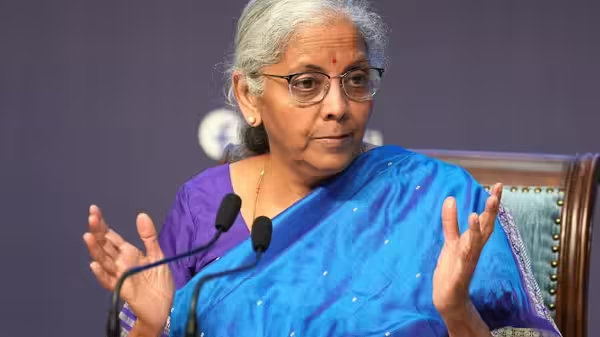
Finance Minister Nirmala Sitharaman has given a big statement about GST reforms for the country’s economy. He said that the general public will directly benefit from about ₹ 2 lakh crore from recent changes in GST. This will especially benefit the middle class and poor class, so that they will be able to increase the expenses according to their needs.
During the “Next Jane GST Reforms” program in Visakhapatnam, Nirmala Sitharaman announced that 99% items, which used to contribute 12% to the total GST revenue, would now be under 5% tax slab. This means that common people will have to pay less tax on everyday needs, which will reduce their pockets. It is especially a matter of relief for those who buy food and drink daily.
Businesses will also benefit
Nirmala Sitharaman said that this GST reform will benefit not only to the common consumers, but also to industries and businesses. Simple tax rules will help businesses improve their functioning. This will give new strength to many industries of the country and will speed up their development. He also informed that the tax collection under GST in 2018 was ₹ 7.19 lakh crore and by 2025 it is expected to increase to ₹ 22.08 lakh crore. Apart from this, the number of taxpayers has also increased from 65 lakh to 1.51 crore. This clearly shows that more people are paying and the government’s revenue is also increasing.
New rates will be implemented from 22 September
On 15 August, Prime Minister Narendra Modi announced important GST reforms before the nation from the Red Fort. Subsequently, the GST Council approved GST 2.0. This new system includes changes in tax slab. Most of the required things of everyday will now come in 5% tax slab, while others will be charged 18% tax. The earlier 12% and 28% slabs have been removed. Essential food items like bread, milk and cheese will no longer be taxed, which will give a lot of relief to the public. These changes will be applicable from 22 September. This will not only reduce the expenditure of the common man, but will also increase the flow of money in the country’s economy.