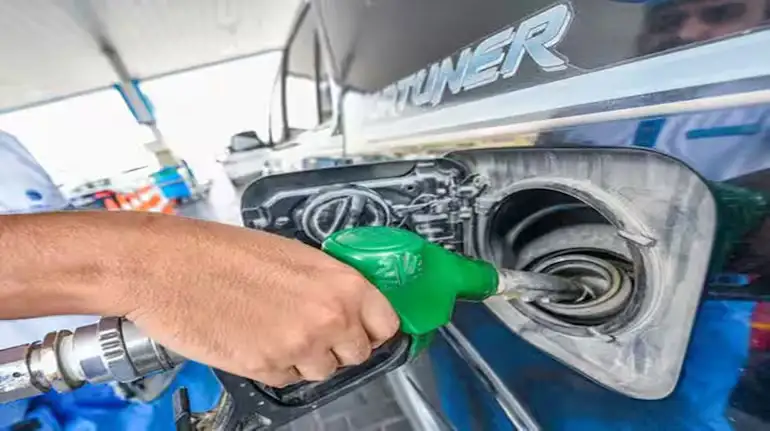
The government has reduced the special additional excise duty on petrol and diesel. According to Reuters, excise duty on petrol has been reduced from ₹13 per liter to ₹3 per litre. At the same time, excise duty on diesel has been reduced from ₹ 10 per liter to zero. This step of the government is expected to reduce the prices of petrol and diesel across the country.
Due to the ongoing conflict in the Middle East between America, Israel and Iran, there has been an interruption in the supply of crude oil. As a result, crude oil has become quite expensive. The rising prices of crude oil have increased the pressure on the country’s fuel companies. Just a day earlier, Naira Energy had increased petrol prices by ₹5 per liter and diesel prices by ₹3 per liter in the country. However, due to different VAT and taxes in different states, the actual price increase could be up to ₹5.30 per litre. Out of the total 102,075 petrol pumps in the country, this company operates 6,967 pumps.
The country’s government oil marketing companies have not yet increased the prices of regular petrol and diesel. However, they have increased the prices of certain categories, including premium and industrial fuels. In Delhi, the price of premium 95-octane petrol has been increased from ₹99.89 per liter to ₹101.89 per litre. Bulk or industrial diesel prices have been increased from ₹87.67 per liter to ₹109.59 per litre. Government oil marketing companies include Indian Oil Corporation, Hindustan Petroleum Corporation and Bharat Petroleum Corporation. These companies together control about 90 percent of the country’s fuel market.
Crude oil prices fell on Friday
There was a decline in crude oil prices during early trading on Friday. The reason for this was America’s announcement in which it said that it was stopping attacks on Iran’s energy facilities for a period of 10 days. Brent futures were down 0.8% at $107.11 a barrel, according to Reuters. At the same time, America’s West Texas Intermediate Futures fell 0.88% to $93.65 per barrel. The previous day, Brent futures had risen 5.7%, and US West Texas Intermediate was up 4.6%.
India meets 88 percent of its total crude oil requirements through imports. Most of these imports pass through the Strait of Hormuz, a vital sea route. Due to the ongoing conflict, Iran has taken control of this vital waterway, blocking the movement of commercial ships. However, Iran has clarified that ships from its “friendly countries”—including India—will be allowed to pass through this route. Nevertheless, this exemption will not be given without any conditions. Iran has made it clear that ships will be allowed to pass only if they follow its conditions. Only those ships which are not involved in any action against Iran will be allowed to pass.
The struggle continues since 28 February
The hostilities between Israel, the US and Iran began on February 28, when the US and Israel attacked Iran. In retaliation, Iran launched attacks on Israel and the Gulf countries where US military bases are located. So far, thousands of people have been killed in joint US and Israeli attacks on Iran, as well as Israeli attacks inside Lebanon. Supply chain disruptions caused by the conflict have sent oil prices soaring, hitting markets around the world.