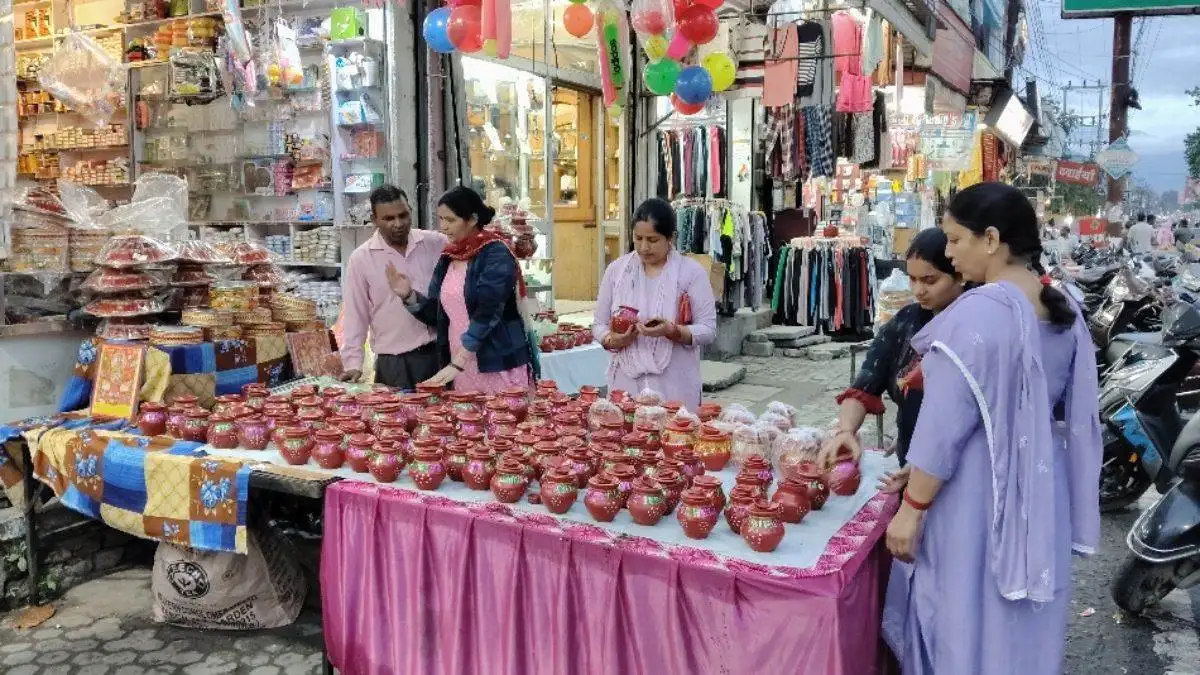
The festival of Karva Chauth is being celebrated across the country today. Women dressed in traditional clothes have gathered in the markets since morning. There is hustle and bustle in every market, mall and market across the country including Delhi. Women are shopping in large numbers to wish for the long life of their husbands. It is estimated that today alone goods worth about ₹28,000 crore were sold in various markets across the country. There were purchases worth ₹8,000 crore in Delhi markets alone.
Shopping continues for several days
Confederation of All India Traders (CAIT) general secretary and BJP MP Praveen Khandelwal said that there are reports of huge shopping across the country on the occasion of Karva Chauth. Goods worth approximately ₹28,000 crore have been sold so far. This business is estimated to be around ₹8,000 crore in Delhi alone. Last year, sales worth around ₹22,000 crore were witnessed across the country on this occasion. Business worth around ₹15,000 crore was seen on Karva Chauth in 2023.
Khandelwal said that a huge jump was seen in the sales of traditional Karva Chauth items like sarees, lehengas, puja thalis, strainers, earthen pots, sweets, gifts, jewelery and cosmetics. Long queues were also seen at beauty parlors, mehendi artists and salons throughout the day. This has provided good employment to small artisans and craftsmen across the country, and a large number of mass Karva Chauth pujas were also organized across the country.
Which markets of Delhi are crowded?
In major markets like Chandni Chowk, Sadar Bazaar, Sarojini Nagar, Lajpat Nagar, Karol Bagh, Rajouri Garden, Kamla Nagar, Shalimar Bagh, Pitampura, Paschim Vihar, Rohini, Connaught Place, Khan Market, South Extension, Laxmi Nagar and Preet Vihar, the crowd has increased so much that even standing in the shops is becoming difficult. The organization says that the reduction in GST rates on many items before Karva Chauth has provided additional relief to consumers.
Fast for husband’s long life
On Karva Chauth, women observe Nirjala fast for the long life of their husbands. During the fast, they do not consume water throughout the day and break the fast by drinking water from their husband’s hands after the moon rises at night. Women dress up a lot on this occasion. They are not only buying new clothes but also jewellery, usually made of precious metals. This has provided good employment to small artisans and artists across the country.