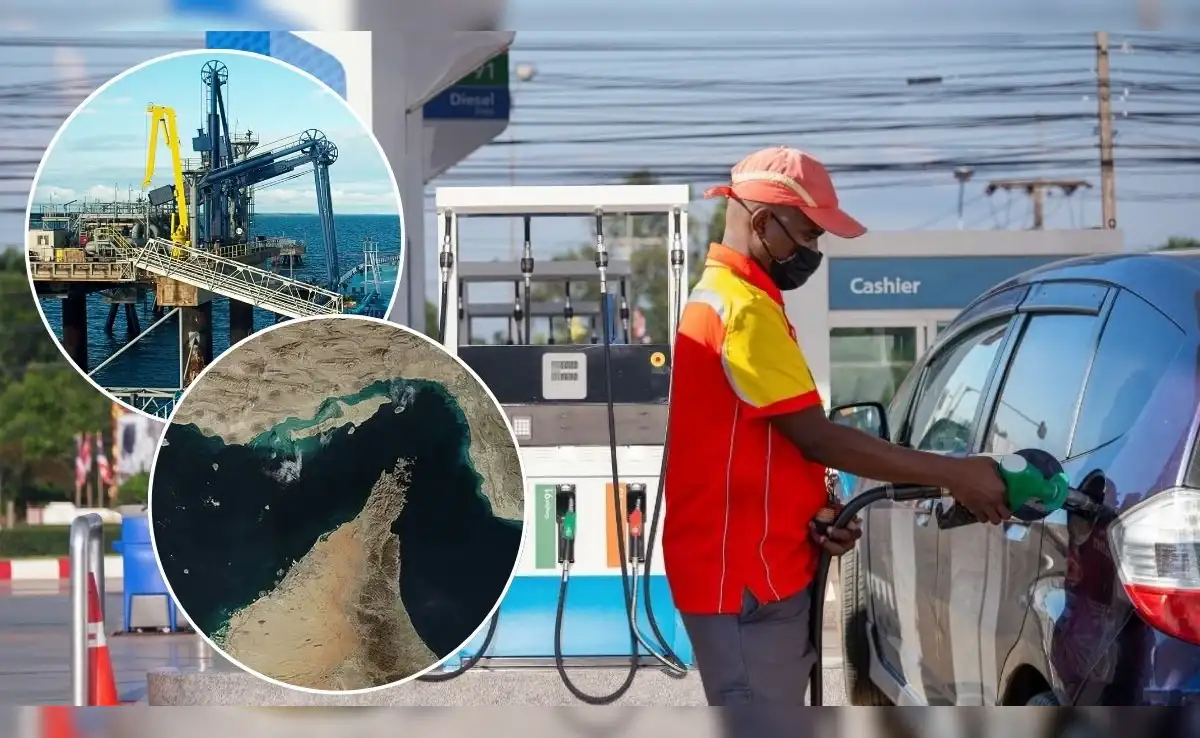
There has been positive progress in the ongoing peace talks between America and Iran. As a result, the market expects the Strait of Hormuz – which was closed for the past three months – to reopen, and global crude oil supplies will return to normal levels. After this news, a huge fall in oil prices was seen in the international markets today. Brent crude, the global benchmark, fell 5.4% to $97.97 a barrel, while West Texas Intermediate traded below $92.
This fall in crude oil prices has come as a big relief for India, which imports more than 85% of its oil needs. Meanwhile, despite the fall in global crude oil prices, state-owned oil companies in India have increased petrol and diesel prices by about ₹7.50 in the last 10 days. This naturally assumes that domestic petrol and diesel prices will come down in the near future; However, this is not the case in reality.
Why are the prices of petrol and diesel going to increase further?
Despite the recent price hike, the financial books for the country’s oil companies have still not broken even, according to a report by financial experts and Kotak Securities. The conflict between Iran and the US – which began on February 28 – caused crude oil prices to rise from $70 per barrel to $114 per barrel. During this period, oil companies refrained from raising prices for a full 76 days, thereby bearing the burden of expensive imports.
*Livemint* financial experts say that since the conflict between the two countries started, crude oil prices have increased by a whopping 39%; In comparison, petrol and diesel prices have increased by only 3-7% so far. As a result, to fully recover their losses, oil companies may theoretically need to increase prices by an additional ₹11-14 per litre.
Another reason for price increase
Another reason for the rise in petrol and diesel prices is that, even though crude oil prices have currently reached the level of $98 per barrel, tensions in the Strait of Hormuz have not yet completely subsided. Even if peace talks between the US and Iran succeed, it will take some time for the situation to return to normal. Additionally, due to this geopolitical crisis, marine insurance premiums and freight charges (shipping costs) for oil tankers originating from the US and Northern Europe have increased significantly. These additional costs will ultimately be recovered by increasing retail prices.
continuous losses
Even after increasing the prices of petrol and diesel four times, oil companies are still making a loss of ₹10 per liter on petrol and ₹13 per liter on diesel. Companies cannot sustain such large daily losses for long; Therefore, to maintain their financial stability, they are left with no other option but to increase prices.