
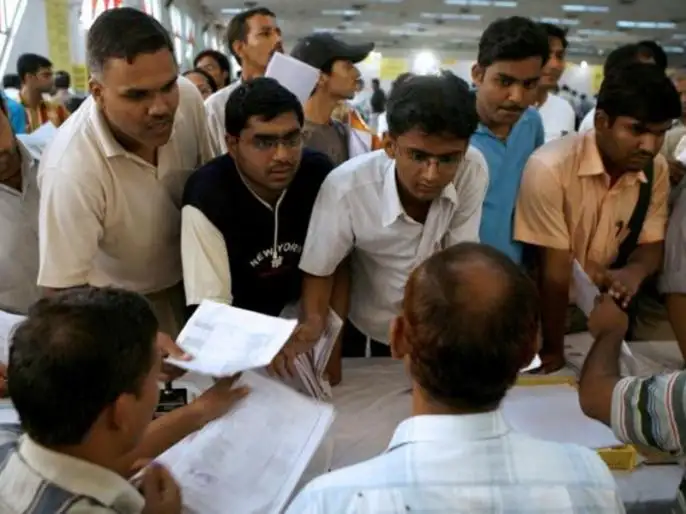
The government is making many efforts to promote education in India. As a result, access to higher education has increased significantly compared to before; However, getting a job after completing your degree is still a big challenge. The recently published ‘State of Working India 2026’ report and data from the Periodic Labor Force Survey show that the number of young graduates in the country is continuously increasing, yet employment opportunities have not increased at the same pace. As a result, a large number of young degree holders are still waiting for employment. According to the report, the number of graduates in the 20-29 age group was about 50 lakh in 1983 and has since increased to 6.3 crore – an almost thirteen-fold increase in four decades. During the same period, the number of unemployed graduates increased from 7 lakh to 1.1 crore. In other words, employment opportunities have failed to keep pace with the rapid expansion of higher education.
**Two out of three unemployed youth are now graduates**
In 1983, one in eight unemployed youth was a graduate; Today, two out of three unemployed youth have a degree. This change shows that education has increased in the country, but the mechanisms for getting employment after completing studies have not been strengthened accordingly. The report said the unemployment rate among graduates under 25 is projected to increase from 35 per cent in 1983 to 39.3 per cent in 2023, indicating that the level of unemployment in this category has remained largely unchanged for four decades. At the same time, the situation has worsened for graduates in the age group of 25-29, where the unemployment rate has increased from 12.2 percent to 20 percent. This means that youth are taking longer to find employment than before. Millions of graduates every year, yet limited paying jobs
The report shows that between 2004 and 2023, the country produced an average of 50 lakh new graduates every year. Of these, about 28 lakh people got some kind of employment, but only 17 lakh youth could get regular salary jobs. This means that a large number of youth either got only temporary jobs or remained unemployed. Panel data shows that even after being unemployed for a year, about half of young people find some kind of work; However, very few people get jobs with fixed salary. The number of people getting white-collar jobs is even less.
wide variation between states
Graduate unemployment rates vary from state to state. According to the report, the unemployment rate among male graduates under 30 years of age stands at 8.8% in Delhi, while in Odisha it reaches 40.3%. The situation is even more difficult for female graduates in many states; The unemployment rate in Jammu and Kashmir is 73.5%, in Telangana 52.3% and in Andhra Pradesh 51.6%. Nationally, this rate is 25.1% for men and 36.6% for women.
A degree is still useful, but it takes longer to get a job
The report also states that graduates initially earn more than non-graduates. After getting a job, their income is good, but now it takes more time than before to get a job. Additionally, the pace of increases in starting salaries has slowed in recent years.