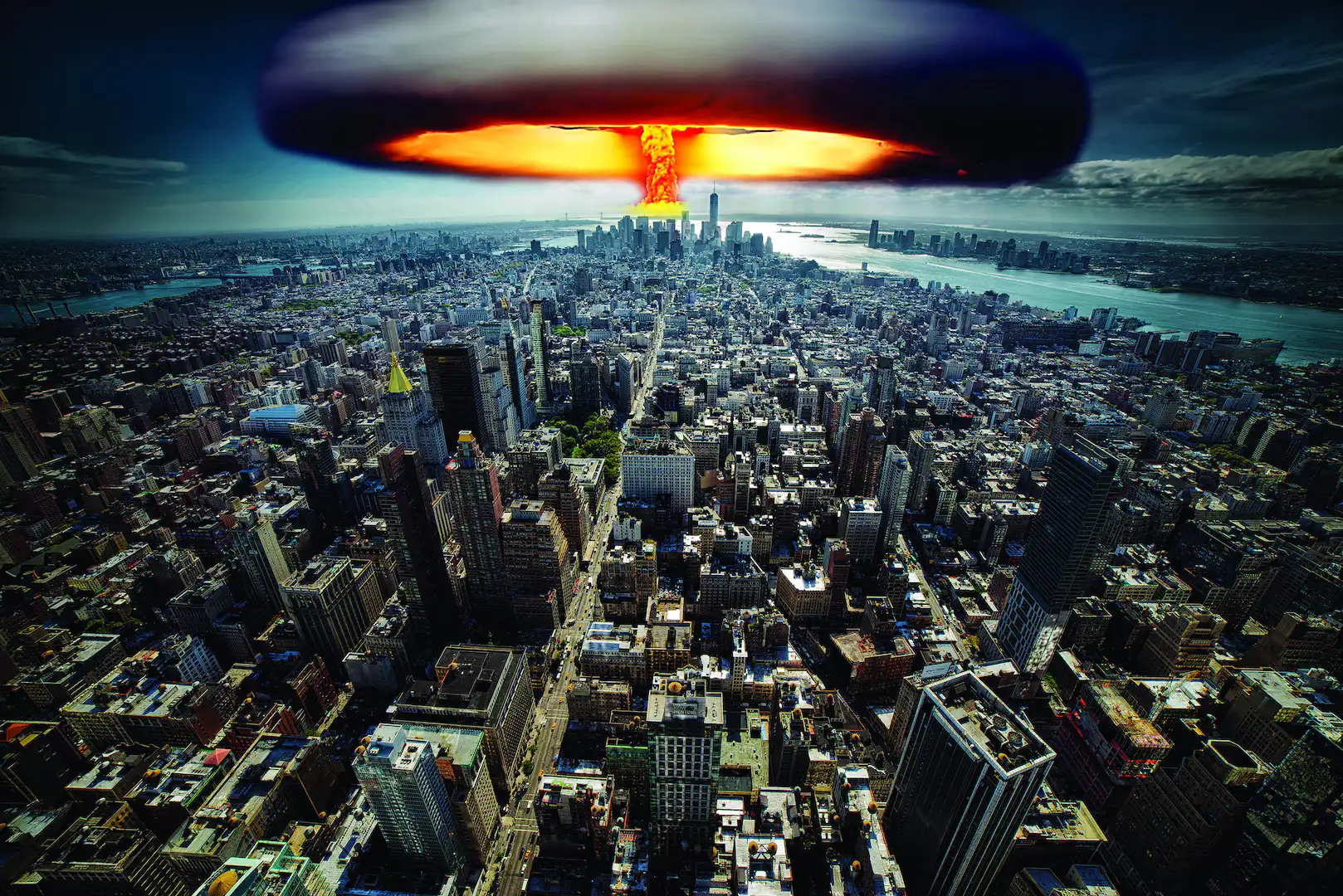
Due to the increasing conflict between Iran, Israel and America, the world is once again immersed in discussions about the destructive potential of nuclear weapons. When two or three nuclear-armed countries face each other, the most important question arises: Who has the right to fire these deadly missiles? In a responsible country like India, this process is not as simple as pressing the “red button” shown in movies; Rather, it is wrapped in many impenetrable layers of security and morality. While on one hand India has proved its might to the world, on the other hand it has also created a strong framework that ensures that these weapons are used only as a ‘last resort’.
India’s ‘No First Use’ policy
India is one of only nine countries in the world that have nuclear capability; However, its policy is quite different—and notably restrained—from those of the rest of the world. India has consistently followed a “no first use” policy—meaning it will not initiate a nuclear attack. This simply means that under no circumstances will India launch a first nuclear attack on any other country. Our nuclear arsenal exists not to wage war, but to act as a deterrent against enemies and to ensure our own national security. India would use these weapons only if it—or its forces—were subjected to a nuclear attack by another country. It is this restraint that establishes India as a mature nuclear power on the global stage.
In whose hands is the command?
Contrary to popular belief, the “remote control” of India’s nuclear arsenal is not in the hands of any one person. Even the Prime Minister does not have the unilateral authority to fire nuclear missiles merely on the basis of his personal wish. In India, the authority to manage and deploy nuclear weapons rests with the ‘Nuclear Command Authority’ (NCA). This organization consists of two main parts that work together to analyze the need for any potential attack, as well as assess its potential consequences. This framework has been designed with such precision and complexity to ensure that no wrong decision is taken in a moment of passion or haste, thereby maintaining both national security and international norms.
Prime Minister’s supreme mandate
The highest body within the Nuclear Command Authority is known as the ‘Political Council’. It is chaired by the Prime Minister of the country himself. This council is the only body that has the authority to issue final and formal orders for the use of nuclear weapons. However, the Prime Minister takes this decision only after consulting senior ministers of his cabinet and his advisors. Unless the Political Council gives the ‘green signal’, no branch of the armed forces can activate these weapons. This underlines the strength of India’s democratic structure, in which the military has always been subordinate to civilian leadership.
Role of Executive Council and NSA
The second important component of the NCA is the Executive Council. Its command is in the hands of the National Security Advisor (NSA) of the country. The main function of this council is to keep the Political Council informed about the ground realities, enemy activities and technical aspects. It is this same team—headed by the NSA—that advises the Prime Minister on whether it becomes necessary to carry out a nuclear attack. Once the Political Council issues the order, the responsibility of implementing it and formulating the precise strategy for the attack falls on the Executive Council. This institution includes top military commanders as well as scientists.
Strategic Forces Command
Once the process of issuing orders is complete, the task of executing them on the ground falls to the Strategic Force Command (SFC). It is a specialized branch of the Indian Armed Forces, specially trained to maintain and launch nuclear weapons. The SFC functions directly under the instructions of the Prime Minister and the NSA. This branch is responsible for verifying the launch codes required for the attack—and guiding the missiles to their intended targets. This three-tier security structure of India is impenetrable to any adversary and ensures that our retaliatory strike is so devastating that the attacking nation has no chance of recovery.