Governor refuses to administer oath as CM to TVK chief Vijay in Tamil Nadu. Know the complete inside story of Yediyurappa’s ‘VIP exemption’ and Raj Bhavan’s dual attitude in 2018.
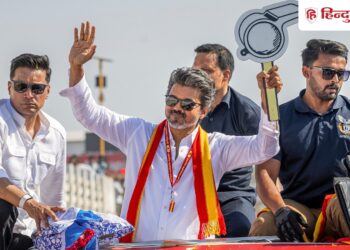
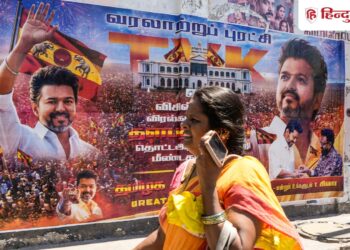
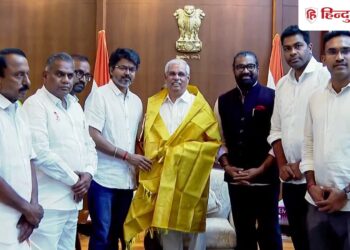
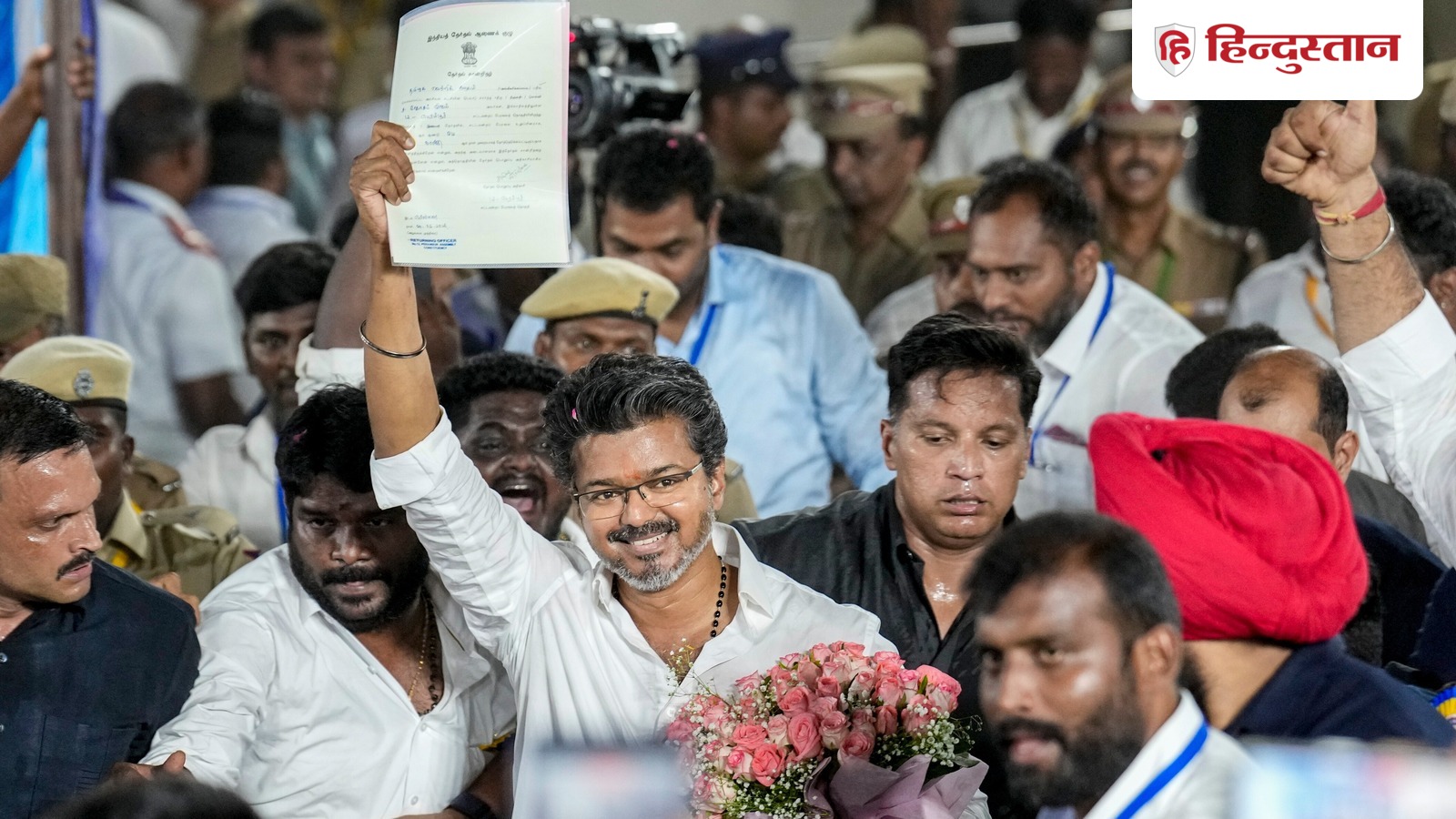
Raj Bhavan has put a big ‘speed breaker’ in the path of Tamilaga Vetri Kazhagam (TVK) chief Vijay, who entered the political arena from the cinematic screen in Tamil Nadu politics, becoming the Chief Minister. When Vijay reached Lok Bhawan to meet Governor Rajendra Vishwanath Arlekar to stake claim to form the government with the support of Congress, he was flatly refused to administer the oath immediately. A strict condition was put forward by the Raj Bhavan – first bring the letter of support from 118 MLAs, only after that the further process will take place.
This incident has once again given vent to that old and heated debate in Indian politics: Do governors in the country adopt a dual attitude according to political circumstances and parties? To gauge the depth of this question, we have to turn the pages of the 2018 Karnataka Assembly elections, where the role of Raj Bhavan was exactly the opposite.
When Yediyurappa got ‘VIP discount’ in 2018
No party got an absolute majority in the Karnataka Assembly elections of May 2018. In the 224-member assembly, Bharatiya Janata Party (BJP) emerged as the largest party with 104 seats, but fell short of the magical figure. On the other hand, Congress and JDS formed an alliance soon after the elections, with the latter having a clear majority. Congress had won 80 seats and JDS 37 seats. But, the then Governor Vajubhai Vala replaced the Congress-JDS alliance with B.S. as the leader of the single largest party. Yeddyurappa was invited to form the government.
Yediyurappa also took oath as Chief Minister for the third time. He was not asked for the list of 112 MLAs before taking oath, rather he was given time to prove his majority in the House. However, after the intervention of the Supreme Court, when the time for floor test came, due to lack of majority, Yediyurappa had to resign in just 3 days and Congress-JDS formed the government.
Vijay vs Yediyurappa: Questions arising and Raj Bhavan’s ‘double standards’
When these two cases of Karnataka and Tamil Nadu are seen together, many contradictions are seen, which raise questions on the impartiality of the Governors.
‘Evidence’ before oath vs ‘time’ after oath: In Yediyurappa’s case, the then Governor did not say that first bring the letter signed by the majority, then I will administer the oath. He gave time to prove majority by administering oath. At the same time, in Vijay’s case, Governor Arlekar has sought ‘physical guarantee’ of the support of 118 MLAs in the Raj Bhavan itself.
Supreme principle of floor test
The Supreme Court has long made it clear that the majority decision should not be taken in the closed rooms of Raj Bhavan, but on the floor of the Legislative Assembly. In this context S.R. The case of Bommai v. Union of India (1994) is a landmark decision in Indian constitutional history. On March 11, 1994, a 9-judge bench of the Supreme Court banned arbitrary dismissals of state governments under Article 356 and strengthened the federal structure. This decision established that the government’s majority must be proven in the Assembly itself. In Vijay’s case, it seems as if the Governor wants to take ‘Raj Bhavan test’ even before the floor test.
pay attention to the strength of the alliance
In 2018, when Congress-JDS claimed majority soon after the elections, it was ignored and the single largest party (without majority) was called. Now that Vijay is staking claim in Tamil Nadu with the support of Congress, the strictness of the rules has suddenly increased. It is noteworthy that Vijayay’s Tamilaga Vetri Kazhagam (TVK) has achieved the status of the largest party by winning 108 seats in the 2026 assembly elections. But 118 seats are needed for majority in the 234-member House. With the support of 5 Congress MLAs, their figure has reached 112-113, which is still six less.
Constitutional and political perspective
The Chief Minister is appointed by the Governor under Article 164 of the Indian Constitution. The tradition is that the largest party/alliance gets a chance, then there is a floor test. But the measure of ‘satisfaction’ depends on the discretion of the Governor – which often gives rise to controversies. In the Yediyurappa case, the Governor took risk and gave time, which benefited BJP. In Vijay’s case, it seems to be a safe game – first full proof, then oath. Congress is calling it a violation of the mandate.
This comparison of the cases of Vijay and Yediyurappa clearly shows that the prerogatives enjoyed by Governors at the time of hung assemblies or formation of coalition governments often become a cause of controversy. Now it will be interesting to see whether ‘Thalapathy’ Vijay is able to overcome this challenge of Raj Bhavan by collecting signatures of 118 MLAs, or this political tug of war will turn into a long legal battle. If other small parties (like VCK etc.) come together then the figure may be exceeded.