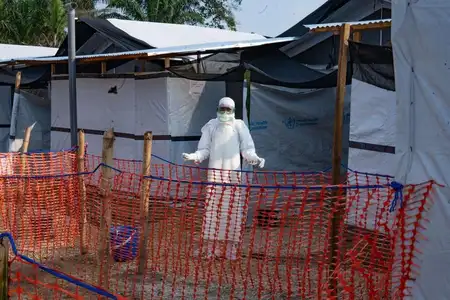
Addis Ababa, June 29 (IANS). Amid the growing outbreak of Ebola in Africa, the Africa Centers for Disease Control and Prevention (Africa CDC), the World Health Organization (WHO) and the Government of Uganda have jointly launched the ‘Joint Continental Incident Management Support Team’ (IMST). Its aim is to strengthen the capacity to respond to health emergencies across the continent.
In a statement released late Saturday, Africa CDC said the newly launched IMST creates a shared operational platform that strengthens Africa’s capacity to prepare, coordinate, and respond to public health emergencies. Additionally, it also supports ongoing efforts to combat the Bandibugyo Ebola virus disease.
The IMST, launched on Saturday at Makerere University in the Ugandan capital Kampala, will support Uganda, the Democratic Republic of Congo and neighboring countries at risk through integrated technical assistance, operational coordination and multidisciplinary expertise.
Africa CDC said, “This launch is an important step towards strengthening Africa’s public health emergency response. It reflects the shared commitment of Africa CDC, WHO and African Union (AU) Member States to respond to complex public health threats rapidly, in a better-coordinated and country-led manner.”
The AU specialized public health agency said the new platform strengthens regional preparedness and cross-border cooperation as essential pillars of Africa’s health security.
The IMST, which works on the principles of ‘one team, one plan and one budget’, brings together experts in surveillance, laboratory systems, case management, infection prevention and control, emergency logistics and operations, risk communication, information management and partner coordination to strengthen the capacity to respond to disease outbreaks across the region, the agency said. Xinhua news agency gave this information.
A highly contagious and fatal viral disease that affects humans and other primates (such as monkeys and chimpanzees). The virus is spread from wild animals (such as fruit bats, porcupines, and non-human primates) to people and then to humans by direct contact with the blood, secretions, organs or other body fluids of infected people, and by contact with surfaces and objects (such as bedding and clothing) contaminated with these fluids.
The average case fatality rate (case fatality rate) in Ebola disease is about 50 percent. The death rate in previous outbreaks has ranged from 25 percent to 90 percent.
The first outbreak of Ebola disease occurred in remote villages in Central Africa, near tropical rainforests. The 2014–2016 Ebola virus outbreak in West Africa was the largest and most complex outbreak since the virus was discovered in 1976. This outbreak resulted in more cases and deaths than all other outbreaks combined. This outbreak also spread to many countries. It started from Guinea and then reached Sierra Leone and Liberia through land borders.
–IANS
PIM/AS