New Delhi, May 3 (IANS). In an important step towards strengthening child health services in the country, the Ministry of Health and Family Welfare has released the Rashtriya Bal Swasthya Karyakram (RBSK) 2.0 Guidelines at the recently concluded National Summit on Best Practices and Innovations in Public Health Service Delivery.
The RBSK 2.0 guidelines mark a significant advancement in India’s flagship child health screening programme, building on over a decade of implementation and expanding its scope to address emerging child health priorities. The latest framework strengthens and broadens the established Four D approach—congenital defects, diseases, deficiencies, and developmental delays. It also covers the health challenges of the new generation including non-communicable diseases, mental health conditions and behavioral concerns.
The revised guidelines offer a comprehensive preventive, promotive and curative continuum of care, reinforcing the existing lifecycle based approach of the program covering children from birth to 18 years, with a greater focus on digitalization. This shift reflects India’s evolving child health needs and its commitment to ensure not just survival but holistic development and growth.
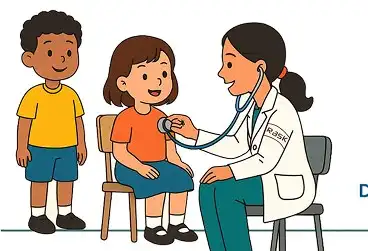
A key feature of RBSK 2.0 is the expanded scope of screening to include a range of conditions including developmental disorders, mental health problems and risk factors for non-communicable diseases such as diabetes and hypertension. Screening services will continue through mobile health teams in Anganwadi centers and schools, ensuring universal reach and early detection.
The guidelines emphasize strengthening referral relationships and continuity of care, including clearly defined pathways from community-level screening to health facility-based diagnosis and treatment. A robust referral tracking system ensures that children with health problems are tracked throughout the care process, reducing dropouts and ensuring timely intervention.
In line with the government’s digital health-focused approach, RBSK 2.0 introduces digital health cards, real-time data systems and integrated platforms for tracking, monitoring and service delivery. These digital innovations are expected to improve program efficiency, accountability and evidence-based decision making at all levels of implementation.
The guidelines promote multi-sectoral coordination, bringing together health, education and women and child development systems to ensure comprehensive and coordinated service delivery. Schools, Anganwadi centers and community platforms act as key contact points for screening, awareness and follow-up care.
By strengthening early detection, improving referral systems and ensuring continuous follow-up, RBSK 2.0 is expected to significantly enhance child health outcomes, reduce the burden of diseases and promote the overall well-being of children across the country.
The publication of the RBSK 2.0 guidelines reflects the Government’s continued commitment towards ensuring accessible, equitable and quality health services for every child, with special focus on early intervention, continuity of care and long-term health outcomes.
–IANS
OP/VC