New Delhi, December 4 (IANS). The Institute of Nano Science and Technology (INST), a Mohali-based autonomous institute of the Department of Science and Technology (DST), has conducted research on the harm caused to the body by single-use pet bottles. According to this research, the nanoplastics present in these plastic bottles directly attack our biological system. DST gave this information on Thursday.
Nanoplastics found in food items are a matter of concern worldwide and in recent times there has been much evidence of their presence in the human body, but their true effects are still not known.
Some previous studies had focused on how plastics pollute the environment or damage host tissue, but almost nothing was known about their direct effects on gut microbes beneficial to human health.
The team of Prashant Sharma and Sakshi Dagaria of the Chemical Biology Unit at INST found the first clear evidence of its serious effect on the human body.
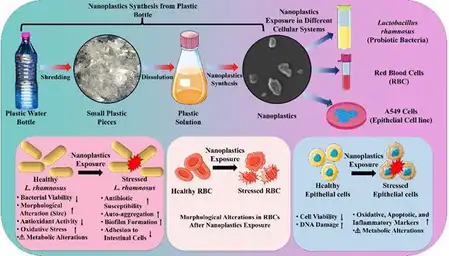
The researchers found that long-term exposure reduced bacterial growth, colonization (the process of bacteria establishing and multiplying within the human body), and defense mechanisms, while increasing stress responses and sensitivity to antibiotics.
“Overall, the results suggest that nanoplastics from everyday plastics are biologically active particles that may interfere with gut health, blood stability (by interfering with blood flow or the balance of its components), and cellular function,” the researchers said in a paper published in the journal Nanoscale Advances.
The team recreated nano-plastics from pet bottles in the lab and tested them on three specific biological models.
To see how nanoplastics affect the microbiome, a beneficial gut bacteria, Lactobacillus rhamnosus, was used.
In high concentrations, nanoplastics were found to damage red blood cell membranes and cause premature death of cells.
Additionally, the team found that chronic exposure to these substances causes DNA damage, oxidative stress (an imbalance between free radicals and antioxidants in the body), apoptosis (cells destroy themselves), and inflammatory signaling (a complex molecular process in which the body’s immune system uses signals to produce inflammation in response to infection, injury, or damaged cells), as well as energy and There are also changes in nutrient metabolism (a biochemical process that the body uses to convert and store nutrients from the diet into energy).
“Nanoparticles cause DNA damage, oxidative stress, and inflammatory responses in human epithelial cells during long-term exposure, posing previously unknown risks to human health,” the researchers said.
He said that apart from human health, these insights can be extended to agriculture, nutrition and ecosystem studies, where microbial balance and plastic pollution intersect.
–IANS
kr/