Dhaka, July 12 (IANS). Five more children died due to measles-like symptoms in Bangladesh in the last 24 hours till 8 am (local time) on Sunday. With this, the total number of confirmed and suspected deaths related to measles in the country has increased to 758.
According to the latest data from Bangladesh’s Directorate General of Health Services (DGHS), the number of deaths due to suspected measles has increased to 664, while the number of deaths confirmed by lab tests remains at 94, according to Bangladeshi newspaper The Business Standard.
During this period, 879 new suspected cases of measles were reported in Bangladesh, taking the total number of suspected infections to 111,480. At the same time, 90 new cases of test-confirmed measles were registered, taking the total number of confirmed cases in the country to 13,500.
According to DGHS data, 94,340 suspected measles patients have been admitted to hospitals in Bangladesh since March 15. Of these, 90,605 patients have recovered.
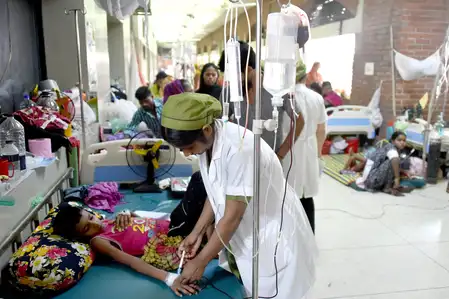
More than 900 measles patients are being admitted to hospitals in Bangladesh every day, putting a lot of pressure on the health system. Health experts have warned that if dengue cases also increase, the burden on hospitals may further increase and the risk of deaths may also increase.
According to reports, major government hospitals in Dhaka, which have previously treated thousands of patients during dengue outbreaks, are currently grappling with a large number of measles patients. Experts say that if dengue cases increase, there will be further pressure on the already limited health facilities and the medical services available to patients may be affected.
According to Bangladeshi newspaper The Daily Star, the dengue situation has worsened in the month of June. Of the total dengue cases reported so far this year, 48 percent of the cases and 72 percent of the total deaths have been reported in June.
Health experts have warned that the figures could rise further unless steps are taken to stop Aedes mosquitoes, which spread dengue, during the peak monsoon season in July and August.
Fazal Rabbi Chowdhury, associate professor in the department of internal medicine at Bangladesh Medical University (BMU), said that although measles cases have now started declining, the decline is slower than expected.
“At the same time, monsoon is creating a favorable environment for mosquitoes to breed and dengue cases have already started increasing. This will definitely put additional pressure on hospitals,” he said.
To prevent the situation from turning into a major health crisis, health experts have appealed to the Bangladesh government to intensify operations to eliminate mosquito larvae, increase temporary treatment centers and create separate units for dengue so that both diseases can be tackled simultaneously.
–IANS
AY/DKP