
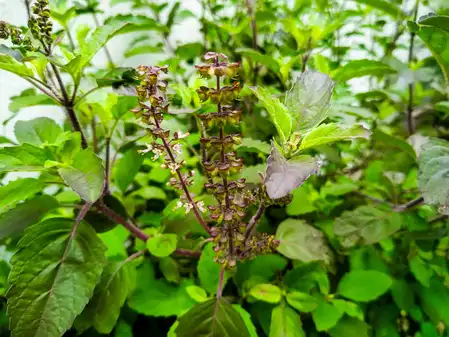
New Delhi, April 12 (IANS). The Tulsi plant in the courtyard of the house is not limited to just the puja plate, but along with the leaves, Tulsi Manjari (small bunches of flowers) is also a wonderful medicine for health. In Ayurveda, Tulsi Manjari is considered a natural remedy for increasing immunity, cold and cough, improving digestion and reducing stress.
According to Ayurveda, Tulsi Manjari not only gives physical health but also gives mental peace. It also brings happiness and prosperity in the house. Religiously it is also considered sacred.
Experts advise that daily consumption of cheap and easily available natural medicine Tulsi Manjari reduces the need for medicines to a great extent. However, in case of serious illness, definitely consult an Ayurvedic expert.
The Ministry of AYUSH of the Government of India also calls Tulsi a powerful blessing of nature. Basil flower is a bunch of small flowers that grow on the plant. Antibiotic, antiviral, antifungal, and antioxidant properties are found in abundance in it. These properties make the body strong from inside and prevent many diseases.
Regular consumption of Tulsi Manjari increases the body’s immunity. Cold, cough, fever and viral infections do not occur easily. Provides relief from cold, cough and throat problems like sore throat, phlegm and chronic cough. Asthma and allergy patients also benefit. By strengthening the digestive system, it provides relief from problems like gas, indigestion, acidity and constipation.
Not only this, the fragrance of Tulsi calms the mind, reduces stress and brings good sleep. There is relief from mouth ulcers, glow on the face and reduction in pimples and acne. Also, toxic elements are removed from the body and the blood becomes clean.
Tulsi Manjari can be used in many easy ways, chew 4-5 Manjari in the morning on an empty stomach. Make tea with basil leaves and manjari and drink it. Mix Manjri juice with honey and take it. Make a decoction by adding ginger, black pepper and cloves and drink it, it is very beneficial especially in winter.
–IANS
MT/DKP